16 Common Backyard Trees in Logan That Are Actually Weeds
Some of the most familiar trees in Logan backyards are not harmless ornamentals at all. Logan City Council's current weed directory lists 16 tree species that can spread beyond gardens and cause environmental, social or economic impacts. If you need help identifying or managing a problem tree, tree services in Logan can assess the tree and the practical work required.
GDE Tree Services has worked across Logan, Brisbane and South East Queensland since 1987, providing tree lopping, pruning, removal and stump work for residential, commercial and managed properties.
Why Are Common Garden Trees Listed as Weeds?
Many weeds found throughout Logan were originally introduced as ornamental, shade or productive plants. Once established in South East Queensland's climate, some can spread from gardens into creek lines, bushland, roadsides and disturbed areas.
Logan City Council notes that weeds can reduce biodiversity, degrade waterways, increase control costs, contribute to fire risk and affect native animals and local landscapes.
Weed status and tree-removal approval are not the same thing. A tree appearing in Council's weed directory does not mean you should automatically remove it without checking the rules that apply to your property.
The 16 Tree Weeds Listed by Logan City Council
Logan City Council's current tree-weed directory includes the following 16 species or groups. Some are regulated as restricted matter, while others are classified by Council as environmental weeds.
1. African Tulip Tree
Spathodea campanulata Council-listed weed treeA fast-growing tropical tree with large orange-red flowers and long seed capsules. It can spread readily into moist areas and waterways, where seedlings compete with native vegetation.
2. Broad Leaf Privet
Ligustrum lucidum Council-listed weed treeAn evergreen tree with glossy leaves, clusters of white flowers and dark berries. Birds can spread the fruit into bushland, creek lines and other areas away from the original garden plant.
3. Broadleaved Pepper Tree
Schinus terebinthifolius Council-listed weed treeA spreading evergreen tree with dense foliage and clusters of red fruit. Its ability to establish outside gardens can allow it to compete with local vegetation.
4. Cadaghi
Corymbia torelliana Environmental weed in LoganAn Australian native tree from North Queensland that is outside its natural local range in Logan. Council lists Cadaghi as an environmental weed and specifically names it in the Biodiversity Areas Overlay clearing exemptions.
5. Camphor Laurel
Cinnamomum camphora Council-listed weed treeA large evergreen tree with strongly scented foliage and dark fruit. It can establish along waterways and on former rainforest soils, creating dense shade and competing with native regeneration.
6. Chinese Celtis
Celtis sinensis Council-listed weed treeA deciduous tree that can reach substantial size and produces small orange fruit. It commonly spreads beyond gardens and can establish along waterways, roadsides and disturbed land.
7. Cocos Palm
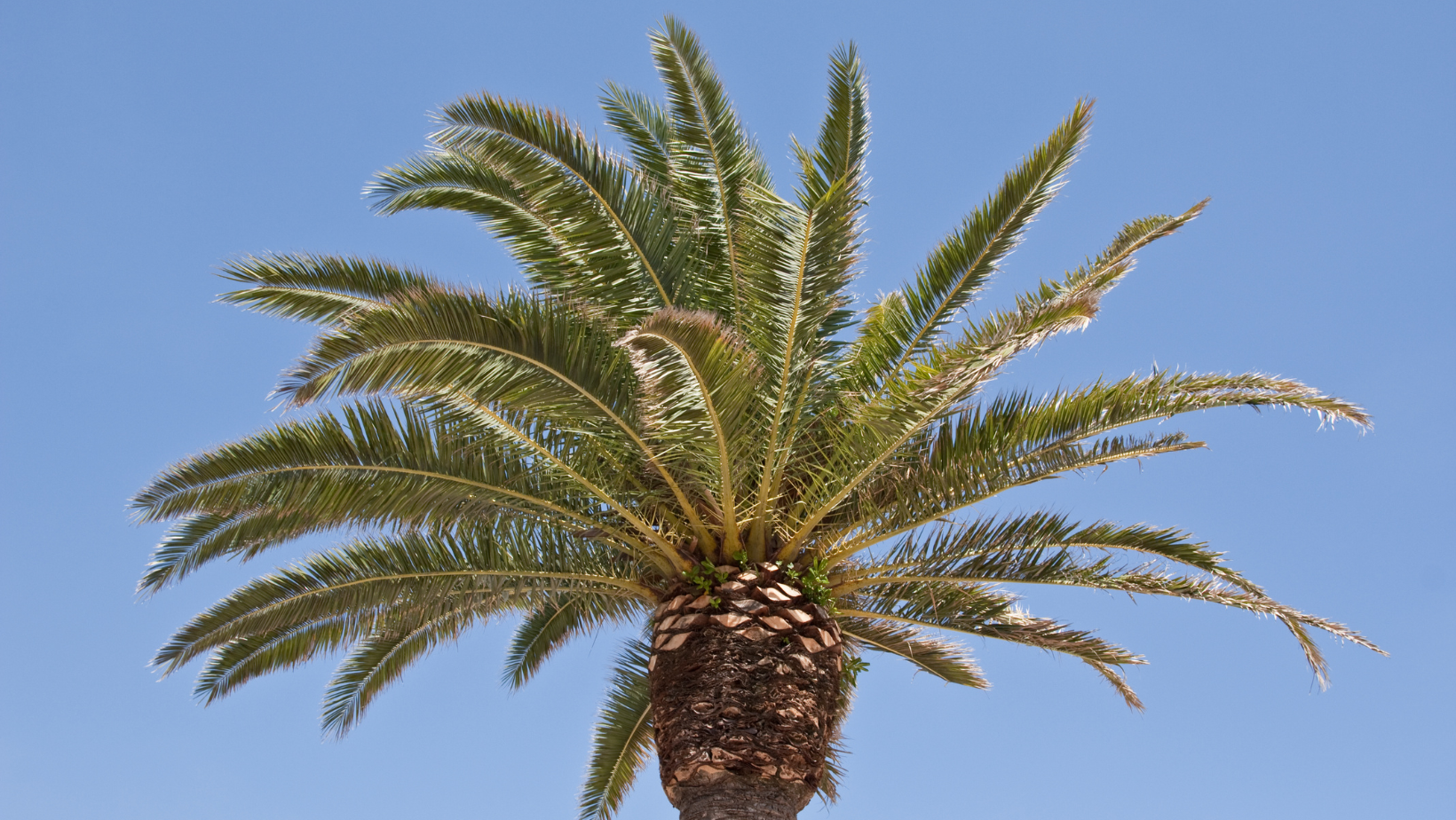
Syagrus romanzoffiana Environmental weed in LoganA familiar ornamental palm that produces large clusters of orange fruit. Logan City Council notes that it can be spread by flying foxes into riparian areas and dry eucalypt forest.
8. Golden Rain Tree
Koelreuteria elegans subsp. formosana Environmental weed in LoganA small ornamental tree with yellow flowers and distinctive papery seed pods. Its prolific seed production allows it to establish beyond gardens.
9. Honey Locust Tree
Gleditsia triacanthos Council-listed weed treeA deciduous tree that can carry long, sharp thorns and large seed pods. Council warns that the thorns can injure people, livestock and native wildlife.
10. Indian Coral Tree
Erythrina indica, E. crista-galli and Erythrina × sykesii Council-listed weed treeCoral trees are recognised for their striking red-orange flowers. Some forms readily establish around waterways and disturbed areas, where broken material and new growth can contribute to their spread.
11. Kei Apple
Dovyalis caffra Environmental weed in LoganA thorny evergreen tree with yellow fruit. It can form dense, difficult-to-access thickets, and its thorns can be hazardous to people and animals.
12. Leucaena
Leucaena leucocephala Council-listed weed treeA fast-growing leguminous tree that produces large quantities of seed. Once established, it can form dense stands that suppress other vegetation.
13. Mulberry
Morus nigra Council-listed weed treeA deciduous fruiting tree whose berries can be spread by birds and other animals, allowing seedlings to establish away from the original garden tree.
14. Slash Pine
Pinus elliottii Council-listed weed treeA North American pine originally planted for timber and other uses. Seedlings can establish outside planted areas and form self-sown stands in suitable conditions.
15. Umbrella Tree
Schefflera actinophylla Council-listed weed treeAn Australian native species that is a common ornamental tree but can spread into local bushland. Like Cadaghi, Umbrella Tree is specifically named in Logan's Biodiversity Areas Overlay clearing exemptions.
16. Yellow Bells
Tecoma stans Council-listed weed treeA fast-growing ornamental with bright yellow trumpet-shaped flowers. It can produce abundant seed and establish in disturbed sites and natural areas.
Restricted Weeds vs Environmental Weeds
The term weed covers more than one regulatory category. This matters because the legal obligations can differ from one species to another.
| Weed Status | What It Generally Means |
|---|---|
| Category 3 restricted matter | These species are regulated under Queensland biosecurity laws and must not be distributed. Logan City Council can investigate regulated weeds and may issue biosecurity directions or orders where relevant. |
| Environmental weed | These plants may not be declared as restricted matter under the Act but can still cause serious environmental harm. Council recommends managing them where practical. |
African Tulip Tree, Broad Leaf Privet, Camphor Laurel, Chinese Celtis and Honey Locust are examples Council identifies as Category 3 restricted matter. Cadaghi, Cocos Palm, Golden Rain Tree and Kei Apple are examples listed by Council as environmental weeds.
Can You Remove a Weed Tree in Logan Without a Permit?
This is where the original version of this article needed an important correction. Do not assume that every tree in the weed directory can automatically be removed without approval.
Logan's planning controls protect native vegetation in mapped Biodiversity Areas, and additional controls can apply to waterways, wetlands, development approvals, covenants, community-title properties and some state-protected areas.
Cadaghi and Umbrella Tree
Cadaghi and Umbrella Tree are both Australian native species. Logan's published Biodiversity Areas Overlay exemption criteria specifically list clearing of these two species as an exemption.
There Is an Important Waterway Exception
Logan City Council states that all native vegetation clearing within the Waterway Corridors and Wetlands Overlay requires approval. The Biodiversity Areas Overlay exemptions do not override that requirement.
Before arranging removal, check the property through Logan PD Hub and work through Council's vegetation clearing decision tool.
Council also notes that its decision tool does not determine every possible requirement, including some development conditions, community-title arrangements and Queensland koala habitat controls.
How Are Larger Weed Trees Removed?
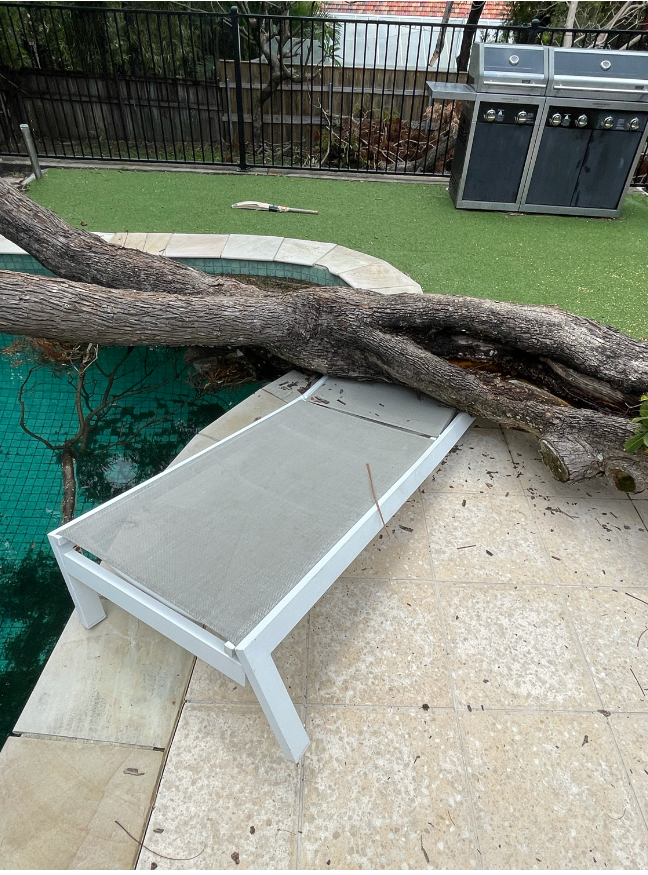
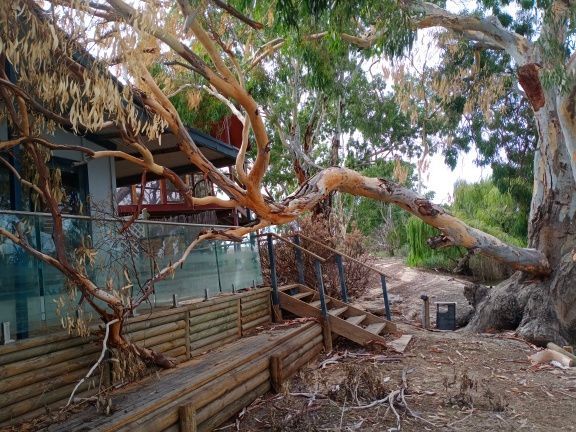
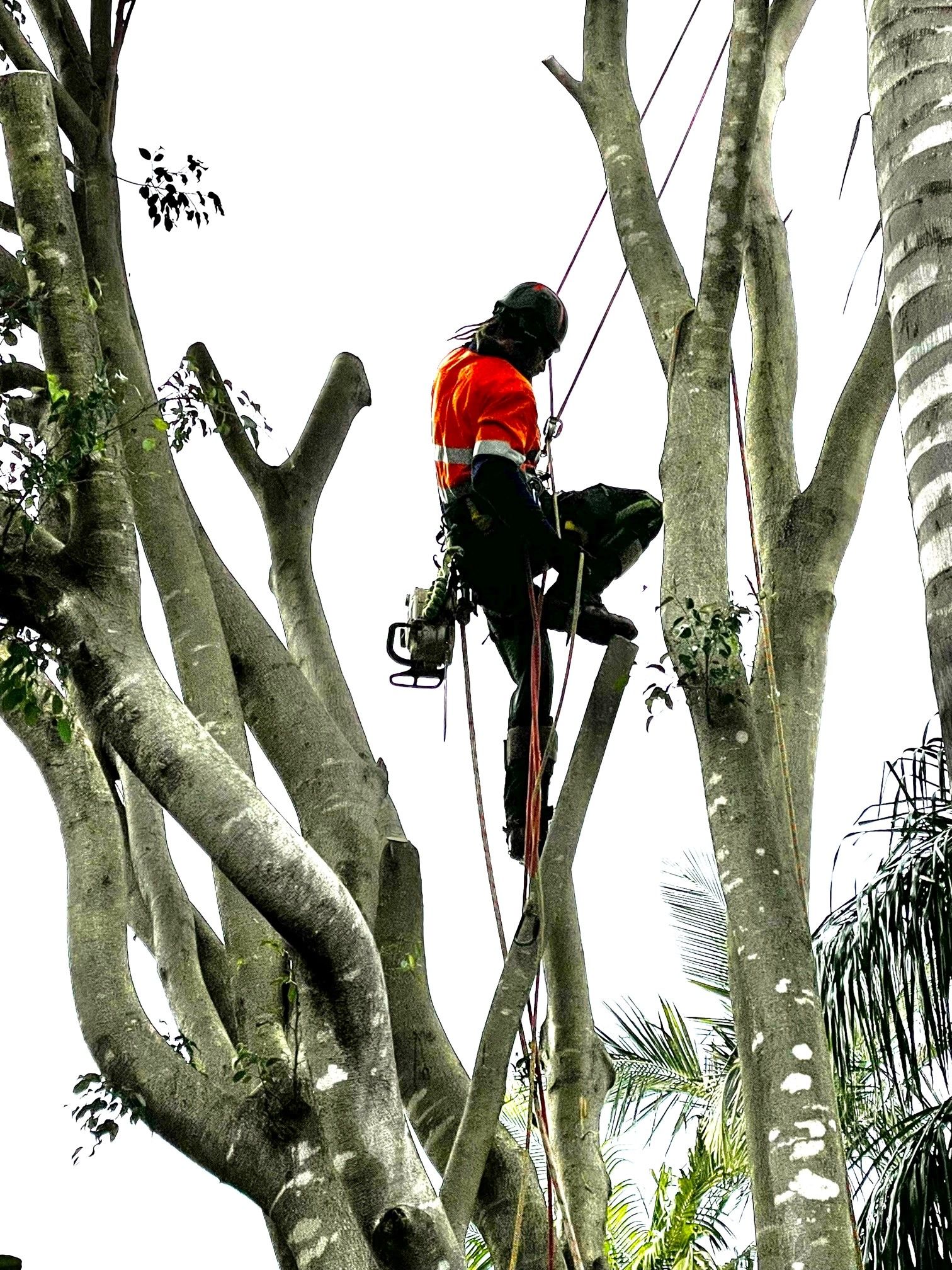
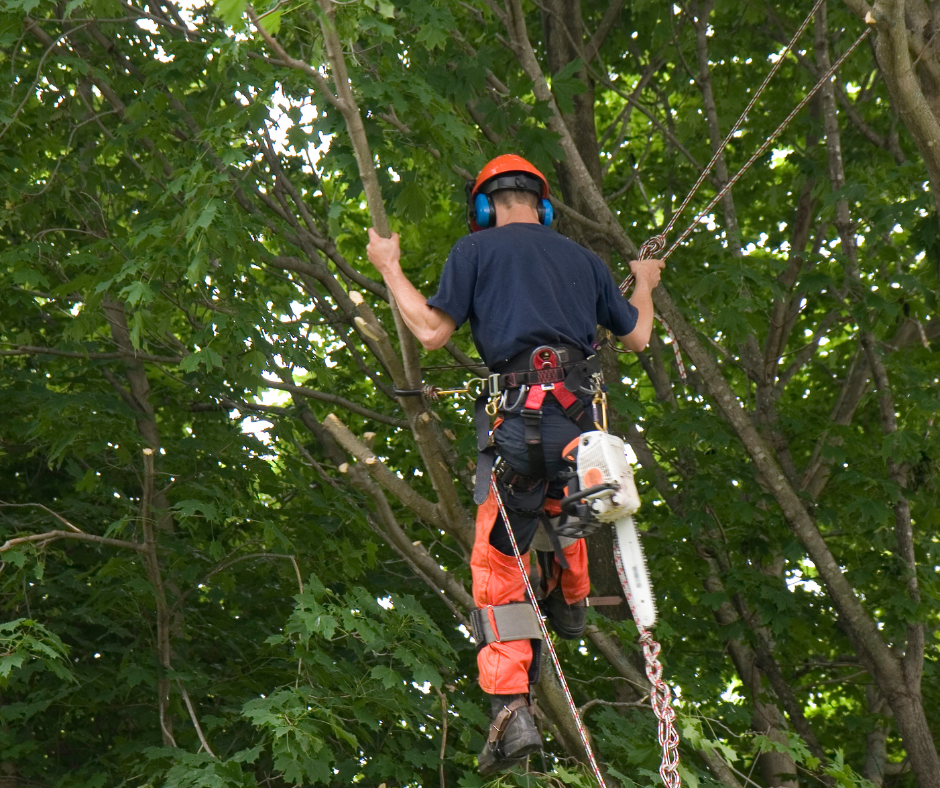
Weed management advice often focuses on seedlings, saplings and chemical control. A mature backyard weed tree can be a very different job, particularly when it is close to a house, fence, pool, shed or neighbouring property.
The appropriate method may involve:
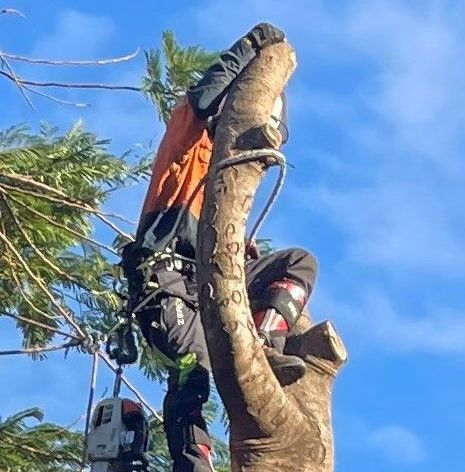
- sectional dismantling using climbing and rigging;
- an elevated work platform where access permits;
- machinery for larger timber or difficult sites;
- controlled lowering of branches around structures;
- stump treatment where the species can regrow; or
- stump grinding after the tree has been removed.
Where there is enough clear landing space, controlled tree felling may be the most practical removal method. Confined suburban sites often require the tree to be dismantled in smaller sections instead.
Once the tree is down, stump grinding or stump removal can help clear the remaining stump and make the area easier to replant or landscape.
What About Herbicide and Cut-Stump Treatment?
Logan City Council lists several control techniques across its weed directory, including manual removal, mechanical removal, cut-stump treatment, basal-bark spraying and stem injection. The suitable method varies by species and tree size.
For cut-stump treatment, Council's species guidance commonly requires the herbicide to be applied immediately after cutting so the active ingredient can be taken into the plant tissue.
Always Follow the Herbicide Label
Council advises users to check that the herbicide is registered for the target weed and to follow the product label exactly. Large-tree removal and herbicide use are separate decisions and should both be planned appropriately.
Why Weed-Tree Removal Can Help the Local Environment
Removing a problem weed tree can prevent further seed or fruit spread and create an opportunity to replace it with a species better suited to the local landscape.
Replanting is particularly worthwhile where the removed tree provided shade, screening or habitat. A locally suitable native tree can restore those benefits without creating the same weed-management problem later.
Council's weed directory is also useful for positive identification before work begins. Similar-looking trees can occur, so identification should be confirmed rather than based only on a single leaf, flower or photograph.
Need a Weed Tree Assessed in Logan?
GDE Tree Services can inspect mature weed trees on private property, assess access and surrounding structures, and provide a free written quote for the tree work required.
Frequently Asked Questions About Weed Trees in Logan
Can I remove a weed tree from my property in Logan without Council approval?
Do not assume that a tree can be removed without checks simply because it appears in Council's weed directory. Planning overlays, waterway and wetland controls, development conditions, covenants, community-title requirements and state controls can still be relevant. Check the property through Logan PD Hub and Council's vegetation clearing decision tool.
Are Cadaghi and Umbrella Tree exempt from Logan vegetation clearing rules?
Logan's Biodiversity Areas Overlay exemption criteria specifically list Cadaghi and Umbrella Tree. However, Council states that all native vegetation clearing within the Waterway Corridors and Wetlands Overlay requires approval, so the property and tree location still need to be checked.
What is a Category 3 restricted weed?
Category 3 restricted matter is regulated under Queensland biosecurity laws and must not be distributed. Logan City Council can also take compliance action in relation to regulated weeds. Some trees in Logan's weed directory are Category 3 restricted matter, while others are environmental weeds.
What is an environmental weed?
An environmental weed may not be listed as restricted matter under the Biosecurity Act but can still cause environmental harm. Logan City Council encourages practical management of environmental weeds on private land.
How should a large weed tree be removed?
The method depends on the tree's size, condition, access and surroundings. Large trees may need sectional dismantling, machinery or controlled felling. Stump treatment or grinding may also be needed to reduce regrowth, depending on the species.
Can I use herbicide on a weed-tree stump?
Council lists cut-stump, stem-injection, basal-bark and other herbicide methods for various weed species. Always use a product registered for the target weed and follow the label directions exactly.
Does GDE Tree Services remove weed trees in Logan?
Yes. GDE Tree Services can inspect weed trees on private property in Logan and provide a free written quote for appropriate tree work, including removal, controlled felling where suitable and stump grinding.
Have You Identified a Weed Tree on Your Logan Property?
GDE Tree Services can inspect the tree and site and provide a free written quote for safe removal, lopping, controlled felling or stump work where appropriate.
Request a Free Written QuoteThis article provides general information. Weed classifications, planning controls and vegetation-clearing requirements can change, and property-specific conditions may apply. Confirm current requirements with Logan City Council before clearing protected vegetation.