How to Tell if Your Tree Needs Lopping or Full Removal
Overgrown branches, storm damage and poor clearance do not always mean that an entire tree must come down. Professional tree lopping may be enough where the main trunk, roots and overall structure remain sound.
Full removal may be the safer or more practical option when damage or instability affects the whole tree rather than one section of the canopy. GDE Tree Services assesses each tree individually and recommends an approach based on its condition, structure, location and the likely consequences of branch or tree failure.
In general: lopping or selective pruning may be suitable where the problem involves particular branches, excessive canopy growth or manageable clearance issues.
Full removal may be necessary where the root plate, trunk or major supporting structure is severely damaged, unstable or unable to be managed through reasonable pruning.
What Is Tree Lopping?
Tree lopping is a broad term used for cutting back larger branches or reducing parts of a tree canopy. It may be carried out to improve clearance, remove hazardous limbs or manage the height and spread of suitable trees.
Professional lopping should not mean cutting branches at random or indiscriminately topping the canopy. The work should have a defined purpose and consider how much living growth can be removed without leaving the tree unnecessarily stressed or unbalanced.
Depending on the tree, lopping may involve:
- removing dead, damaged or hanging branches;
- reducing overextended limbs;
- improving clearance from roofs, gutters and structures;
- managing branches over driveways, paths or neighbouring property;
- reducing selected areas of a heavy or uneven canopy; and
- removing branches damaged during storms.
When Tree Trimming or Pruning May Be the Better Option
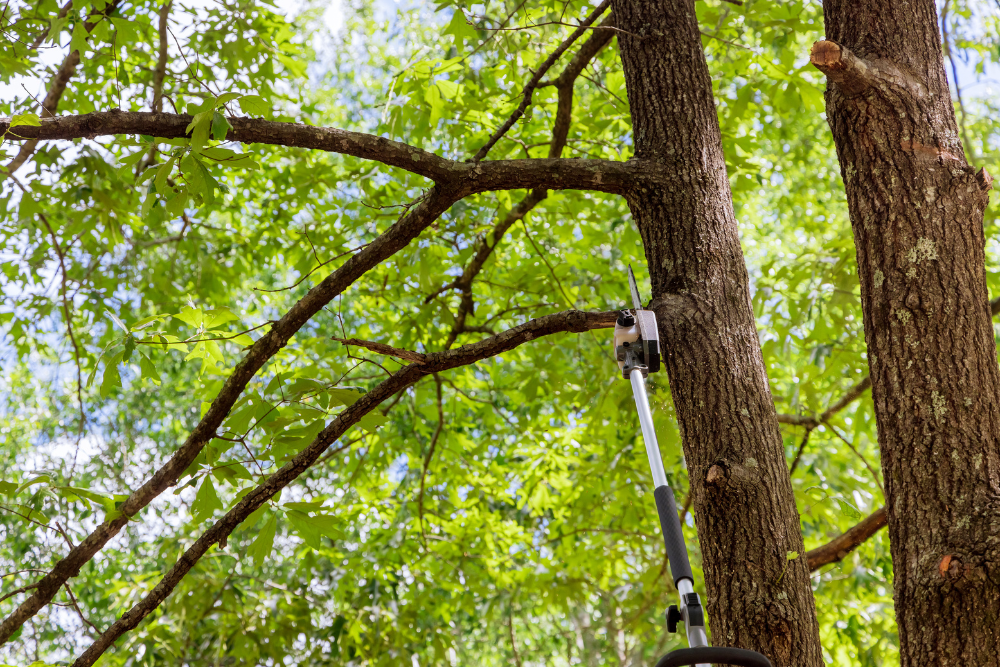
Routine maintenance and smaller branch issues may not require substantial lopping. Selective tree trimming and pruning may be more appropriate where the objective is deadwood removal, structural pruning, crown lifting or regular clearance management.
Pruning generally focuses on particular branches and a defined outcome. Lopping is more commonly used to describe larger reductions or broader branch-removal work.
Signs Your Tree May Only Need Lopping or Pruning
Full removal is not always necessary. The following situations may be manageable where the tree is otherwise healthy and structurally sound.
Overgrown Branches
Individual branches may be growing towards a roof, fence, driveway, pool or neighbouring property while the rest of the tree remains suitable for retention.
Isolated Deadwood
A limited number of dead branches may be removed without taking down the whole tree where there are no broader structural or health concerns.
Minor Storm Damage
A tree may lose one or two branches during severe weather while retaining a stable trunk, root system and primary canopy structure.
Clearance Problems
Carefully selected cuts may improve clearance around roofs, gutters, sheds, paths, driveways and outdoor living areas.
Heavy or Uneven Growth
Selected branch reduction may help manage excessive weight on overextended limbs or improve the balance of a suitable tree.
Reduced Light or Airflow
In some situations, selective canopy work can improve filtered light and airflow without sacrificing the entire tree.
Removing More Is Not Always Better
Excessive canopy removal can place the tree under unnecessary stress, expose previously shaded branches to intense sunlight and encourage rapid regrowth that may be weakly attached.
Signs a Tree May Need Full Removal
Full removal is generally considered where the problem affects the tree’s main structural system and cannot be resolved by removing selected branches.
- A severely cracked or split trunk
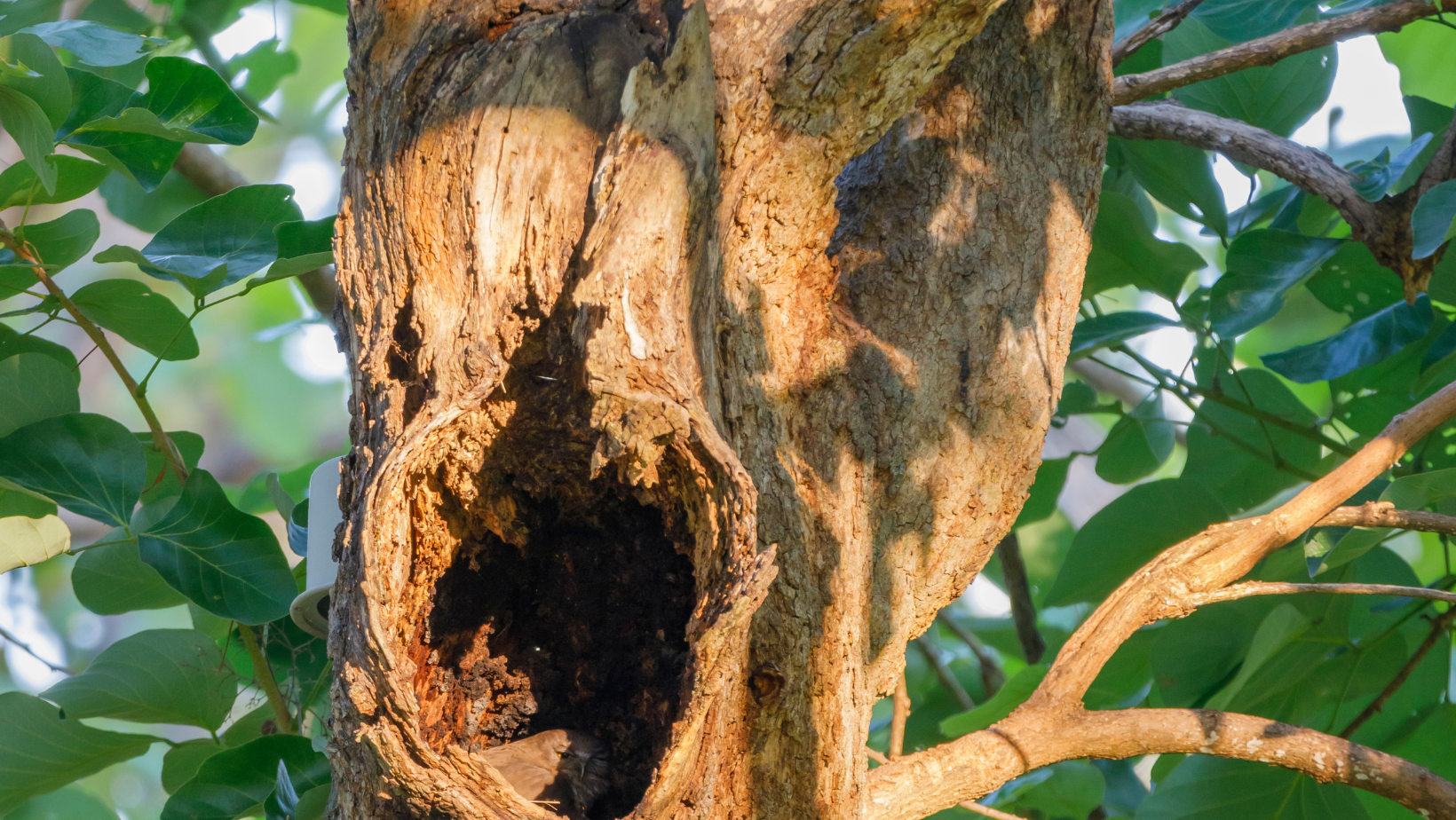
- Extensive decay affecting the trunk or major branch unions
- A large cavity that substantially reduces structural wood
- Broken, damaged or moving structural roots
- Soil lifting or cracking around the root plate
- A recent or progressively increasing lean
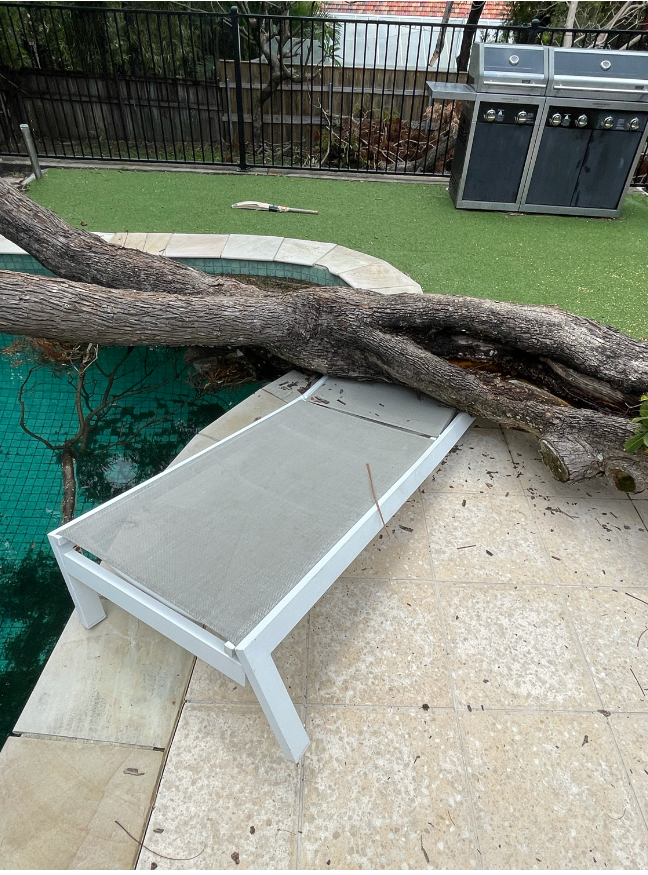
- Major storm damage affecting the trunk or most of the canopy
- A dead or rapidly declining tree
- Repeated failures involving major branches
- A location where reasonable pruning cannot reduce the risk to an acceptable level
These signs do not provide a diagnosis on their own. The tree, site and potential targets beneath it need to be assessed together.
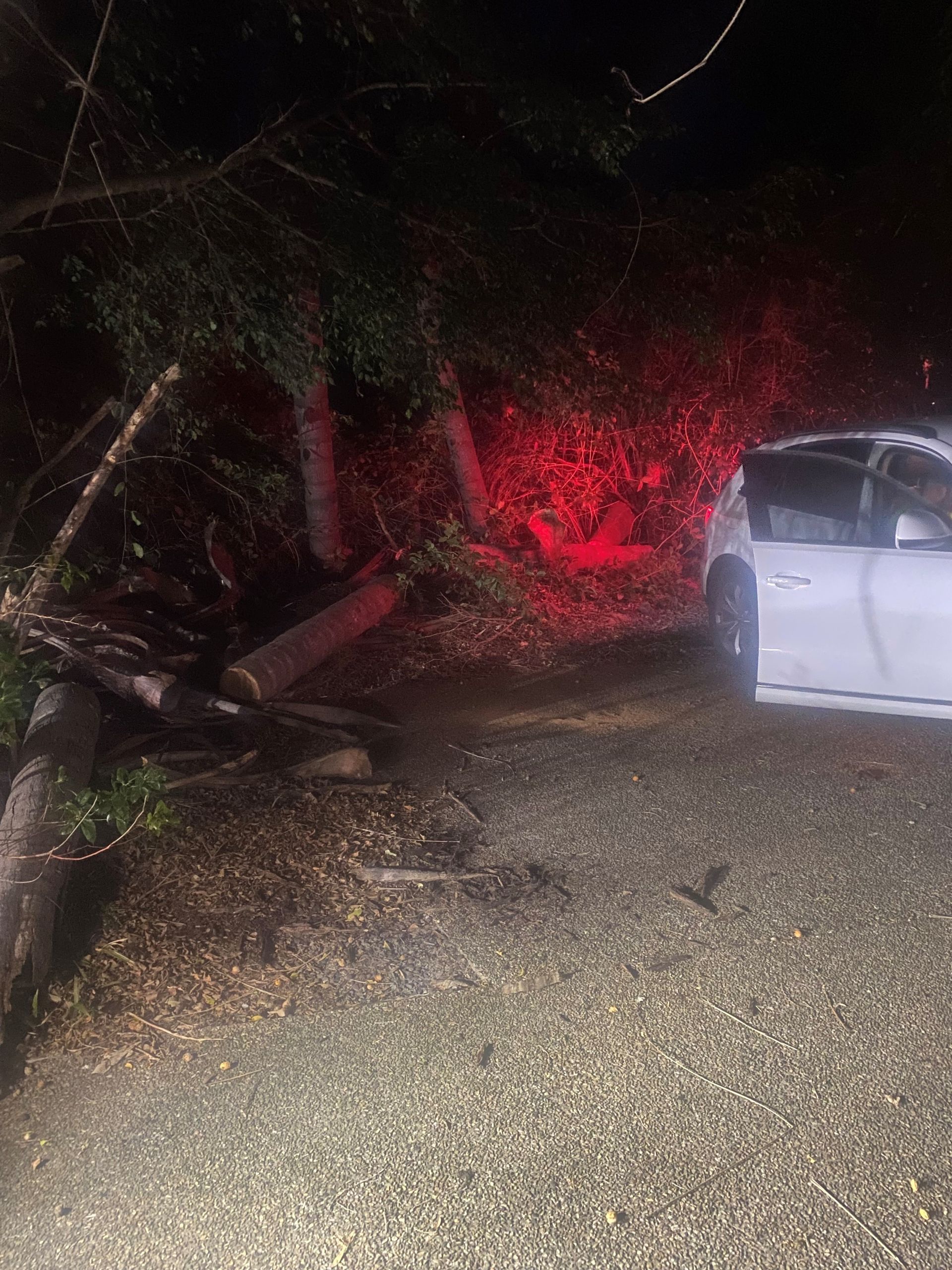
How to Tell Whether a Leaning Tree Is Dangerous
Not every leaning tree is unstable. Some trees develop a longstanding lean while growing towards light or adapting to their surroundings.
A lean requires more urgent attention where:
- the angle has changed recently;
- the lean developed after heavy rain, flooding or strong winds;
- soil is cracking, lifting or moving around the base;
- roots are exposed, broken or pulling from the ground;
- the trunk is cracked or split; or
- the tree is leaning towards a home, road, play area or neighbouring property.
Sudden Lean After Severe Weather
A tree that has recently changed position may have experienced root failure. Keep people, pets and vehicles away from the possible fall zone and arrange an urgent professional assessment.
Can a Storm-Damaged Tree Be Saved?
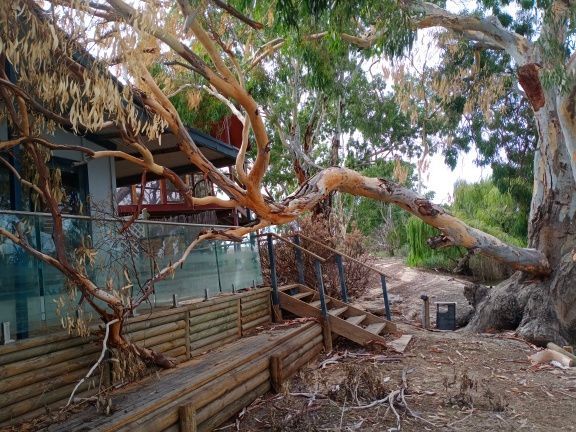
Some storm-damaged trees can be retained. Others lose so much structural support that removal becomes the safer option.
A tree may still be suitable for retention where:
- damage is limited to selected branches;
- the trunk and major branch unions remain sound;
- the root plate has not moved;
- enough healthy canopy remains for the tree to recover; and
- damaged branches can be removed without leaving a severely unbalanced structure.
Removal may be necessary where the trunk has split, major roots have failed, most of the canopy has been lost or the remaining structure cannot be made reasonably safe.
Fallen, unstable and suspended tree sections may require emergency tree removal in Brisbane.
Does Decay or Disease Mean the Tree Must Be Removed?
Not automatically. Some pest, disease and decay problems remain localised, while others progressively affect the tree’s structural strength.
The assessment should consider:
- the location and extent of the affected area;
- whether load-bearing wood has been lost;
- the condition of the surrounding trunk and branch unions;
- the tree’s overall vigour and ability to recover; and
- what could be damaged if the tree or a major branch failed.
Green leaves do not necessarily prove that a tree is structurally sound. Tree health and structural stability are related but separate considerations.
Can Root Problems Be Managed Without Removing the Tree?
Visible surface roots, lifted paving or roots near pipes do not automatically mean a tree must be removed.
The practical options depend on:
- the species and expected mature size of the tree;
- the location of structural roots;
- the type and extent of property damage;
- whether the affected structure can be modified;
- whether any roots can be managed without destabilising the tree; and
- the distance from buildings and underground services.
Cutting major roots can create instability. Root pruning should not proceed without understanding how the proposed work may affect support and tree health.
Should a Tree Be Removed Because It Is Close to a House?
Proximity to a building is not enough on its own to justify removal. Many mature trees grow close to homes without creating an unacceptable risk.
Relevant factors include:
- the tree species and expected mature dimensions;
- branch clearance from roofs, walls and solar panels;
- the condition of the trunk and major limbs;
- the direction and history of any lean;
- previous branch failures;
- root location and condition; and
- whether periodic pruning can maintain practical clearance.
Tree Lopping or Full Removal: Quick Comparison
| Tree or Site Issue | Lopping or Pruning May Be Suitable | Full Removal May Be Necessary |
|---|---|---|
| Overgrown branches | Where the tree remains sound and the issue is limited to selected growth. | Where safe clearance cannot be maintained without repeatedly removing excessive canopy. |
| Dead branches | Where deadwood is isolated and the broader tree remains sound. | Where the entire tree is dead or undergoing widespread decline. |
| Storm damage | Where damage is limited to branches and the trunk and roots remain stable. | Where the trunk, root plate or primary supporting structure has failed. |
| Leaning tree | Where the lean is longstanding and there are no signs of root movement. | Where the lean is recent, increasing or associated with soil movement. |
| Root concerns | Where the site issue can be managed without cutting important structural roots. | Where major root failure or unavoidable structural damage makes retention impractical. |
| Decay | Where decay is limited and sufficient sound structural wood remains. | Where decay substantially weakens the trunk, root plate or critical branch unions. |
Questions to Ask Before Deciding
- Is the concern limited to one branch or does it affect the whole tree?
- Is the main trunk structurally sound?
- Are there signs of root movement or root failure?
- Can selected branches be removed while retaining a balanced canopy?
- Has the tree recently leaned, moved or lost major branches?
- What people, buildings or areas could be affected by failure?
- Would regular maintenance provide a practical long-term solution?
- Is Council permission required before work begins?
What Happens if Full Removal Is Recommended?
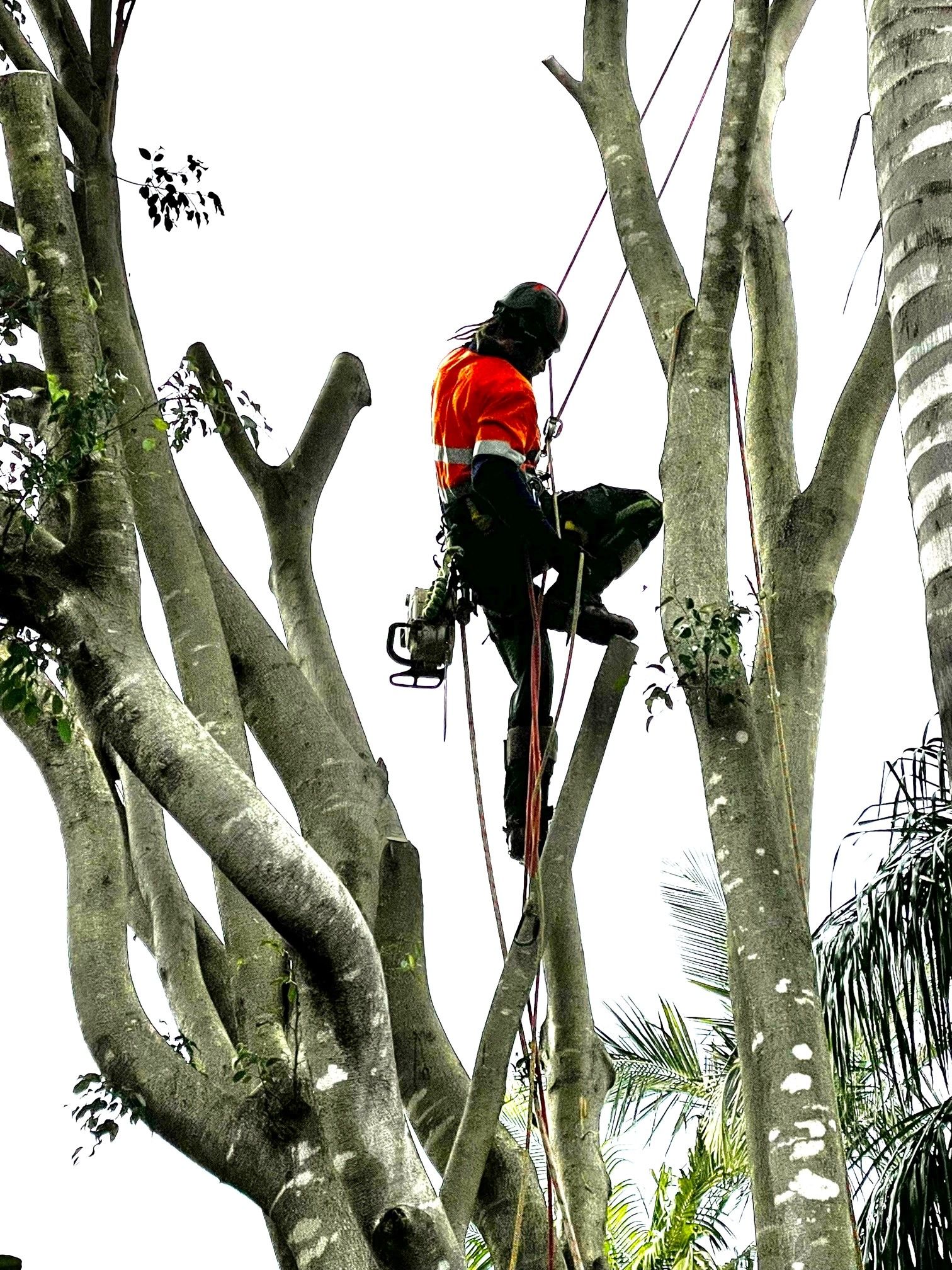
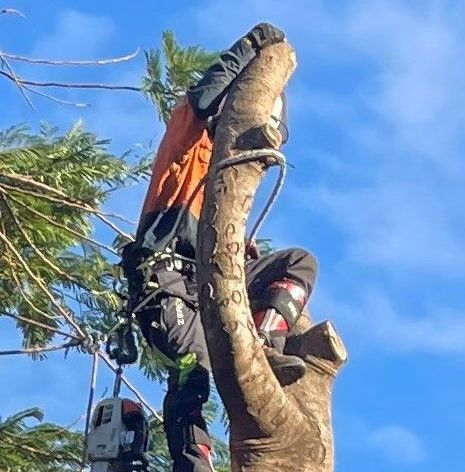
The removal method depends on the space around the tree. Trees close to homes, fences or roads are commonly dismantled progressively, with branches and trunk sections controlled using suitable access and rigging equipment.
Where the tree can be brought down safely into a clear landing area, controlled tree felling may be appropriate.
The written quote should explain the proposed method, green waste chipping, timber handling, final clean-up and whether stump grinding is included.
Do You Need Brisbane City Council Approval?
Some vegetation is protected, and Brisbane City Council requires permission for certain work on protected vegetation. Council street and park trees also require Council involvement.
Before arranging substantial pruning or removal, submit a protected vegetation enquiry for the property and confirm whether a permit or exemption applies.
Professional Tree Assessment in Brisbane
GDE Tree Services has provided professional tree work throughout Brisbane and South East Queensland since 1987.
Our qualified arborists and experienced tree crews can inspect the tree, explain whether lopping, selective pruning or full removal is the more practical option and provide a free on-site written quote.
- Tree and site assessment
- Tree lopping and canopy reduction
- Selective tree trimming and pruning
- Deadwood and damaged branch removal
- Storm-damaged tree work
- Large and difficult tree removal
- Green waste chipping and clean-up
- Stump grinding quoted where required
Frequently Asked Questions
How do I know whether a tree needs lopping or removal?
A tree may be suitable for lopping or selective pruning where the main trunk, roots and primary structure remain sound and the problem is limited to particular branches or canopy growth. Full removal may be necessary where the trunk, root plate or major structure is severely compromised.
Can a large tree be made safe without removing it?
Sometimes. Deadwood removal, selective branch reduction, crown lifting or other carefully planned pruning may address a specific clearance or branch concern. The result depends on the tree’s condition, structure, species and location.
Does a leaning tree always need to be removed?
No. Some trees develop a stable natural lean. A recent or increasing lean, especially with cracked or lifting soil around the base, broken roots or storm damage, requires prompt professional assessment.
Can a storm-damaged tree be saved?
A tree may be retained where damage is limited to selected branches and the trunk, root plate and major unions remain sound. Removal may be recommended where the trunk has split, roots have failed or the remaining structure cannot be managed safely.
Does decay mean a tree must be removed?
Not automatically. The importance of decay depends on its location, extent and effect on load-bearing wood. A tree can still have green foliage while containing a significant structural defect, so the whole tree and surrounding targets need to be assessed.
Should a tree be removed because it is close to a house?
Proximity alone does not determine whether removal is necessary. The tree’s mature size, branch clearance, condition, root location, lean and history of branch failure should all be considered.
Do I need Council approval for lopping or tree removal in Brisbane?
Approval may be required where vegetation is protected or the tree is on Council land. Check the property through Brisbane City Council’s protected vegetation enquiry service before arranging substantial pruning or removal.
What happens if full removal is recommended?
The tree may be dismantled in sections or, where there is a suitable clear landing area, felled in a controlled direction. The written quote should explain the method, green waste handling, clean-up and whether stump grinding is included.
Not Sure Whether Your Tree Needs Lopping or Removal?
GDE Tree Services can assess the tree’s condition, structure and location and explain the safest and most practical options.
Call 07 3910 3439 to arrange a free on-site written quote.
Request a Free Written Quote