10 Low-Maintenance Trees and Large Shrubs for Brisbane Gardens
The easiest tree to maintain is usually one that actually fits the space when mature. Brisbane City Council recommends a range of native plants suited to the city's subtropical climate, and many need relatively little watering once established. Good species selection can also reduce the need for repeated tree trimming and pruning simply to stop a tree outgrowing the property.
Below are 10 Brisbane-friendly options ranging from compact screening plants to larger feature trees, along with the type of property each one is better suited to.
What Actually Makes a Tree Low Maintenance?
“Low maintenance” does not mean a tree never drops leaves, never needs water and never needs pruning. It means the tree is well matched to the site and can develop without constant intervention.
A lower-maintenance tree usually has:
- a mature height and width that suit the available space;
- reasonable tolerance of Brisbane's climate once established;
- soil and drainage requirements that match the property;
- enough distance from roofs, fences, pools and services;
- a natural form that does not need constant clipping; and
- manageable leaf, flower, fruit or seed drop for the location.
The wrong tree in the wrong place is never truly low maintenance. A species that naturally grows to 15 or 20 metres may be perfectly easy to manage in a large open yard but become a recurring pruning problem beside a small suburban house.
10 Low-Maintenance Options for Brisbane
These selections are based on native plants Brisbane City Council currently recommends for local gardens and Brisbane's subtropical growing conditions.
1. Tuckeroo
Cupaniopsis anacardioidesTuckeroo is one of Brisbane City Council's recommended small native trees. Its naturally compact scale makes it a practical option for many suburban gardens where a very large canopy would create future maintenance problems.
Best for: Suburban yards needing a manageable native shade or feature tree.
2. Golden Penda
Xanthostemon chrysanthusGolden Penda combines glossy foliage with dense clusters of yellow flowers. Council recommends it as a feature tree and also notes that it can be used as a hedge, windbreak or screen.
Best for: Medium gardens wanting year-round foliage and strong seasonal colour.
3. Ivory Curl Tree
Buckinghamia celsissimaIvory Curl Tree produces long creamy flower clusters and suits full sun to semi-shade in moist, well-drained soil. Its moderate mature size makes it easier to accommodate than many large rainforest trees.
Best for: Feature planting where flowers, shade and wildlife value are priorities.
4. Brown Gardenia
Atractocarpus fitzalaniiBrown Gardenia is included in Council's list of low-maintenance native small trees for Brisbane. It is useful where you want genuine tree form without committing to the size of a large canopy tree.
Best for: Smaller gardens and sheltered feature-tree positions.
5. Bottlebrush
Callistemon spp.Bottlebrush is a hardy Brisbane option with nectar-rich flowers that attract birds and insects. Council describes suitable forms as fast growing and useful for screening, with regular light pruning encouraging denser growth.
Best for: Sunny gardens wanting a flowering native that can double as screening.
6. Lilly Pilly
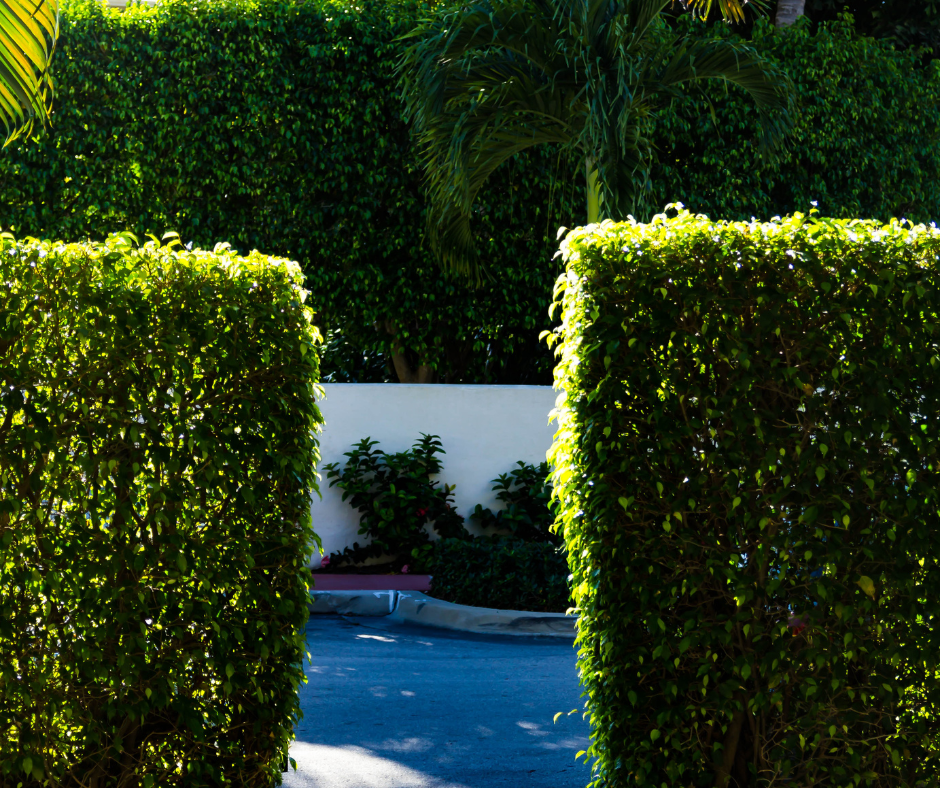
Syzygium spp.Lilly Pillies are versatile evergreen plants that can be kept as a hedge or allowed to develop a more natural form. The key is choosing a species or cultivar whose mature height and width match the available space.
Best for: Boundaries, screening and compact evergreen planting.
7. Brisbane Wattle
Acacia fimbriataBrisbane's native floral emblem produces masses of pale-yellow flowers and is well suited to sunny, well-drained positions. It works particularly well where a natural garden style is preferred over a formal clipped tree.
Best for: Native gardens, informal screens and wildlife-friendly planting.
8. Weeping Lilly Pilly
Waterhousea floribundaWeeping Lilly Pilly is a larger option for properties with enough room. Council recommends it as a dense screen or windbreak. If grown as a formal screen it will need trimming, but allowed more natural space it can form a substantial evergreen tree.
Best for: Larger yards needing a tall evergreen screen or shade tree.
9. Wheel of Fire
Stenocarpus sinuatusWheel of Fire appears on Council's list of low-maintenance native trees for Brisbane. Its striking red-orange flowers make it a feature tree, but its larger mature size means it belongs on properties that can comfortably accommodate a tall tree.
Best for: Larger gardens where there is room for a genuine canopy tree.
10. Flame Tree
Brachychiton acerifoliusThe native Flame Tree is another Council-recommended option for Brisbane. Its mature size makes correct placement essential: planted with enough room, it can be lower maintenance than a large tree that is constantly being cut back to fit a restricted site.
Best for: Large yards and open sites where long-term canopy space is available.
Which Tree Is Best for Your Property?
| Your Priority | Good Options to Consider | Why |
|---|---|---|
| Smaller suburban tree | Tuckeroo, Brown Gardenia | Tree form without committing to the scale of a very large canopy tree. |
| Flowers and feature value | Golden Penda, Ivory Curl Tree | Moderate tree size with strong flowering displays. |
| Privacy or screening | Lilly Pilly, Bottlebrush, Weeping Lilly Pilly | Dense foliage and the ability to form screens when given enough space. |
| Natural native garden | Brisbane Wattle | Works well where a softer, informal tree shape is preferred. |
| Large garden or open site | Wheel of Fire, Flame Tree | Suitable where there is enough room for a tall tree to mature naturally. |
Why We Changed Some Trees From the Old List
The previous version mixed plants from very different climates and included several trees that can grow in Brisbane but are not necessarily the strongest choices for a genuinely low-maintenance subtropical garden.
This updated list gives more weight to trees and large shrubs Brisbane City Council specifically recommends as low-maintenance native options. That makes the advice more locally relevant and reduces the risk of recommending a tree that needs extra watering, climate protection or repeated corrective pruning simply to cope with the site.
Low Maintenance Does Not Mean No Pruning
Even a well-selected tree can eventually need pruning for dead branches, clearance or damage. The difference is that routine work should complement the tree's natural shape rather than constantly fighting against its mature size.
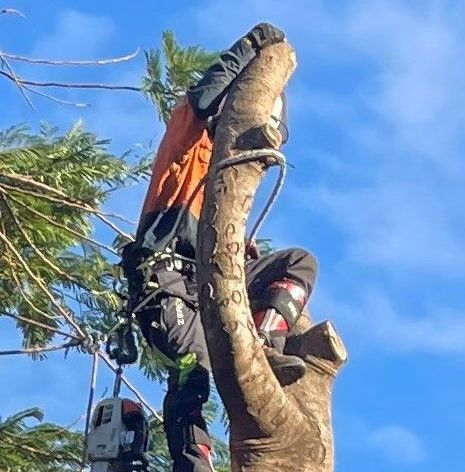
Where an established tree has individual overextended branches or needs canopy management, professional tree lopping may be appropriate when the work is planned around the tree's structure and the actual problem being addressed.
Avoid Planting a Large Tree With the Plan to “Keep It Small” Forever
Repeated heavy reduction can create more maintenance rather than less. Choose a tree whose natural mature size is reasonably close to what the property can accommodate.
Replacing an Unsuitable Existing Tree
An existing mature tree should not be removed simply because another species might require less maintenance. Established trees can provide substantial shade, cooling and habitat value.
However, replacement may be worth considering where a tree is fundamentally incompatible with the property, repeatedly conflicts with structures or services, or requires ongoing severe pruning just to remain within the available space.
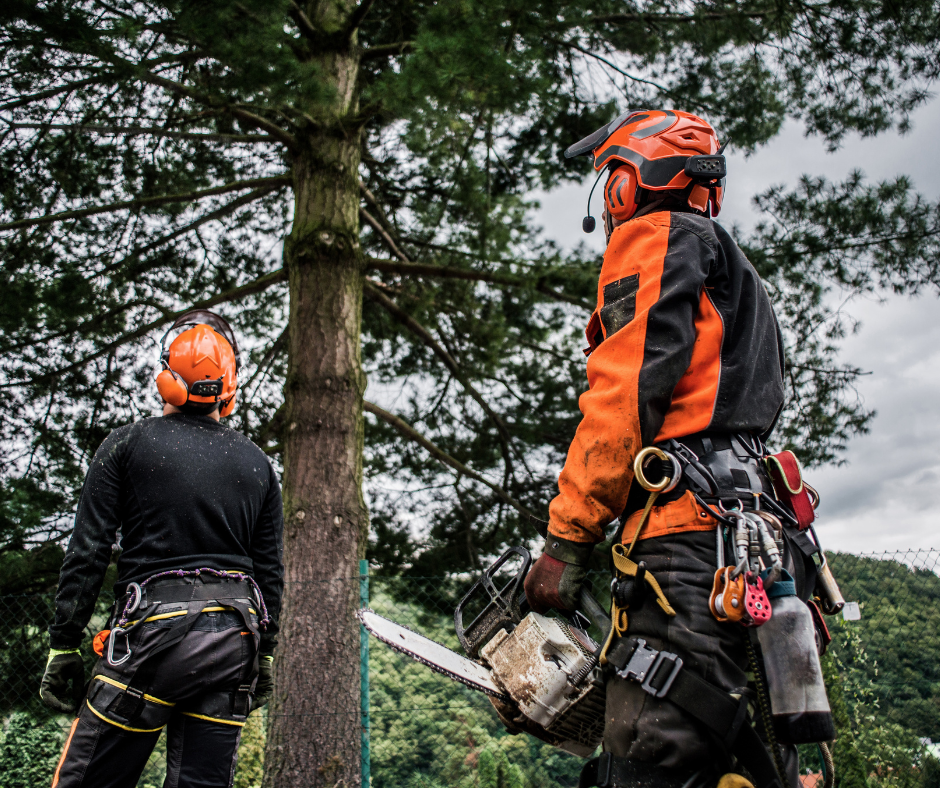
Where removal is appropriate and the property has enough clear landing space, controlled tree felling may be one removal method. Confined suburban sites can require the tree to be dismantled in sections instead.
Before removing protected vegetation, check the relevant Brisbane City Council requirements and any property-specific controls.
Brisbane's Free Native Plants Program
Brisbane City Council's Free Native Plants program provides eligible residential properties and other eligible participants with native plants suited to Brisbane's soils and subtropical climate.
The current plant range includes options such as Bottlebrush, Lilly Pilly, Golden Penda, Ivory Curl Tree, Brisbane Wattle and Weeping Lilly Pilly, although seasonal availability can vary.
Check the current Brisbane City Council Free Native Plants program before planning around a specific species.
Need Help With an Established Tree?
GDE Tree Services has worked across Brisbane and South East Queensland since 1987. The team can assess established trees and provide a free written quote for appropriate pruning, branch reduction or removal where required.
Frequently Asked Questions About Low-Maintenance Trees
What are the best low-maintenance trees for Brisbane?
Brisbane City Council recommends a range of low-maintenance native plants suited to the city's subtropical climate. For tree-sized options, Tuckeroo, Golden Penda, Ivory Curl Tree, Brown Gardenia, Weeping Lilly Pilly, Wheel of Fire and Flame Tree are among the choices worth considering.
Are native trees lower maintenance in Brisbane?
A well-chosen native species can be lower maintenance because it is suited to local climate conditions. Brisbane City Council notes that its recommended low-maintenance native plants generally need minimal watering once established and will not spread or become weedy.
What is a good small tree for a Brisbane backyard?
Tuckeroo, Golden Penda, Ivory Curl Tree and Brown Gardenia are all included in Brisbane City Council's small-tree recommendations. The best choice depends on sunlight, soil, available width and the distance from buildings and services.
What is a good low-maintenance screening tree?
Lilly Pilly, Bottlebrush and Weeping Lilly Pilly can all provide screening. However, a formal hedge will always require more pruning than a tree or shrub allowed to grow closer to its natural size.
Does low maintenance mean a tree never needs pruning?
No. Even a well-chosen tree may need occasional deadwood removal, clearance pruning or structural maintenance. Low maintenance means the species and site are compatible enough that constant corrective pruning should not be necessary.
How close should I plant a tree to my house?
There is no single spacing distance that suits every species. Plan around the tree's mature canopy and root space, access for future maintenance, buildings, fences, pools, retaining walls and overhead or underground services.
Should I remove an existing tree to plant a lower-maintenance species?
Not automatically. An established healthy tree may provide substantial shade and habitat value. If an existing tree is fundamentally unsuitable for the site or requires repeated severe pruning, removal and replacement may be worth considering after checking any relevant Council controls.
Can Brisbane residents get free native plants?
Brisbane City Council currently operates a Free Native Plants program for eligible residential properties and other eligible participants. Plant availability can be seasonal, so check Council's current list before planning around a particular species.
Has an Existing Tree Outgrown Its Space?
GDE Tree Services can inspect the tree and property and provide a free written quote for suitable pruning, lopping or removal where necessary.
Request a Free Written QuoteMature size and performance vary with species, cultivar, soil, rainfall, irrigation and site conditions. Always plan around the expected mature tree rather than its nursery size.