Termites in Trees: When Do They Become a Structural Concern?
Finding termites in a tree can be unsettling, especially when the tree is close to a house, driveway or outdoor area. But termite activity does not automatically mean the tree is dead or needs to be removed. The more important question is whether the tree also has significant decay, cavities or structural defects.
GDE Tree Services can assess the tree-work side of the problem and provide a free written quote where pruning or removal is required. Termite identification and treatment itself should be handled by an appropriately licensed pest-management professional.
What Finding Termites in a Tree Actually Tells You
Queensland Government information explains that some subterranean termites have a central nest in a dead or living tree. It also states that termite galleries in timber and trees can result in a loss of structural integrity.
So termite activity is worth investigating — but it is one part of the structural picture, not a complete diagnosis by itself.
Termites Do Not Only Live in Houses
Queensland has many species of subterranean termites. Most live in the ground and depend on soil contact or another reliable source of moisture, travelling through enclosed galleries and mud tubes that protect them from drying out.
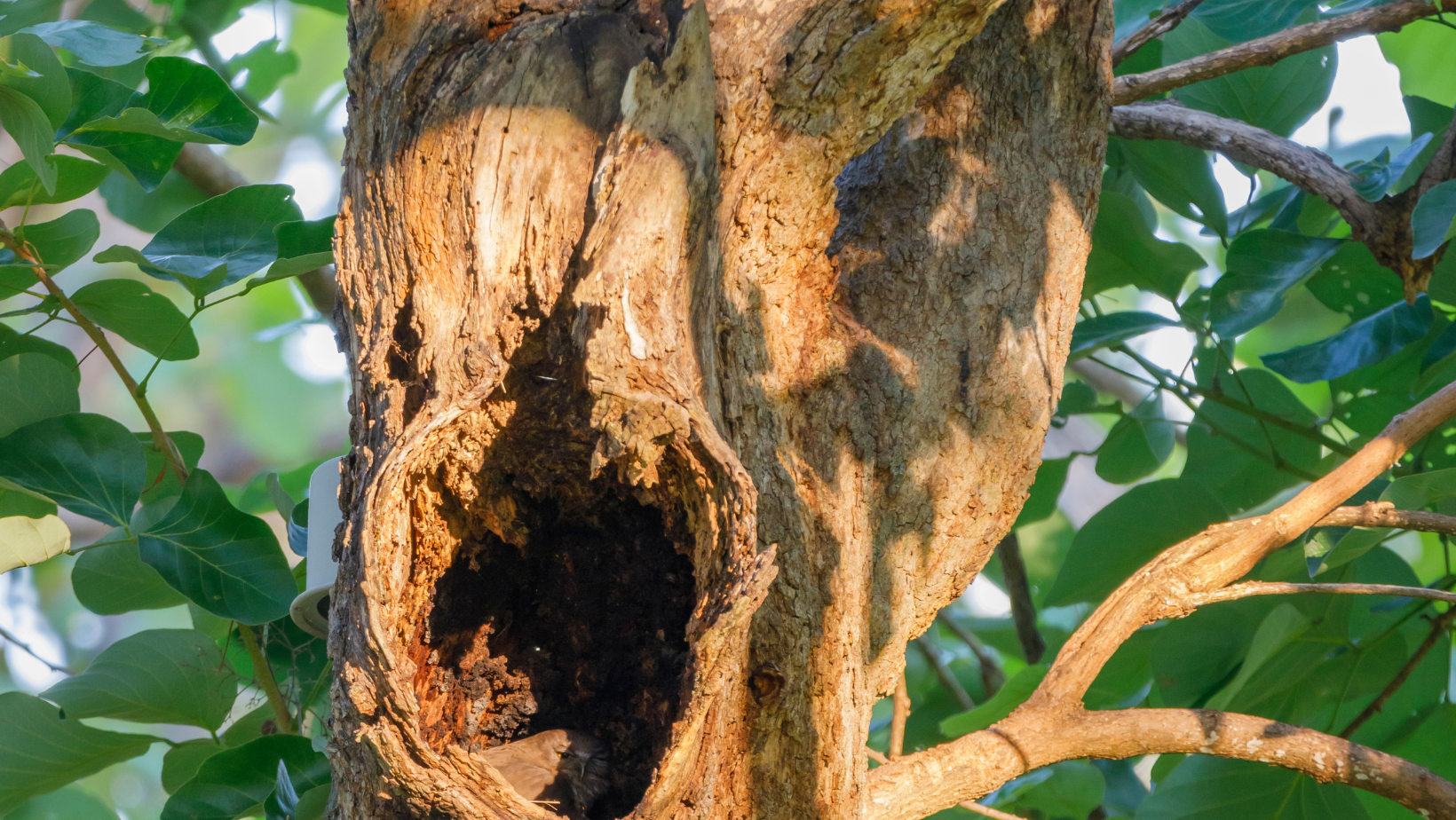
Some species establish nests in trees, and termites can create internal galleries as they feed through suitable wood. That may occur in dead timber, decayed sections of a living tree or, depending on the termite species, other woody material.
This is why a tree can still have a green canopy while containing termite activity or an internal cavity.
Queensland Government also notes that correctly identifying termite species requires skill and experience, so homeowners should be cautious about identifying a termite simply from an online photograph.
Signs Worth Investigating — and What They Do Not Prove
Mud Galleries on the Trunk
Subterranean termites can travel above ground inside enclosed mud galleries. Seeing these on a trunk is evidence of termite activity and warrants further investigation.
Large Cavities or Decayed Wood
A large cavity, soft decayed wood or extensive internal loss of wood becomes more important when it affects the trunk, major unions or roots that support the tree.
Deadwood or Branch Dieback
Dead branches, declining sections of canopy or broken limbs can indicate broader tree-health or structural problems and become more significant when combined with trunk decay.
Cracks, Lean or Root-Plate Movement
Fresh cracks, sudden changes in lean or movement of the soil and root plate are structural warning signs regardless of whether termites are present.
Why the Old “Tap the Trunk and Listen for a Hollow Sound” Test Is Not Enough
A hollow-sounding trunk is often presented online as a simple termite test, but it is not a reliable way for a homeowner to decide whether a tree is safe.
Trees can naturally compartmentalise cavities and continue growing around internal hollow areas. Conversely, important structural decay may not be obvious from a casual tap on the outside.
The location of the remaining sound wood, major cracks, branch unions, roots and the targets around the tree all matter when deciding whether internal damage has become a structural concern.
What to Do After Finding Termites in a Tree
Do Not Assume the Tree Must Come Down
Start by looking at the whole tree and site. Termites alone do not tell you whether the tree is viable or whether the remaining structure is acceptable.
Look for Structural Warning Signs From Ground Level
Check for major cavities, extensive deadwood, fresh splits, broken limbs, a sudden lean or visible root-zone movement. Do not climb into a suspect tree or probe deeply into unstable cavities.
Have the Termites Properly Identified
Queensland Government advises that termite identification requires skill and experience. If treatment is required, pesticide-based pest-management work in Queensland must be undertaken by a person with the appropriate current pest-management licence.
Consider a Building Termite Inspection as a Separate Issue
A termite nest or activity in a garden tree does not prove that the house is infested. However, when termites are active close to a building it is sensible to have the building's termite-management system and current condition inspected by a licensed termite professional.
Then Decide What Tree Work Is Actually Required
The outcome may be no immediate tree work, removal of dead branches, monitoring, or complete removal where decay and structural defects make retention unsuitable.
Tree Assessment and Termite Treatment Are Different Jobs
Tree Professional
The tree-work assessment focuses on the tree's structure, deadwood, cavities, cracks, root condition, surrounding targets and whether pruning or removal is practical.
Licensed Pest-Management Professional
The pest-management role is termite identification, treatment and assessment of termite activity in buildings or termite-management systems. Queensland regulates pest-management activities involving pesticides and fumigants through licensing requirements.
Keeping those roles separate avoids making the common mistake of treating a termite colony while ignoring a structurally compromised tree — or removing a tree without considering termite activity around the home.
When Does a Termite-Affected Tree Become More Urgent?
Termite galleries can reduce the amount of sound wood, but urgency depends on what else is happening with the tree and what could be struck if part of it failed.
Arrange Prompt Assessment Where Termite Activity Is Combined With:
- a major cavity at the base or through the trunk;
- large dead or hanging branches;
- fresh trunk or branch-union cracks;
- a sudden or increasing lean;
- visible root-plate or soil movement;
- recent storm damage; or
- a house, driveway, road or frequently used area directly within reach of the tree.
WorkSafe Queensland identifies hollow trees, damaged trees, leaning trees and dead or brittle tops among the hazards that can make tree felling more complex. Dead and decayed standing trees can also shed branches unpredictably.
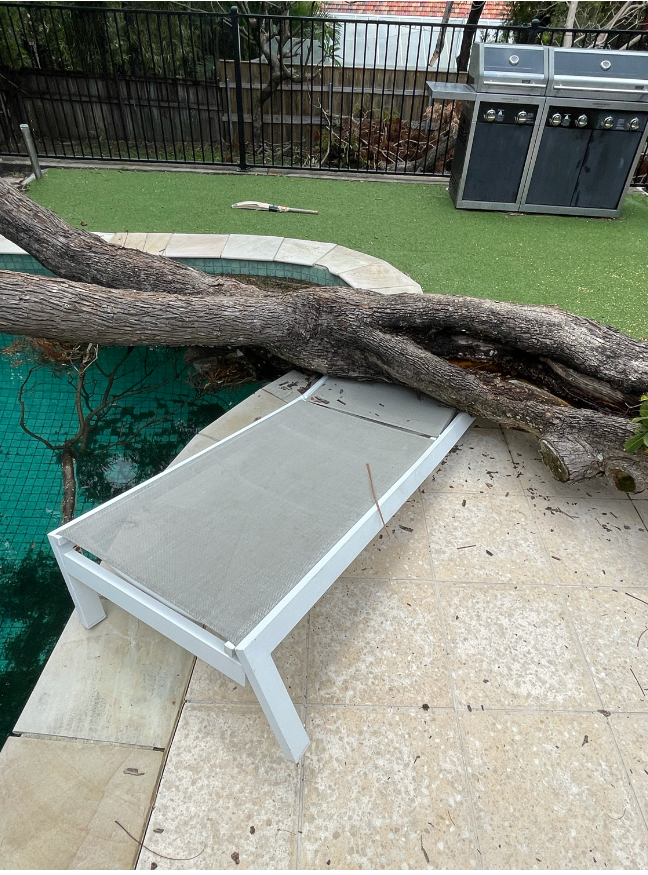
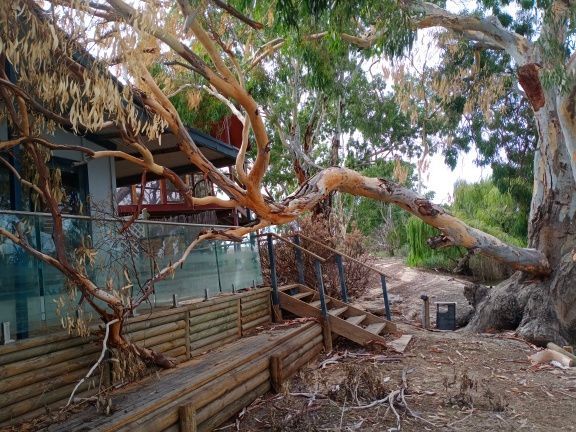
Where instability creates an immediate concern after storm or structural damage, emergency tree removal in Brisbane may be appropriate.
Does a Termite Nest Mean Removal Is the Best Option?
Not necessarily. A mature tree with localised termite activity may still have substantial sound structure, while another tree with extensive basal decay, cracks and very little remaining sound wood may no longer be a reasonable candidate for retention.
The decision should consider:
- where the termite galleries and decay are located;
- how much sound wood and viable canopy remain;
- whether major roots or structural unions are affected;
- the tree's lean and overall architecture;
- recent changes or storm damage; and
- what people, buildings or property are within striking distance.
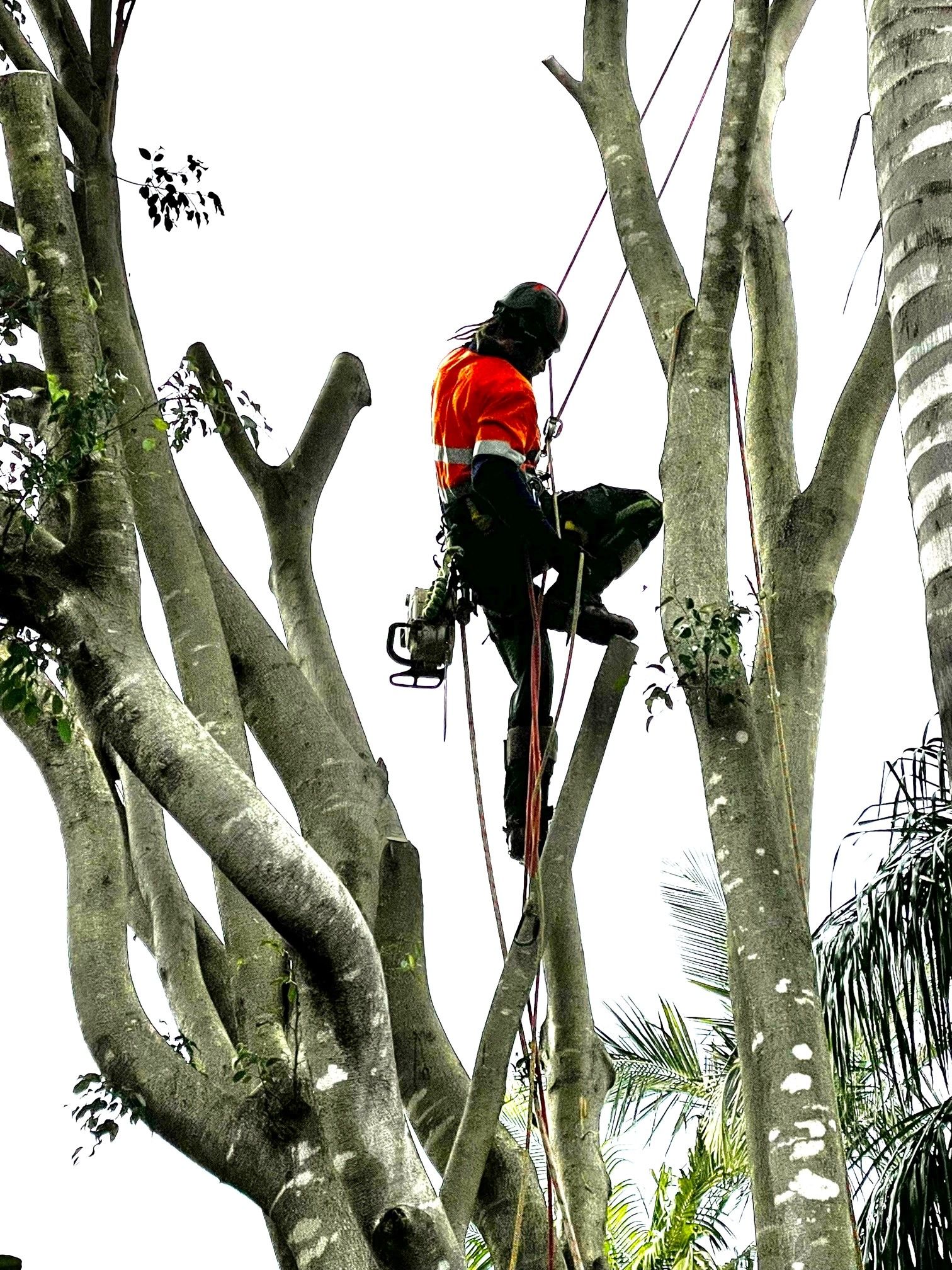
If removal is recommended and there is sufficient suitable open space, controlled tree felling may be one possible method. A termite-affected or decayed tree may require a different removal plan where its structure makes ordinary felling less predictable.
What Happens to the Stump?
Where a termite-affected tree is removed, the stump is a separate decision. Grinding can clear the visible stump and reduce it below ground level, while more complete stump removal involves greater excavation.
Before stump work is carried out on a tree containing active termites, it can be sensible to coordinate the timing with the licensed termite professional so pest-management requirements are considered as part of the job.
Learn more about stump grinding and stump removal.
Concerned About the Structure of a Termite-Affected Tree?
GDE Tree Services can inspect the tree-work requirements and provide a free written quote where branch removal, tree removal or stump work is required. Termite identification and treatment should be arranged with a suitably licensed pest-management professional.
Frequently Asked Questions About Termites in Trees
Do termites in a tree mean the tree has to be removed?
No. Termites can occur in living or dead trees, and their presence alone does not prove that a tree is structurally unsafe. The amount and location of decay or internal damage, the remaining sound wood, the tree's condition and what surrounds it all need to be considered.
Can termites weaken a tree?
Yes. Queensland Government information states that termites create galleries in timber and trees that can lead to a loss of structural integrity. The practical importance depends on the extent and location of the affected wood.
Can termites live inside a healthy-looking tree?
Yes. Some subterranean termite species can have a central nest in a dead or living tree, so a green canopy does not rule out termite activity or internal cavities.
Are mud tubes on a tree proof there is a termite nest inside it?
Not necessarily. Subterranean termites use enclosed mud galleries when travelling above ground. Mud tubes show termite activity, but they do not by themselves prove where the central nest is located.
Does a hollow sound mean a tree is termite damaged?
No. Tapping a trunk is not a reliable diagnosis of either termite activity or structural safety. Trees can naturally contain cavities, and internal decay can have many causes. A tree should be assessed using the overall structure and visible defects rather than a simple tapping test.
Can termites spread from a tree to my house?
A termite colony can forage through soil and other concealed pathways, but finding termites in a nearby tree does not prove that the house is infested. It is sensible to have the building checked by a licensed termite professional, especially if the tree is close to the home.
Who should inspect a termite-affected tree?
The tree's structural condition should be assessed by an appropriately experienced tree professional, while termite identification, pesticide treatment and building termite inspection should be carried out by a suitably licensed pest-management professional.
When is a termite-affected tree more urgent?
Prompt assessment is appropriate where termite activity occurs together with a major cavity, extensive decay, large dead branches, fresh cracks, root-plate movement, a sudden lean or significant damage over a house, driveway or other frequently used area.
Found Termites in a Tree on Your Property?
GDE Tree Services can assess the tree-work required and provide a free written quote where pruning, removal or stump work is appropriate.
Request a Free Written QuoteThis article provides general tree-care information. Termite species identification and pesticide treatment should be undertaken by an appropriately licensed pest-management professional. Do not climb or cut into a tree suspected of significant structural decay.