Stump Grinding vs Stump Removal: Which Is Right for Your Property?
Once a tree is gone, the stump can quickly become the next problem. It may be sitting in the middle of a lawn, blocking new landscaping, creating a mowing obstacle or occupying exactly the spot where you want to build or replant.
For most residential properties, stump grinding or stump removal comes down to one question: do you simply need the stump out of the way, or do you need the larger root mass physically excavated from the site?
The Short Version
Stump grinding reduces the stump below ground level and leaves most of the roots in the soil to break down naturally.
Stump removal is a more invasive excavation that removes the stump and a larger portion of the main root mass. It does not usually mean chasing every fine root through the yard.
For a lawn or garden where you mainly want the stump gone, grinding is often enough. Where excavation, construction or major landscaping needs the root mass cleared, more complete removal may make sense.
How the Two Methods Actually Differ
Stump Grinding
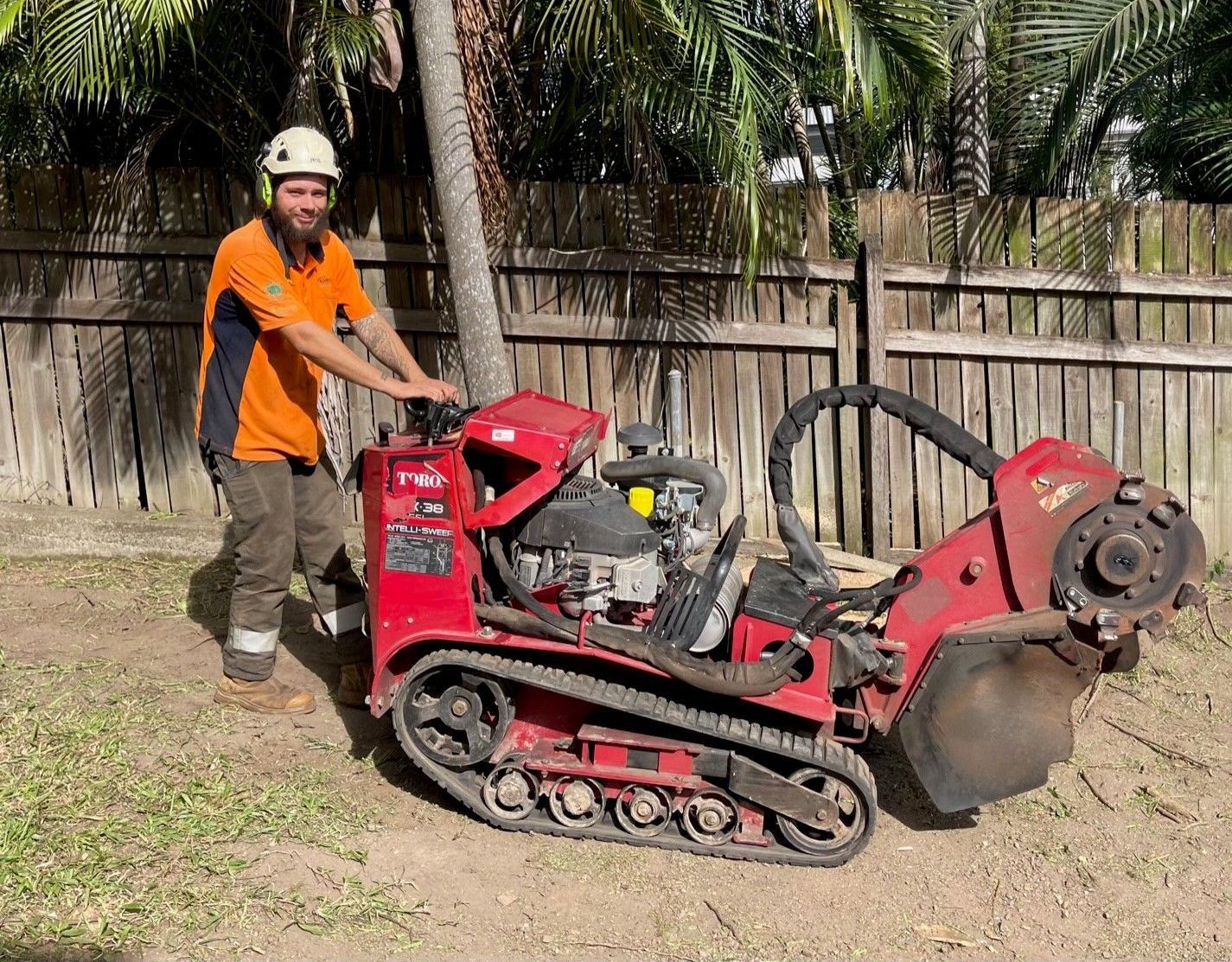
A stump grinder uses a rotating cutting wheel to progressively reduce the stump into small pieces. The stump is normally ground below the surrounding ground level so the area can be backfilled and incorporated back into the yard.
- Most underground roots remain in place.
- Usually creates less soil disturbance.
- Often faster than excavating the root mass.
- Can suit lawns, garden beds and general tidy-up work.
- Grinding depth can vary depending on access and what the area will be used for afterwards.
Stump Removal
Physical stump removal involves digging, pulling or excavating the stump and substantial root material from the ground. The exact method depends on stump size, access, soil and what machinery can safely reach the site.
- Removes more of the root crown and major roots.
- Creates a larger hole and more ground disturbance.
- Can be useful before construction or major excavation.
- May require machinery on larger stumps.
- Does not necessarily remove every lateral or fine root from the property.
Which One Should You Choose?
Does Stump Grinding Stop the Tree Growing Back?
Often, but not universally.
Grinding removes the stump's main above-ground growth point, and the remaining roots gradually lose stored energy and decay. However, some tree species are particularly good at producing stump sprouts or new shoots from lateral roots.
University extension guidance on woody plants notes that some species can continue to resprout from underground roots after the main stem is cut. In other words, the result depends partly on what species was removed, not simply on whether a grinder was used.
“Stump Ground” Does Not Mean “Every Root Is Gone”
Most of a mature tree's root system remains underground after ordinary stump grinding. Those roots generally break down over time, but they can affect soil levels and future landscaping as they decay.
Can You Replant Where the Old Tree Was?
You can reuse the area, but planting a new tree directly into the exact same spot is not always the best approach.
After grinding, the area can contain:
- remaining structural roots beneath the soil;
- woodchip mixed through the upper soil;
- a void or loose fill where the stump was ground;
- future settlement as roots decay; and
- in some cases, remnants of a disease that affected the original tree.
Where space allows, positioning a replacement tree away from the original stump location can give it a better volume of undisturbed soil for establishment.
What About Diseased Trees?
This is one situation where the reason for removing the original tree matters.
Some root-decay organisms can persist in old stumps and woody roots. For example, University of Minnesota Extension recommends removing stumps and as many affected roots as possible where trees are infected with Armillaria root rot because the fungus can survive in woody material and spread to susceptible roots nearby.
That does not mean every diseased tree requires total excavation. It means stump treatment should be considered as part of the original diagnosis rather than assuming ordinary grinding is always the correct answer.
What Determines the Cost of Stump Work?
| Factor | Why It Matters |
|---|---|
| Stump diameter | A larger stump contains more material and generally requires more machine time. |
| Species and wood density | Some stumps are substantially harder or more fibrous than others. |
| Access | Gates, steps, retaining walls, narrow side access and steep ground can limit which machine can reach the stump. |
| Grinding depth | A shallow lawn tidy-up and deeper clearance for landscaping are not necessarily the same job. |
| Surface roots | Large exposed roots around the stump can increase the area requiring grinding. |
| Nearby structures or services | Fences, paving, irrigation, underground services and buildings can affect how close equipment can safely work. |
| Number of stumps | Multiple stumps can change the overall efficiency and scope of the job. |
So Which Is Better?
Neither method is automatically “better”. They solve different problems.
For a typical residential yard where the main goal is to remove a mowing obstacle, tidy the landscape or prepare a garden bed, stump grinding is often enough.
More extensive removal becomes worth considering when the stump and root mass physically interfere with construction, excavation or another specific use of the site.
The practical choice should be based on what you plan to do with the area afterwards—not simply on the idea that removing more roots must always be better.
Stump Grinding and Removal in Brisbane
GDE Tree Services can assess the stump, access and planned use of the area and provide a free written quote for the most practical method.
Frequently Asked Questions About Stump Grinding
What is the difference between stump grinding and stump removal?
Stump grinding uses a specialised machine to reduce the stump below ground level while most of the root system remains in the soil. Stump removal involves physically extracting the stump and a larger portion of the main roots, creating a bigger excavation.
Does stump grinding remove all the roots?
No. Stump grinding removes the stump and may grind some larger surface roots, but most roots remain underground and gradually decay over time.
Does stump removal mean every root is dug out?
Usually not. Full stump removal generally means excavating the stump and the major root mass around it. Fine roots and roots extending further through the soil can remain.
Can a tree grow back after stump grinding?
It depends on the species. Many stumps do not regrow once the tree and stump have been removed, but some trees can produce shoots from remaining roots or stump tissue. Species with strong suckering or resprouting habits may need additional management.
Can I plant another tree where a stump was ground?
It is possible, but planting directly into the same spot is not always ideal. Remaining roots, woodchip, settling soil and the old root zone can make establishment difficult. Moving the new tree slightly away from the old stump is often more practical.
Is stump grinding less invasive than stump removal?
Generally yes. Grinding usually creates less excavation and disturbance because the main root system stays in place. Full stump extraction can disturb a much larger area of soil.
When is full stump removal worth considering?
It can be useful where excavation or construction requires the root mass to be cleared, where a large stump physically blocks planned works, or in some disease situations where infected stump and root material needs to be removed.
Which option is normally more affordable?
Stump grinding is often the simpler and less labour-intensive option, but cost depends on stump diameter, species, access, surrounding obstacles, depth required and whether multiple stumps are being treated.
Got a Stump in the Way?
GDE Tree Services can inspect the stump and access and provide a free written quote for grinding or removal.
Request a Free Written QuoteStump treatment depends on tree species, stump size, access, intended land use and whether disease is involved. This article provides general information only.