Planting Trees Too Close to Your House: 6 Risks to Consider
A well-placed tree can shade a home, soften the landscape and become one of the best features of a property. Problems usually begin when a tree that looked small at planting time reaches maturity in a space that was never large enough for its canopy or root system.
Good planning can reduce the need for repeated tree trimming and pruning, while also keeping branches, roots and falling debris further away from buildings, underground services and high-use areas.
How Far Should a Tree Be From a House?
Queensland Building and Construction Commission guidance says trees should generally be planted at least 1 to 1.5 times their mature height away from a building so roots do not interfere with footings.
That is a useful planning guide rather than a universal rule for every site. Mature canopy width, soil type, drainage, underground services and the tree species should all influence the final position.
1. Tree Roots and Underground Pipes
Tree roots naturally grow towards areas where moisture and oxygen are available. Underground sewer and stormwater pipes can become attractive where water escapes through an ageing joint, crack or other defect.
Once fine roots enter an opening, they can continue growing inside the pipe, restrict flow and trap material that contributes to recurring blockages. Urban Utilities describes tree roots as the leading cause of sewer-pipe blockages and recommends keeping trees away from sewer lines when planning new landscaping.
If slow drains, repeated blockages or sewer problems suggest roots may already be inside the pipework, a licensed plumber such as JPR Plumbing can investigate the drainage side of the problem. JPR services Brisbane and Logan and uses CCTV drain inspections to identify root intrusion and other underground blockages before repairs are planned.
Tree and plumbing work sometimes need to be coordinated. Cutting major roots without understanding their role in tree stability can create a different problem, so confirming what is happening inside the pipe first is the better starting point.
2. Footings, Foundations and Soil Moisture
The old idea that roots simply grow underneath a house and push the foundations upwards is an oversimplification.
QBCC explains that footings move as soil moisture changes. On reactive soils, a large tree close to a building can influence moisture levels around the foundation as its roots take up water, while roots can also physically interfere with structures where space is inadequate.
The practical lesson is the same: allow enough room for the mature tree and its root system, and avoid selecting a large species for a narrow space beside the house.
3. Branches Over Roofs and Gutters
A canopy over the roof can create regular maintenance even when the tree itself is healthy. Leaves, flowers, bark and small twigs can accumulate in gutters and downpipes, particularly from trees with heavy seasonal leaf or flower drop.
QBCC recommends keeping gutters and downpipes clear of leaves and debris as part of normal home maintenance because blocked drainage can contribute to roof and water problems.
Branches rubbing against roofing or sitting heavily over a house can also be worth addressing before they become larger clearance issues.
4. Trees Touching the House
Trees and shrubs growing directly against walls, eaves or roofing can make building maintenance more difficult. They can restrict access for inspections, hold moisture and debris against parts of the structure and give insects or other pests additional routes onto the building.
What About Termites?
It is too simplistic to say that a tree branch touching the roof will “bring termites into the house”. Termite risk is more complex than that. Maintaining sensible vegetation clearance is still worthwhile because it improves access for inspections and reduces unnecessary contact between landscaping and the building.
5. Storm Exposure Close to the House
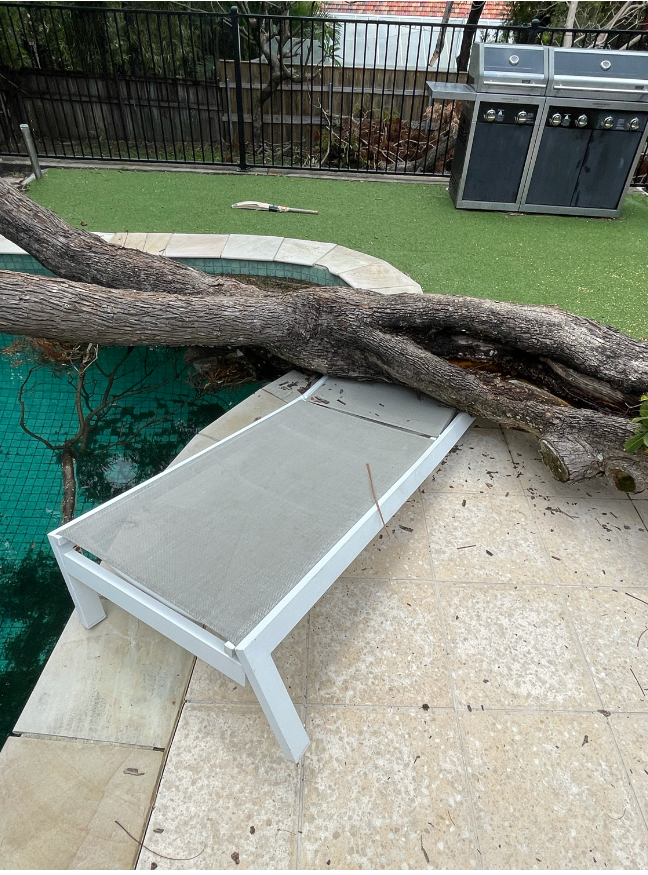
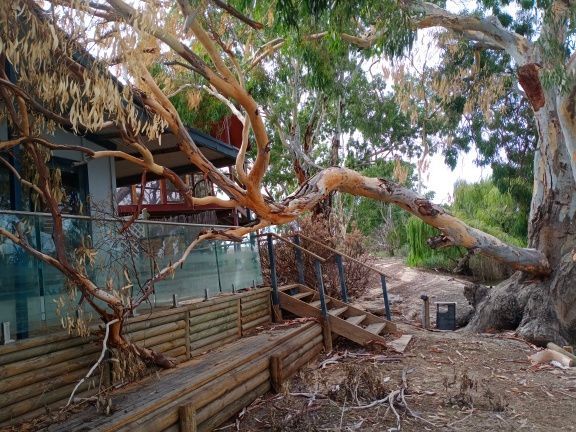
A tree beside a house is not automatically dangerous simply because it is close. The concern is what can reach the structure if a branch breaks or the tree develops a structural problem.
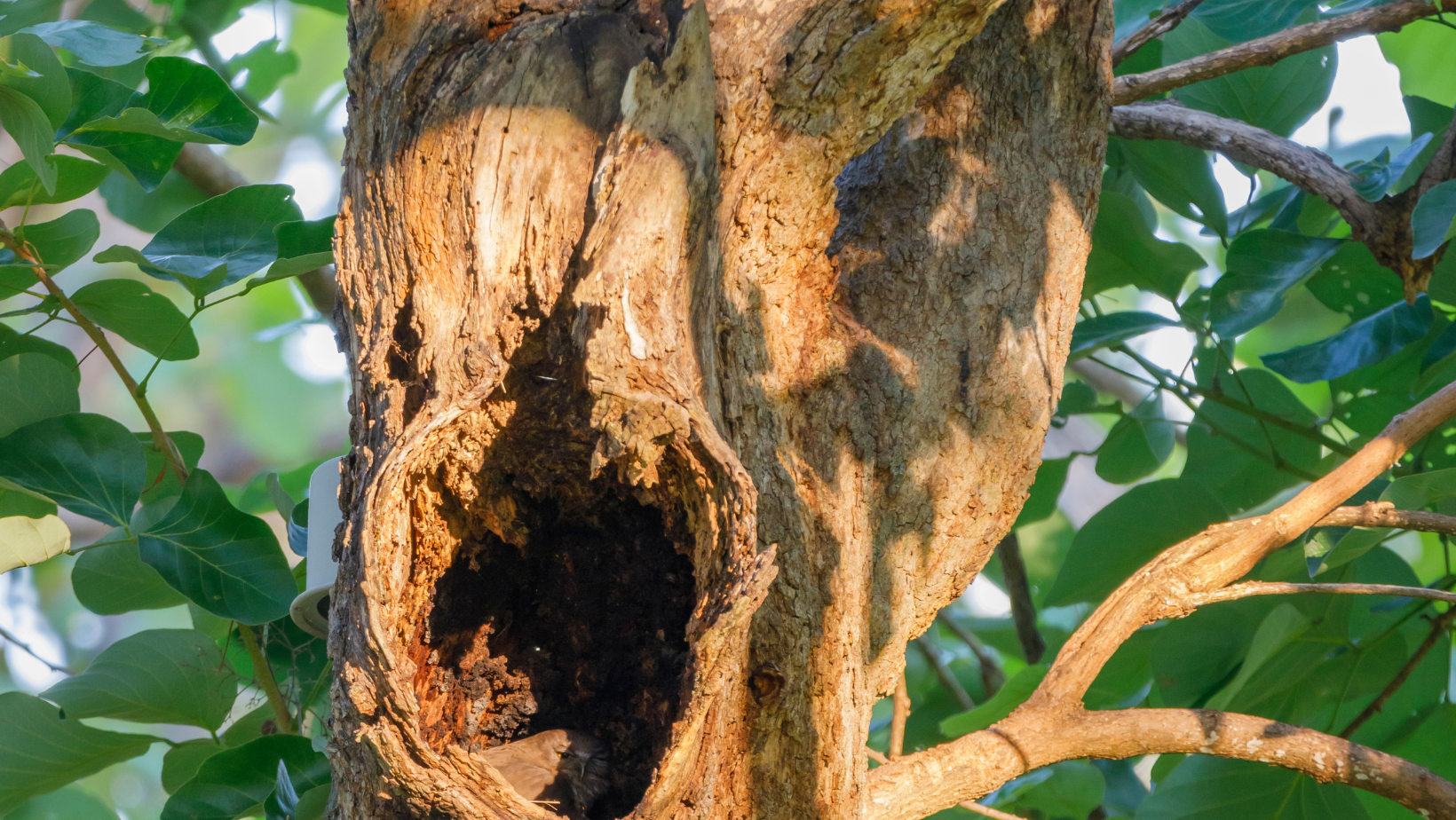
Large overextended limbs, deadwood, storm damage, cracks and changes in tree stability deserve more attention when a roof, bedroom, driveway or frequently used outdoor space sits directly beneath them.
The closer the target, the more important it becomes to inspect actual defects rather than relying on assumptions about the species or tree height.
6. A Lifetime of Corrective Pruning
One of the biggest hidden costs of planting too close to a house is ongoing maintenance.
A tree whose natural canopy wants to occupy the same space as the roof may need repeated branch reduction for decades. That does not necessarily mean the tree must be removed, but it is a sign that the site and mature tree size were never an ideal match.
Good tree selection at planting time is far easier than trying to permanently keep a large-growing tree much smaller than its natural form.
Useful Spacing Guidelines for Brisbane Properties
| What You Are Planting Near | Useful Guidance | Why It Matters |
|---|---|---|
| House or other building | QBCC says trees should generally be 1 to 1.5 times their mature height away from the building. | Helps reduce interference between roots, soil moisture and footings. |
| Sewer pipes | Urban Utilities recommends at least 3 metres from sewer pipes as a general rule. | Reduces the likelihood of roots reaching vulnerable pipe joints and defects. |
| Roof and gutters | Allow for mature canopy width rather than nursery-tree size. | Reduces leaf buildup, branch rubbing and continual clearance pruning. |
| Driveways and paths | Consider mature trunk diameter, root zone and canopy drop. | Helps avoid future conflicts with paving, vehicles and pedestrian areas. |
| Powerlines and services | Choose a species whose mature height and canopy suit the available clearance. | Avoids creating a long-term conflict with infrastructure. |
See QBCC's home maintenance guidance and Urban Utilities' advice on planting around pipes for the current local recommendations.
Already Have a Large Tree Close to the House?
Do not assume removal is automatically necessary. Start by identifying the actual conflict.
When Removal May Be the Better Long-Term Option
Some established trees simply do not fit the space they were planted in. If a tree is structurally compromised, repeatedly conflicts with the building or services, or cannot be maintained without continual heavy reduction, removal may become the more practical long-term option.
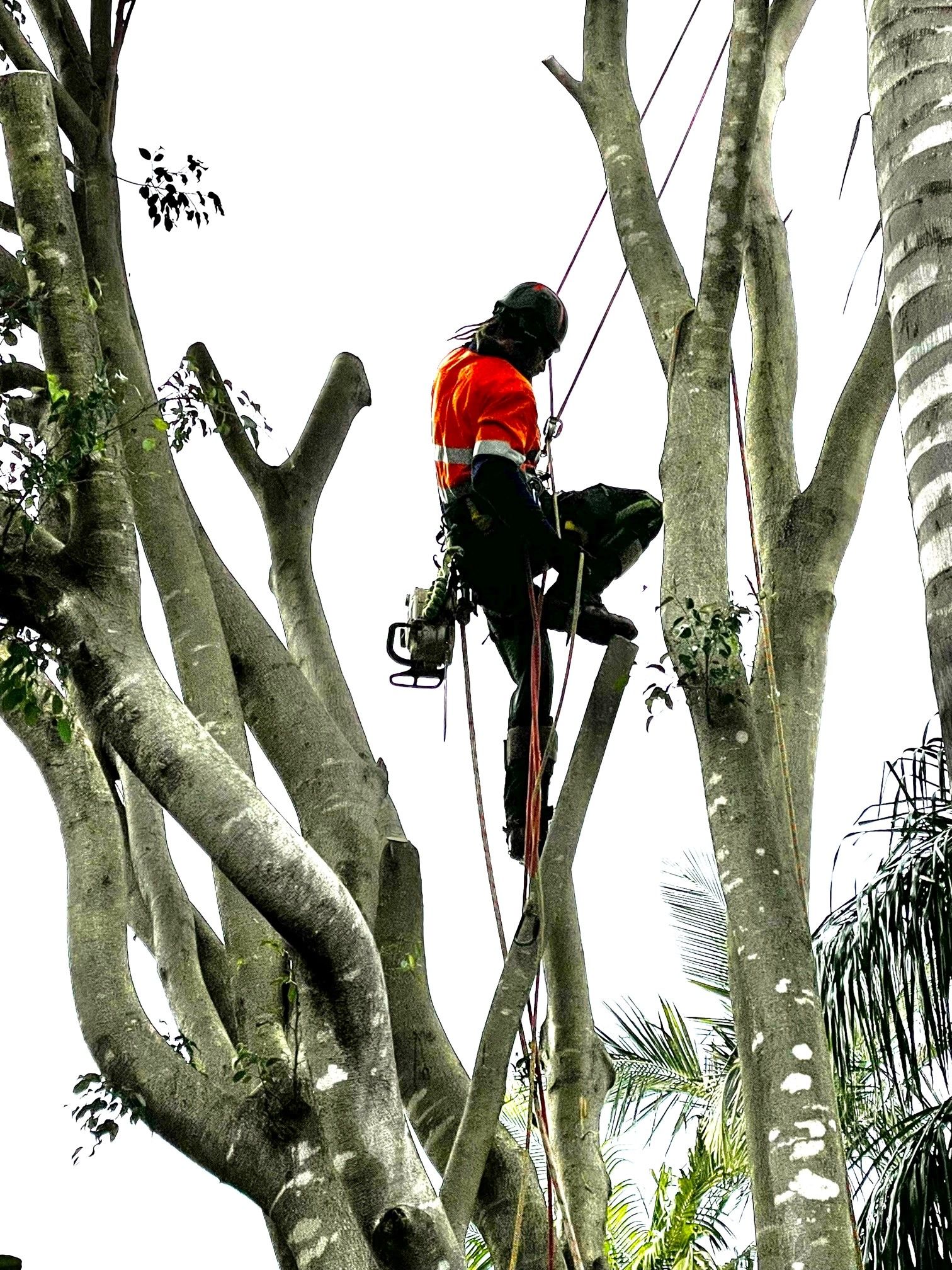
On properties where the tree can be safely brought down into a suitable open area, tree felling may be one removal method. Trees in confined residential positions can require sectional dismantling instead.
Any relevant Council vegetation controls should be checked before removing protected trees.
Managing Trees Around Brisbane Homes
GDE Tree Services can assess established trees that are crowding roofs, structures or access areas and provide a free written quote for appropriate pruning or removal where required.
Frequently Asked Questions About Trees Near Houses
How close is too close to plant a tree to a house?
There is no single distance that suits every tree. Queensland Building and Construction Commission guidance says trees should generally be planted at least 1 to 1.5 times their mature height away from a building so roots do not interfere with footings. The mature canopy, soil, services and site conditions also matter.
Can tree roots break sewer pipes?
Roots commonly enter underground pipes through small joints, cracks or defects where moisture is available. Once inside, they can expand, trap debris and contribute to recurring blockages and pipe damage.
How far should trees be planted from sewer pipes?
Urban Utilities recommends, as a general rule, planting at least 3 metres from sewer pipes and choosing slower-growing plants with less aggressive root systems near underground services.
Can tree roots damage house foundations?
Trees can affect footings, but the mechanism is not always roots physically lifting a house. In reactive soils, large trees can influence soil moisture around foundations, while roots can also interfere with structures when planted too close. Species, soil and distance all matter.
Are branches touching the roof a termite risk?
Vegetation touching a building can create unwanted access points and can make inspection and maintenance more difficult, but it is too simplistic to say a branch automatically causes a termite infestation. Keep sensible clearance and maintain regular pest inspections where termites are a concern.
Should I remove a healthy tree just because it is close to the house?
Not automatically. Many established trees can be managed with appropriate pruning and monitoring. Removal becomes more relevant where the tree is fundamentally unsuitable for the space, creating repeated structural or service conflicts, or cannot be managed reasonably.
What should I do if tree roots are already blocking a drain?
A plumber can inspect the drainage system and confirm whether roots have entered or damaged the pipe. Tree work should then be coordinated with the plumbing issue rather than cutting major roots blindly, because removing structural roots can affect tree stability.
Can pruning stop roots growing towards a house?
Canopy pruning is not a reliable way to control underground root direction. Root management needs to consider tree health, stability, services, soil and the actual source of the conflict.
Is a Tree Getting Too Close to Your House?
GDE Tree Services can inspect the tree and property and provide a free written quote for the tree work required.
Request a Free Written QuoteThis article provides general landscaping and tree-care information. Building movement, drainage faults and structural tree risk can require assessment by the relevant qualified professional.