Storm Season Tree Preparation in South East Queensland: 10 Things to Check Before Severe Weather
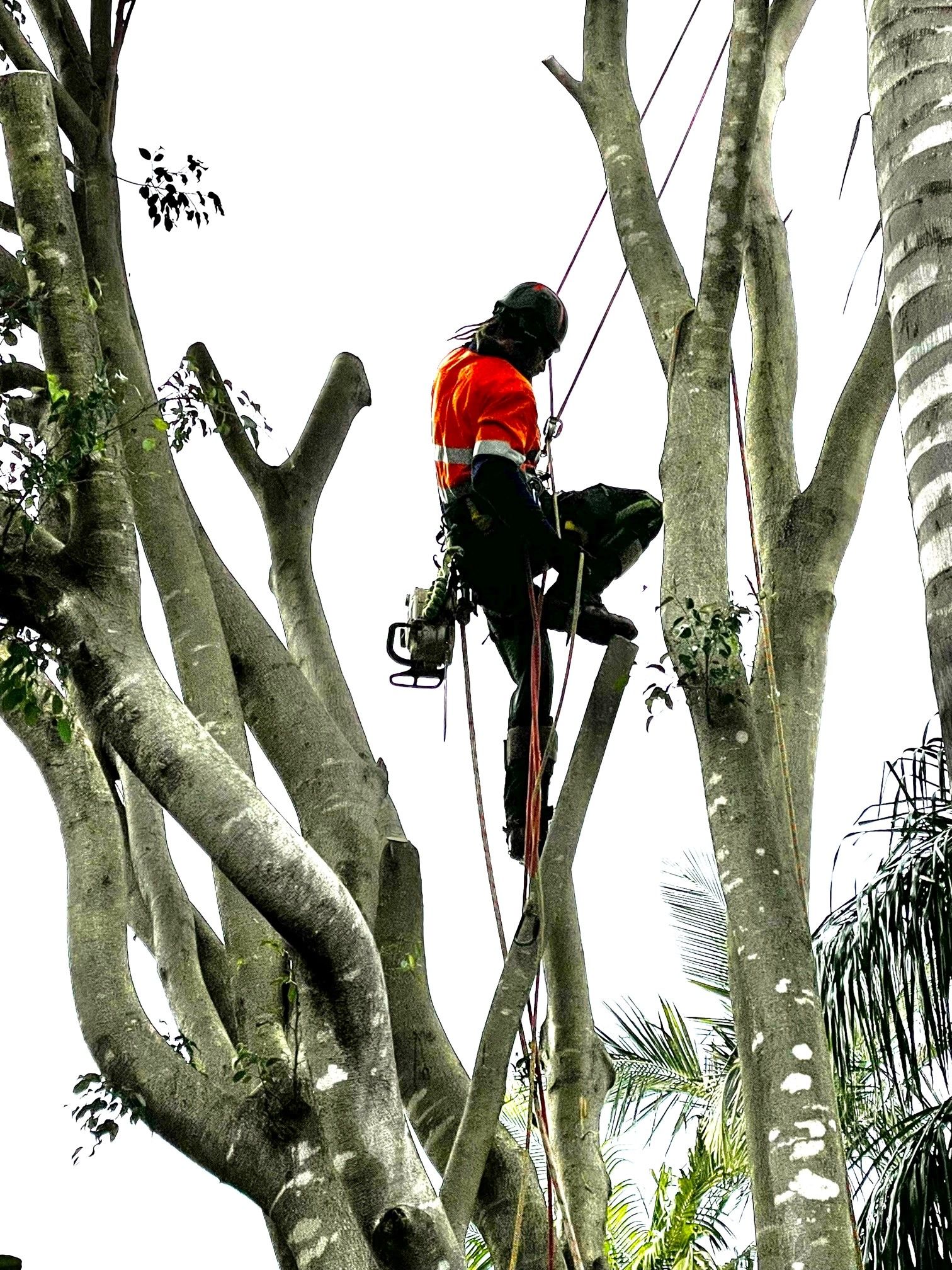
Storm preparation is most useful before damaging winds and heavy rain are on the radar. For trees around homes, the aim is not to cut everything back—it is to identify specific problems such as deadwood, broken branches, roof clearance issues or recent structural changes while there is still time to deal with them safely.
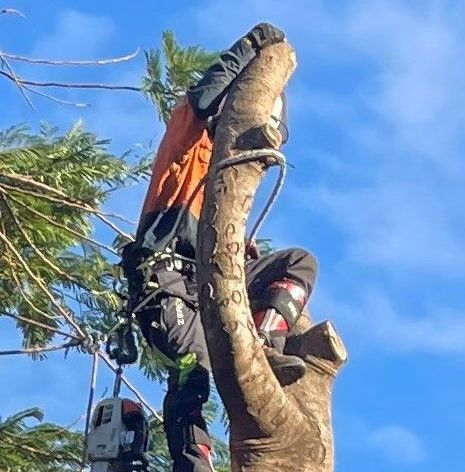
Where branches need attention, professional tree trimming and pruning in Brisbane can target the actual issue without treating every tall or leafy tree as a storm hazard.
2026 Climate Update: El Niño Is Relevant, But It Is Not the Whole Forecast
At the time of this update in August 2026, the Bureau of Meteorology says the El Niño–Southern Oscillation is in an El Niño phase. The Bureau's July outlook said the event was expected to continue into summer, while much of eastern Australia had an increased chance of below-average rainfall through August to October.
That does not mean South East Queensland can ignore severe storms. Queensland SES says severe storms can affect all parts of the state and can occur at any time of year. The Bureau also stresses that Australia's weather is influenced by more than ENSO alone, so current warnings and long-range forecasts are more useful than assuming every El Niño produces the same local conditions.
Check the Bureau of Meteorology's current long-range forecast.
10 Things to Check Before Severe Weather Arrives
Look for Dead, Broken or Hanging Branches
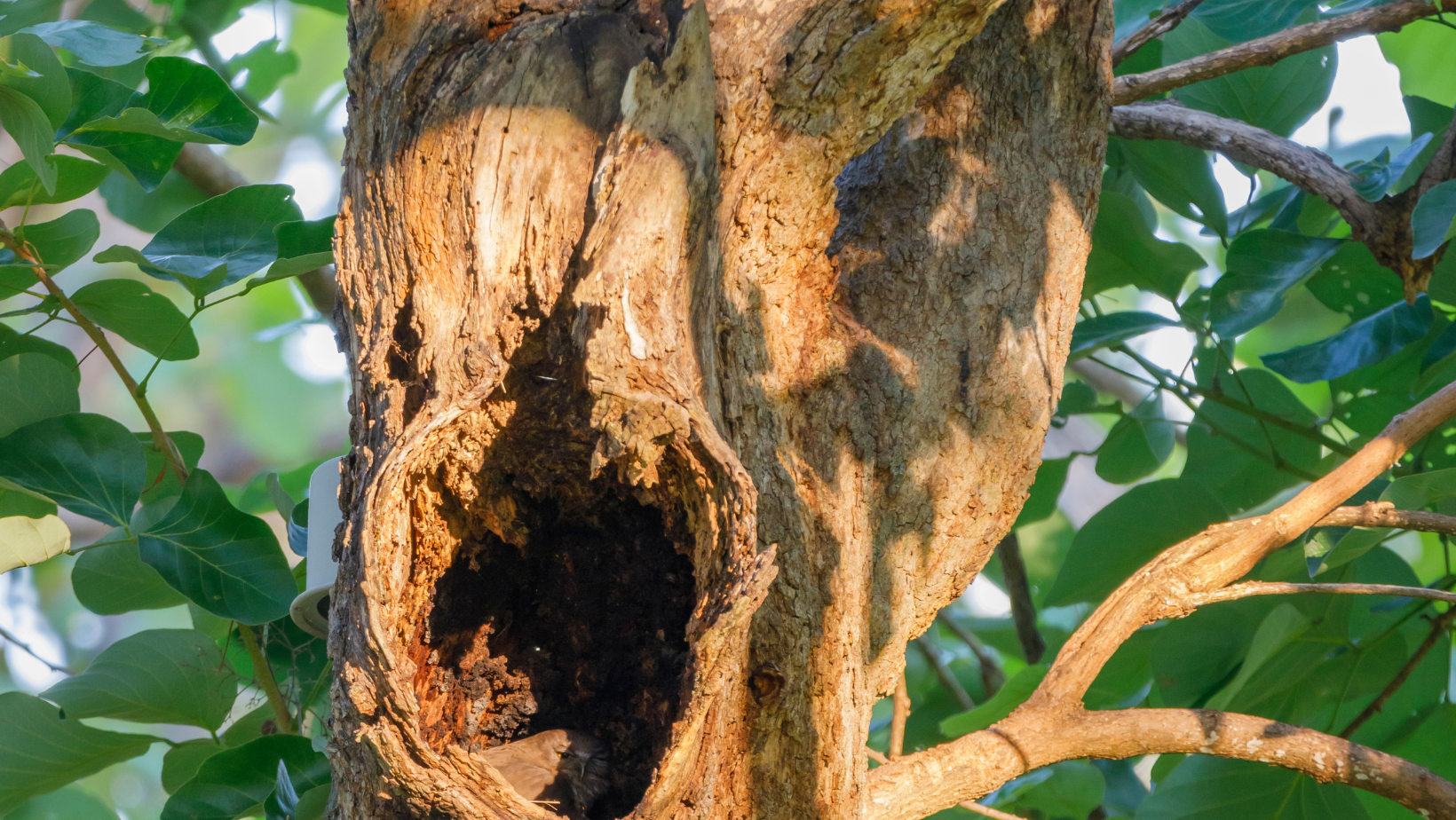
Deadwood and partially detached branches deserve attention where they sit over roofs, driveways, paths, cars or outdoor living areas. A few dead twigs are very different from a large suspended limb, so concentrate on the size, position and condition of the branch rather than simply trying to remove all dead material.
Check What Is Actually Overhanging the House
Branches touching the roof, rubbing on structures or creating a genuine clearance problem may need selective pruning. The objective should be enough clearance for the property—not stripping healthy canopy simply because a branch is somewhere above the roofline.
Look for Fresh Cracks or Storm Damage
Inspect the tree from ground level for fresh splits at major branch unions, broken tops, torn limbs or damage left by previous storms. New defects matter more than the fact that a tree is simply large or old.
Pay Attention to Changes in Lean or the Root Zone
A tree that has always leaned is not necessarily unstable. A recent or increasing lean, lifting soil, root-plate movement or changes after prolonged wet weather are more significant and warrant assessment.
Do Not Automatically Reduce the Height of Tall Trees
Routine height reduction is not a universal storm-preparation treatment. Significant crown reduction removes live canopy and should have a clear objective based on the tree's structure, species, condition and surroundings.
Clear Gutters and Downpipes
Leaves and debris can restrict roof drainage during intense rain. Queensland SES recommends keeping gutters and downpipes clear so water can drain away quickly during storms.
Secure Loose Items Around the Yard
Outdoor furniture, toys, trampolines and garden equipment can become wind-blown debris. Energex and Queensland emergency-preparedness guidance recommend securing loose items before cyclones or high winds.
Prepare an Emergency Kit Before You Need It
Get Ready Queensland recommends preparing an emergency kit with essentials such as food, drinking water, medication, first aid supplies, a torch, spare batteries, a battery-powered radio, phone chargers and power banks. The kit should suit the household and allow for extra supplies where isolation is possible.
Plan for Pets, Vehicles and Household Members
Include pets in the household severe-weather plan, know where vehicles can be moved if hail or falling branches are forecast, and make sure everyone knows where the emergency kit and important contact information are kept.
Know Where Your Official Warnings Will Come From
Follow Bureau of Meteorology warnings and your local council's disaster information. Brisbane residents can also register for Council's free location-based Severe Weather Alert Service.
Why “Make the Tree Shorter” Is Not a Storm-Safety Plan
The old version of this article recommended reducing the height of tall trees to improve their stability. That is too broad.
A tall healthy tree with appropriate structure does not automatically need height reduction, while a shorter tree can still have deadwood, weak unions, root damage or storm-related defects. Heavy pruning also changes the canopy and can stimulate new growth, so it should not be carried out simply to make a tree look less imposing.
Storm Preparation Should Target Identifiable Problems
Dead or hanging branches, fresh damage, significant cracks, clearance conflicts and changes in stability are useful things to assess. No pruning method can guarantee that a tree will not fail in severe weather.
Severe Weather Alerts and Household Preparation
Brisbane Severe Weather Alerts
Brisbane City Council's free alert service can provide location-based notifications for severe thunderstorms, hail, destructive winds, flooding and other events by email, SMS or voice message.
Get Ready Queensland
Queensland's official preparedness program recommends three basic steps: know your risk, make a household emergency plan and pack an emergency kit.
What to Do Once the Storm Has Started
Tree maintenance is a before-the-storm activity. Once damaging winds, lightning or severe weather are affecting the property, stay clear of trees and do not attempt to cut branches yourself.
After the storm, treat damaged trees cautiously. Broken branches can remain suspended in the canopy, trunks can be split and root systems can shift in saturated soil.
Storm and Flood Assistance
For non-life-threatening flood and storm emergency assistance in Queensland, contact the SES on 132 500. For a life-threatening emergency, call Triple Zero (000).
Fallen Powerlines
Energex says to assume fallen powerlines are live, stay at least 10 metres away and warn others to keep clear. Fallen powerlines can be hidden in tree debris after a storm.
Report fallen powerlines to 000 or Energex on 13 19 62.
When Storm Damage Needs Professional Tree Work
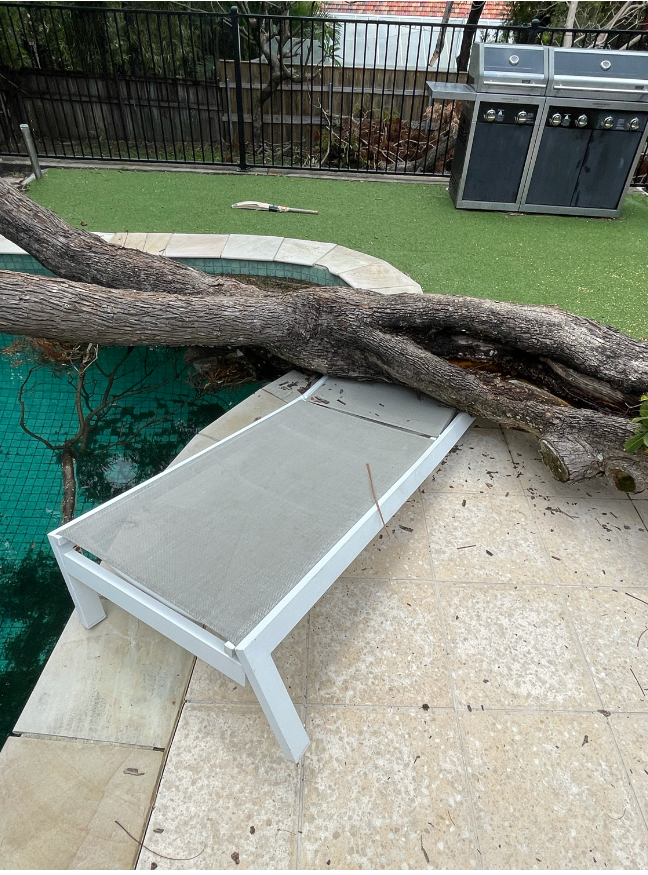
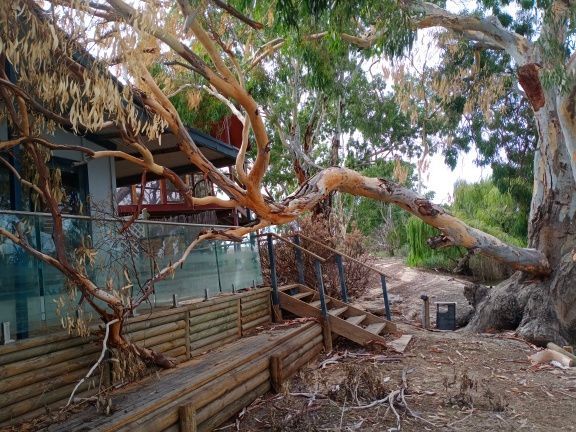
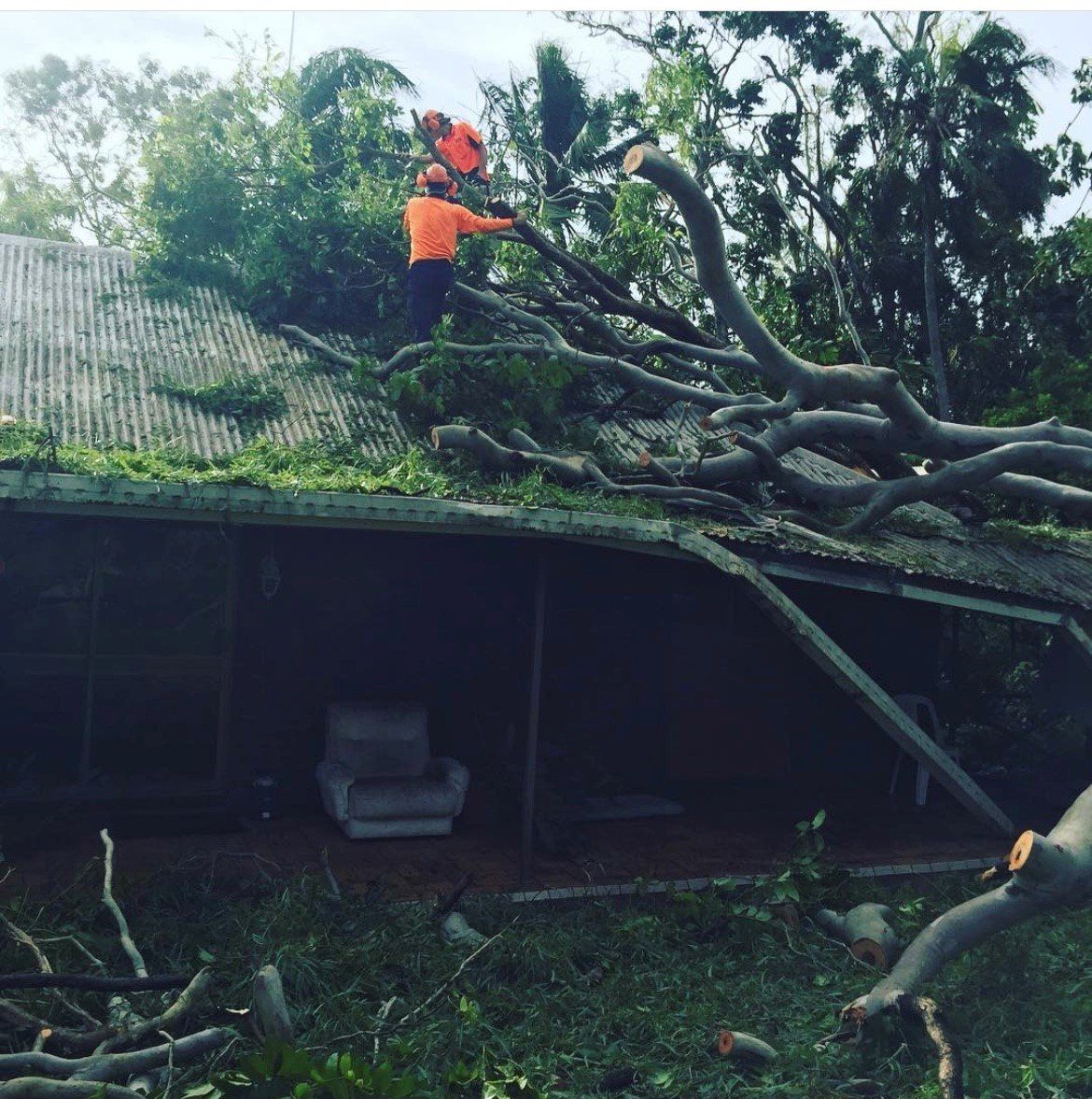
Not every fallen twig needs an arborist, but large damaged limbs, split trunks, partially uprooted trees or suspended branches can be difficult to predict and dangerous to work around.
For trees that remain unstable or are blocking safe access after severe weather, emergency tree removal in Brisbane may be required. Where there is no immediate danger, the safer approach is to keep people away from the damaged area and arrange an assessment rather than rushing into cutting.
Prepare the Trees Before the Warning Arrives
GDE Tree Services can inspect tree-work requirements around Brisbane properties and provide a free written quote for pruning, clearance or removal work that is genuinely needed.
Frequently Asked Questions About Storm Season Tree Preparation
When should I have trees checked before storm season?
Do it before severe weather is forecast, particularly if a tree has deadwood, recent storm damage, large limbs over buildings, fresh cracks, a changed lean or visible movement around the root zone. Waiting until a severe storm warning is active can limit what work can be carried out safely.
Should tall trees be reduced in height before storm season?
Not automatically. Height reduction is a significant pruning treatment and should only be used where there is a clear arboricultural reason. Routine height reduction does not guarantee that a tree will be safer in severe weather.
Does thinning a tree canopy make it storm-proof?
No. Selective pruning may address specific dead, damaged or structurally problematic branches, but no pruning method can guarantee that a tree will not fail during severe weather.
Should branches overhanging a roof be pruned before storms?
Branches that are dead, damaged, rubbing on the building or creating a genuine clearance issue may warrant attention. The aim should be targeted clearance rather than removing large amounts of healthy canopy without a reason.
What should I do with outdoor furniture before a severe storm?
Secure or move loose outdoor items such as furniture, toys, trampolines and garden equipment so they cannot become wind-blown debris. Queensland emergency-preparedness guidance recommends securing loose items before severe weather.
How do I receive severe weather alerts in Brisbane?
Brisbane City Council operates a free location-based Severe Weather Alert Service. Alerts can be delivered by email, SMS or voice message and can cover severe thunderstorms, hail, destructive winds, flooding and other events.
What should I do if a tree or branch brings down a powerline?
Stay at least 10 metres away, warn others to keep clear and assume the line is live. Energex says fallen powerlines should be reported immediately by calling Triple Zero (000) or 13 19 62.
Who should I call for storm damage that is not life-threatening?
Queensland SES provides non-life-threatening flood and storm emergency assistance on 132 500. For a life-threatening emergency, call Triple Zero (000).
Concerned About a Tree Before Storm Season?
Arrange a free written quote from GDE Tree Services for pruning, clearance or other tree work that may be required before severe weather.
Request a Free Written QuoteThis article provides general severe-weather preparation information. Weather outlooks, warnings and emergency guidance can change. Follow current Bureau of Meteorology, Queensland Government, SES, Energex and local council advice during severe weather.