How to Top a Tree? Why Tree Topping Is Usually the Wrong Approach
If a tree has grown too tall or wide for its location, cutting the entire top off can look like the quickest solution. In practice, indiscriminate topping can create new structural problems and ongoing maintenance. For property owners considering tree lopping in Logan, the better starting point is to identify the actual problem—height, branch clearance, storm damage, shading or a tree that has simply outgrown its space.
From there, the tree can be assessed for selective reduction, pruning, ongoing management or removal rather than automatically cutting the crown back to stubs.
What Is Tree Topping?
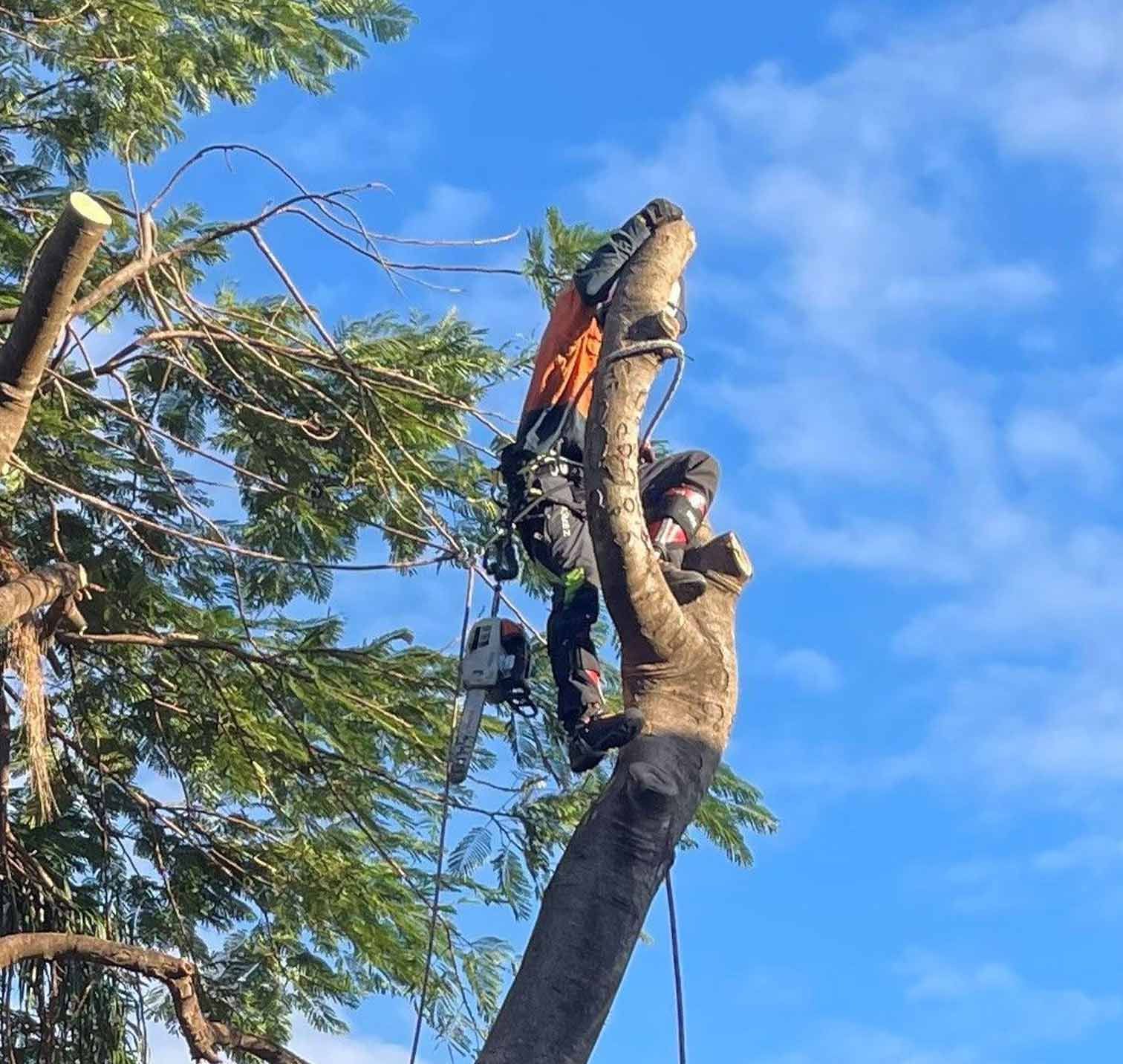
Tree topping is the indiscriminate cutting of the upper crown or major branches back to stubs, or back to lateral branches that are too small to take over the role of the removed branch.
The International Society of Arboriculture describes topping as one of the most harmful pruning practices because it can increase stress and decay, create unacceptable risk and destroy the tree's natural form.
Topping is not the same as properly planned height reduction. A professional reduction-pruning job selects individual branches and suitable pruning points rather than simply cutting a line across the top of the canopy.
Why Do People Consider Topping a Tree?
Most requests to “top” a tree begin with a genuine property problem. Common reasons include:
- a tree has grown taller than expected;
- branches are extending towards a roof, driveway or neighbouring property;
- the canopy is blocking a particular area of light or outlook;
- a large branch has been damaged;
- the owner is worried about storm exposure; or
- the tree was planted in a space that is too small for its mature size.
Those concerns may be valid, but topping is often a poor way to solve them. The first step should be identifying the objective and then choosing the least damaging practical treatment.
What Can Happen After a Tree Is Topped?
Loss of a Large Amount of Foliage
Leaves produce the energy a tree uses for growth and maintenance. Topping can suddenly remove a substantial proportion of the canopy, placing the tree under significant stress.
Rapid Replacement Shoots
Many topped trees respond by producing vigorous new shoots around the cuts. These can restore height surprisingly quickly, meaning the original height problem may return rather than disappear.
Weaker New Attachments
Replacement shoots can arise from tissue near the topping wound rather than developing with the same attachment as the original branch structure. As those shoots become larger, they can create future management concerns.
Large Wounds and Decay
Large topping cuts may be too big for the tree to effectively close over. Exposed wood can become a pathway for decay, particularly where numerous major branches are cut back at once.
Loss of Natural Form
Topping removes much of the structure that gives a tree its characteristic shape. The resulting canopy can look sparse initially and then become crowded with vertical regrowth.
More Ongoing Maintenance
Because vigorous regrowth may need repeated management, topping can turn a one-off attempt to reduce height into a recurring pruning problem.
Is Tree Lopping the Same as Tree Topping?
No—not when the terms are used carefully. Tree topping refers to indiscriminate cutting back to stubs or unsuitable laterals. Tree lopping is a broader term commonly used for cutting and reducing branches.
Professional lopping can be planned around a specific objective, such as reducing an overextended branch, managing clearance or reducing part of a canopy. The quality of the work depends on which branches are selected, where the cuts are made and whether the amount removed is appropriate for the individual tree.
This distinction is also reflected in Logan City Council's vegetation terminology. Council defines lopping as cutting or pruning branches, but says it does not include removing the trunk or pruning branches so severely that the tree is likely to die.
Better Alternatives to Topping
| What You Are Trying to Achieve | Better Option to Consider | How It Differs From Topping |
|---|---|---|
| Reduce overall height or spread | Crown or canopy reduction | Selected branches are shortened back to suitable laterals while retaining more of the tree's natural structure. |
| Create clearance from a roof, driveway or structure | Selective branch reduction or pruning | Work targets the branches creating the conflict instead of removing the entire upper crown. |
| Increase clearance beneath the canopy | Crown lifting | Selected lower branches are removed or shortened; the top of the tree is not indiscriminately cut off. |
| Address dead or damaged branches | Targeted pruning | Only the affected material is removed where appropriate. |
| Tree is fundamentally too large for the site | Consider removal and replacement | A suitably sized replacement can avoid decades of repeated severe pruning. |
For branches that need selective maintenance rather than whole-canopy reduction, professional tree trimming and pruning can target the actual clearance or branch issue.
Does Topping Make a Tree Safer in Storms?
Cutting a tree dramatically shorter does not automatically make it safer. A topped tree may develop large wounds, decay and vigorous replacement shoots that need further management.
Storm-risk work should instead focus on the individual tree. That may mean assessing deadwood, cracks, damaged limbs, weak unions, root movement, previous storm damage and branches that are genuinely overextended.
No Pruning Method Can “Storm-Proof” a Tree
Severe wind, saturated ground, hidden defects and falling neighbouring trees can still cause failure. The aim of professional pruning is to manage identifiable problems—not to promise that a tree cannot fail in extreme weather.
What if a Tree Has Already Been Topped?
A previously topped tree does not necessarily need to be removed immediately. Its future management depends on the species, condition, size of the old cuts and quality of the replacement growth.
In some cases, future pruning can concentrate on selecting better-positioned shoots, removing poorly placed regrowth and gradually developing a more manageable canopy. In others, extensive decay or repeated severe pruning may leave limited long-term options.
The important point is that corrective work is usually a process rather than another round of cutting all the new growth back to the same stubs.
When Removal May Be Better Than Repeated Topping
Sometimes a tree is simply incompatible with its location. It may have been planted too close to a building, beneath infrastructure or in a yard that cannot accommodate its mature size.
If keeping the tree would require repeated severe pruning for the rest of its life, removal and replacement with a more suitable species may provide a better long-term outcome.
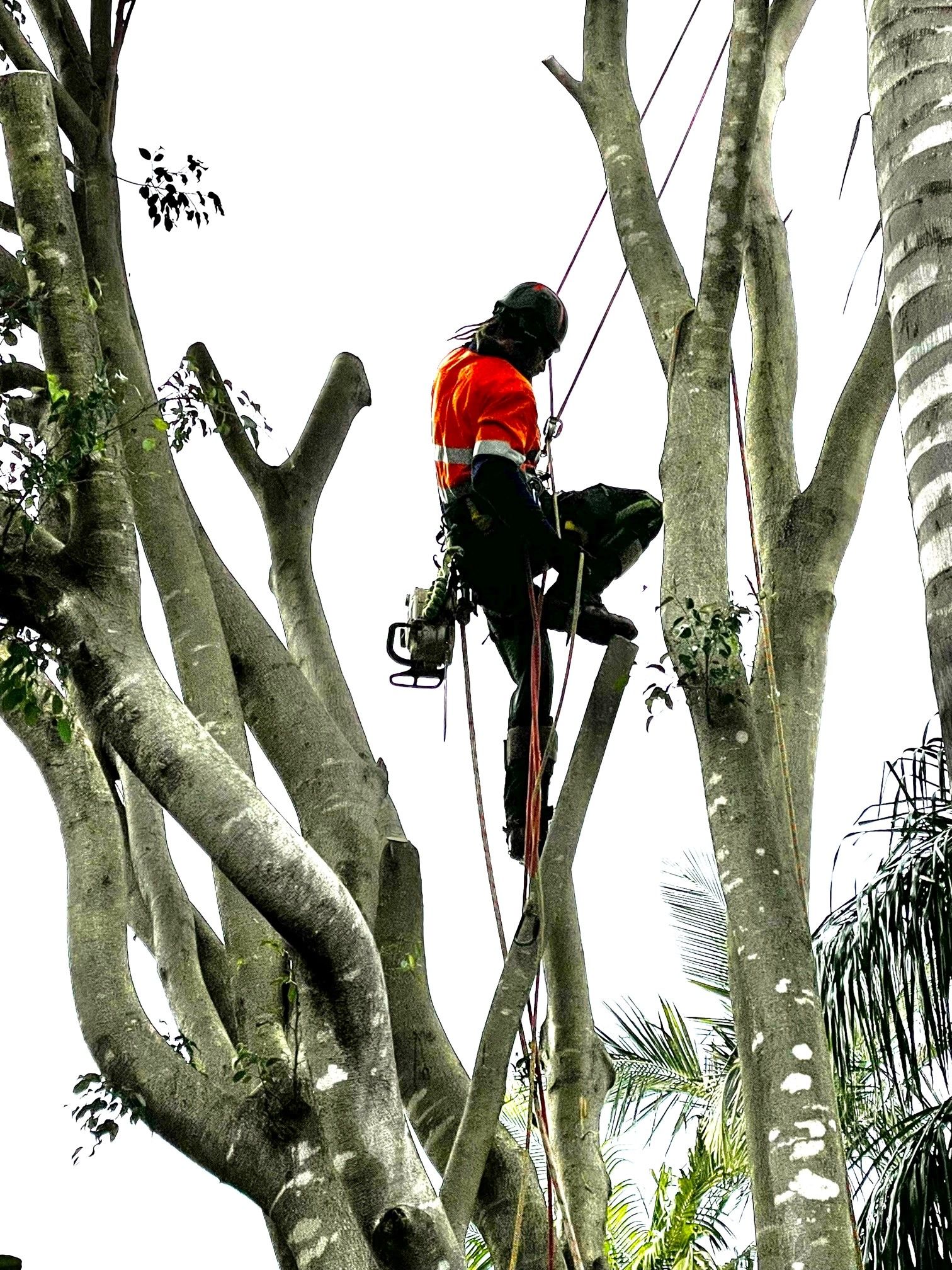
Where there is enough clear landing space, controlled tree felling may be one method used to remove a tree. Confined sites may require the tree to be dismantled in sections instead.
Tree Pruning and Vegetation Rules in Logan
Logan City Council distinguishes between ordinary branch lopping and vegetation clearing. However, protected vegetation rules can still apply depending on the property, vegetation type and planning overlays.
Council states that all native vegetation clearing within the Waterway Corridors and Wetlands Overlay requires approval, and other Biodiversity Areas Overlay controls can also apply.
Before removing a protected tree or carrying out work that may amount to clearing rather than ordinary branch pruning, check the property through Logan's vegetation-clearing information and PD Hub.
Need to Reduce the Size of a Tree?
GDE Tree Services has worked across Brisbane, Logan and South East Queensland since 1987. The team can inspect the tree and property and provide a free written quote based on what the tree actually needs rather than automatically recommending topping.
Frequently Asked Questions About Tree Topping
What does topping a tree mean?
Tree topping is the indiscriminate removal of the upper crown or large branches back to stubs or to lateral branches that are too small to take over the terminal role. It is different from planned reduction pruning.
Is topping a tree a good way to reduce its height?
Generally, no. Topping removes a large amount of foliage, creates large wounds and often stimulates vigorous shoots that can be weakly attached. Professional reduction pruning aims to reduce selected branches while retaining a more natural structure.
Is tree lopping the same as tree topping?
Not necessarily. Topping refers to indiscriminate cutting back to stubs or unsuitable laterals. Professional tree lopping can involve planned branch or canopy reduction for a specific objective, using cuts and a scope chosen for the individual tree.
What is crown reduction?
Crown reduction selectively shortens branches by pruning them back to suitable lateral branches. The aim is to reduce height or spread while retaining more of the tree's natural form and branch structure.
Does topping make a tree safer in a storm?
Not automatically. Topping can create decay and vigorous replacement shoots with weaker attachments. A tree with storm-risk concerns should be assessed for specific defects and managed according to those defects rather than simply having the top cut off.
Can a tree that has already been topped be repaired?
A topped tree cannot be restored instantly, but future pruning can often focus on managing the regrowth, selecting better-placed shoots and reducing structural problems over time. The options depend on the species, condition and extent of previous topping.
When is removing the tree better than repeatedly topping it?
Removal may be more practical when the tree is fundamentally too large for the available space, has serious structural problems or would require repeated severe pruning to remain compatible with the property. Where adequate landing space exists, controlled felling may be one removal method.
Do Logan tree-pruning rules distinguish lopping from clearing?
Yes. Logan City Council defines lopping as cutting or pruning branches and states that it does not include removing the trunk or pruning branches so severely that the tree is likely to die. Vegetation clearing rules can still apply depending on the property and vegetation involved.
Is Your Tree Too Tall or Too Large for Its Space?
GDE Tree Services can inspect the tree, discuss the problem you are trying to solve and provide a free written quote for appropriate pruning, lopping or removal where required.
Request a Free Written QuoteThis article provides general tree-care information. Suitable pruning and vegetation-management options depend on the tree, its condition and the property.