Where to Cut Branches When Trimming Trees
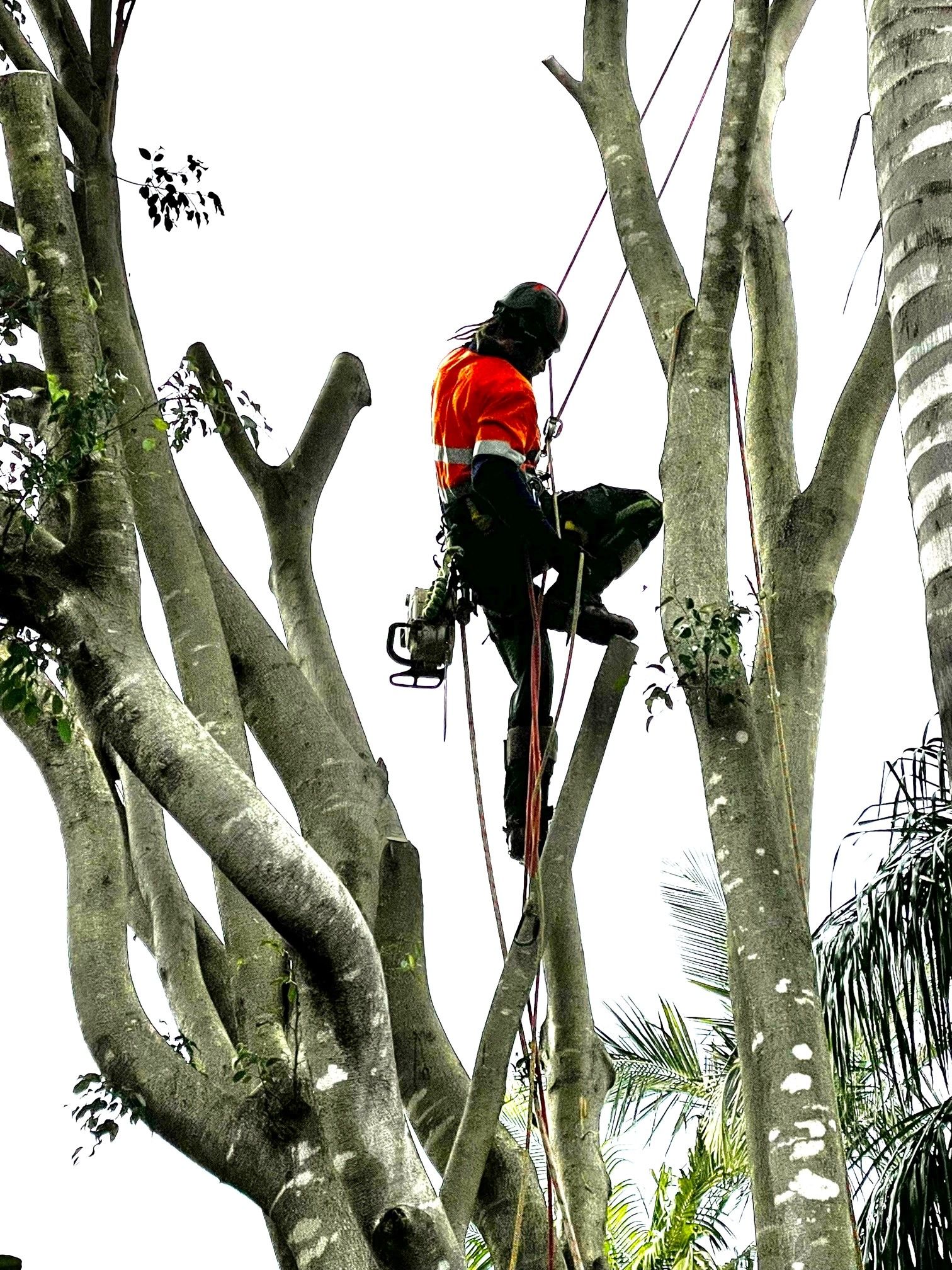
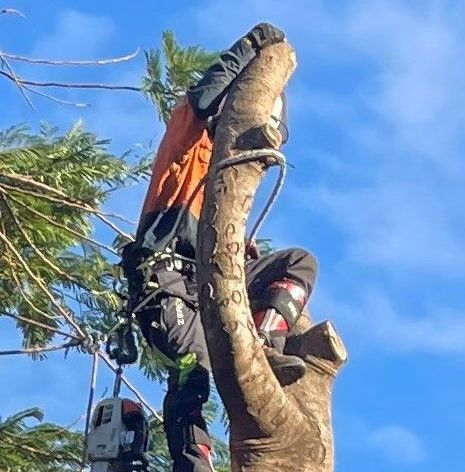
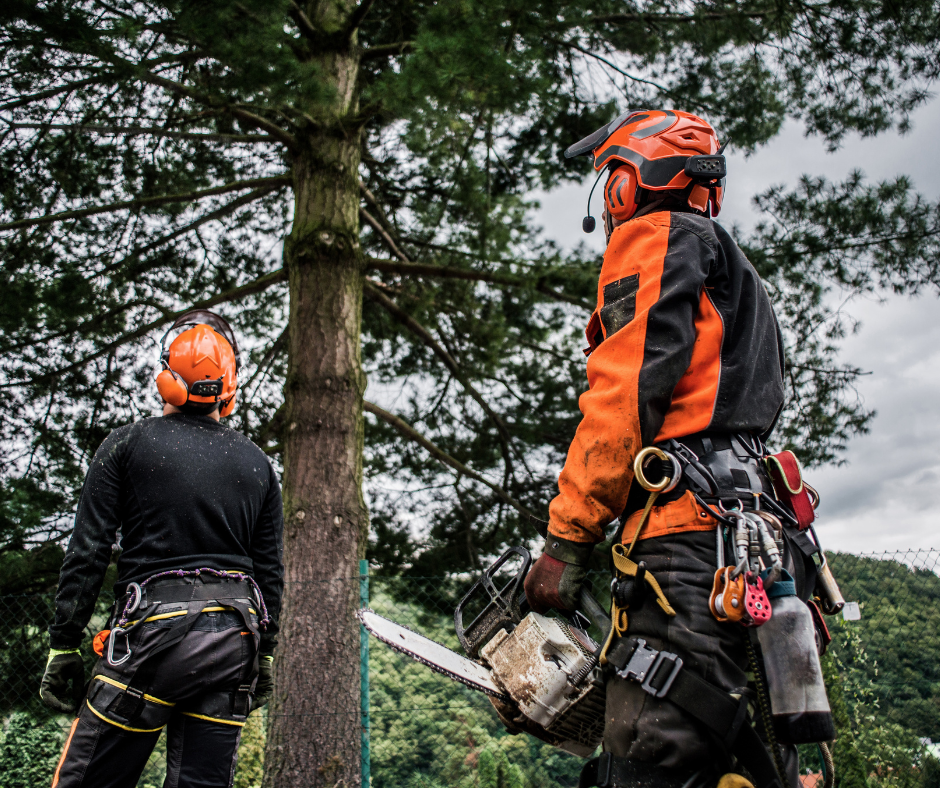
Correctly positioned pruning cuts can help protect a tree’s structure and avoid unnecessary damage. For larger branches, mature trees or work above ground level, professional tree trimming is safer than attempting to cut limbs without the right equipment or experience.
A poorly positioned cut can tear bark, damage the trunk, leave an unnecessary stub or create a larger wound than the branch required. Homeowners comparing Brisbane tree services should look for a team that can explain whether a branch needs selective pruning, reduction or complete removal.
This guide explains the branch collar, the branch bark ridge, the three-cut method for heavier limbs and the situations where trimming should be left to a professional tree crew.
Where should you cut a tree branch? When removing an entire branch, make the final cut immediately outside the branch collar. Do not cut into the collar, cut flat against the trunk or leave a long branch stub.
The branch collar is the raised or swollen area where the branch joins the trunk or a larger supporting limb.
Why the Position of a Pruning Cut Matters
Trees do not repair pruning wounds in the same way human skin heals. Instead, the tree gradually forms new tissue around the wound and limits the spread of damage within the wood.
An incorrectly positioned cut can:
- Remove protective tissue around the branch attachment
- Create a wound larger than necessary
- Tear bark down the trunk or supporting limb
- Leave a stub that dies back and deteriorates
- Encourage dense or weakly attached regrowth
- Change the tree’s natural shape and branch balance
Every pruning cut should have a clear purpose, such as removing deadwood, improving clearance, managing a damaged branch or guiding the development of a young tree.
Understanding the Branch Collar and Branch Bark Ridge
The Branch Collar
The branch collar is the raised or swollen area around the base of a branch. It may be clearly visible on some trees and much less obvious on others.
The final pruning cut should normally sit immediately outside this area rather than passing through it.
The Branch Bark Ridge
The branch bark ridge is the raised line of bark in the upper section where the branch meets the trunk or another limb.
A correct removal cut sits outside the bark ridge and branch collar while removing the branch cleanly.
Do not try to make the wound perfectly flat against the trunk. The correct angle follows the natural branch attachment rather than an arbitrary vertical or horizontal line.
How to Cut a Small Tree Branch
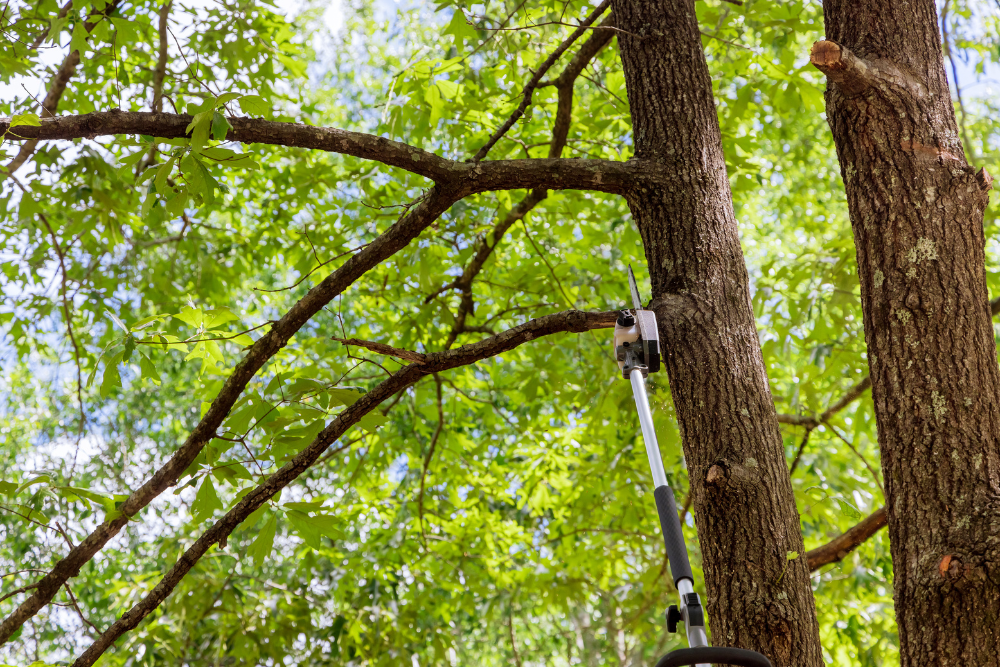
DIY pruning should be limited to small branches that can be reached safely from the ground and controlled by hand. Use clean, sharp secateurs, loppers or a pruning saw suited to the branch diameter.
-
Inspect the Branch Attachment
Locate the branch collar and bark ridge. Check that the branch is small enough to control and is not under unusual tension.
-
Position the Tool Outside the Collar
Place the blade immediately outside the branch collar. Do not cut into the trunk or leave an unnecessarily long stub.
-
Support the Branch and Make a Clean Cut
Support the branch as it is cut so its weight does not pull it down and tear the remaining bark.
-
Leave the Wound Uncovered
Pruning paint, tar and wound dressing are not routinely required. A correctly positioned cut is generally left to begin the tree’s natural wound response.
How to Remove a Larger Branch: The Three-Cut Method
A heavier branch should not be removed with one cut at the trunk. As the branch begins to fall, its weight can strip bark and wood down the supporting trunk or limb.
The three-cut method removes the branch weight first, leaving a smaller stub that can then be removed accurately outside the branch collar.
-
Make a Shallow Undercut
Make a shallow cut into the underside of the branch, generally 30 to 45 centimetres away from its attachment. Do not cut all the way through.
-
Remove the Weight of the Branch
Make a second cut from the top, slightly farther out than the undercut. The outer section should break away without stripping bark back towards the trunk.
-
Make the Final Branch-Collar Cut
Remove the remaining stub immediately outside the branch collar. Do not cut through the collar or make the cut flush with the trunk.
Do Not Attempt to Remove a Branch You Cannot Control
Even a relatively short limb can be extremely heavy. Where a branch could strike a person, roof, fence, vehicle or neighbouring property, it should be removed with suitable access and controlled rigging methods.
Flush Cuts and Stub Cuts: What Is the Difference?
Correct Branch-Collar Cut
- Removes the branch without cutting into the trunk
- Retains the branch collar
- Creates only the wound needed to remove the branch
- Supports the tree’s natural wound response
Incorrect Pruning Cut
- A flush cut slices into the collar and trunk tissue
- A stub cut leaves too much branch behind
- A single cut on a heavy limb can tear the bark
- An arbitrary heading cut can stimulate weak regrowth
Where to Cut When Shortening a Branch
When the aim is to shorten a branch rather than remove it completely, the cut should generally be made back to a suitable lateral branch.
The remaining lateral growth needs to be large enough and well positioned to continue the development of the shortened limb. Cutting at an arbitrary point can leave a stub and produce dense shoots around the wound.
Extensive reductions and work on mature trees should be planned carefully. For larger canopy management, a professional Brisbane tree lopper can assess whether selective reduction is suitable for the species and branch structure.
When Is the Best Time to Trim Trees in South East Queensland?
There is no single pruning season that suits every species. The timing depends on:
- The tree species
- Its age, health and current condition
- The amount of foliage being removed
- Whether the tree is flowering or producing fruit
- The reason the work is being undertaken
- Recent heat, drought, flooding or storm stress
Dead, broken or immediately hazardous branches may need attention as soon as it is safe to carry out the work. Non-urgent structural or canopy pruning should be timed around the particular tree rather than relying on a general calendar rule.
How Much of a Tree Can Be Pruned at Once?
There is no universal percentage that is appropriate for every tree. The amount that can be removed depends on the species, maturity, health, previous pruning and reason for the work.
Removing too much live canopy can:
- Reduce the tree’s ability to produce energy
- Expose previously shaded branches to intense sunlight
- Trigger rapid and poorly attached regrowth
- Place additional stress on a mature or unhealthy tree
- Alter how wind moves through the remaining canopy
Pruning should be limited to the amount needed to achieve a defined safety, clearance, structural or maintenance objective.
Common Tree Branch Trimming Mistakes
| Mistake | Why It Can Cause Problems | Better Approach |
|---|---|---|
| Cutting flush with the trunk | Removes the branch collar and creates a larger wound. | Cut immediately outside the branch collar. |
| Leaving a long stub | The remaining branch section may die back and deteriorate. | Remove the branch cleanly without cutting into the collar. |
| Using one cut on a heavy limb | The falling branch can strip bark from the trunk. | Use the three-cut method or engage a professional. |
| Removing excessive foliage | Can stress the tree and stimulate excessive regrowth. | Remove only what is required for a defined objective. |
| Topping the tree | Leaves large wounds and commonly produces weak shoots. | Use appropriately planned reduction or structural pruning. |
| Using blunt tools | Can crush, tear or splinter the branch. | Use clean, sharp tools suited to the branch diameter. |
| Using a chainsaw from a ladder | Creates a serious fall and loss-of-control risk. | Engage a suitably equipped professional tree service. |
Never Trim Trees Near Powerlines Yourself
Branches do not need to be touching a powerline to create an electrical risk. Tools, ladders, branches, elevated equipment and people must remain outside the applicable exclusion zone.
Do not attempt to cut, pull or move vegetation growing into street powerlines. Report the concern to the electricity network provider and keep well clear of damaged or fallen lines.
Powerline Emergency
Always treat fallen or damaged powerlines as live. Keep everyone clear, call 000 where there is an immediate threat and report the fault to the electricity network provider.
Do You Need Council Permission to Prune a Tree?
Tree-protection requirements differ between councils. Approval may be required where a tree is protected by a local law, vegetation protection order, planning condition or heritage provision.
Brisbane property owners also need Council permission before pruning a street or park tree. Before substantial work begins, check whether the tree is on private or Council land and whether protected vegetation controls apply.
Brisbane property owners can review Brisbane City Council’s protected vegetation information.
Which Branches Can Homeowners Safely Trim?
DIY pruning should be limited to small branches that can be reached safely from the ground with appropriate hand tools.
Lower-Risk DIY Work
- Small branches within easy reach from the ground
- Minor formative pruning on young trees
- Small dead twigs that can be controlled by hand
- Light pruning with clean and sharp hand tools
Call a Professional
- Branches requiring climbing or ladder access
- Heavy limbs that cannot be supported by hand
- Branches above roofs, fences or vehicles
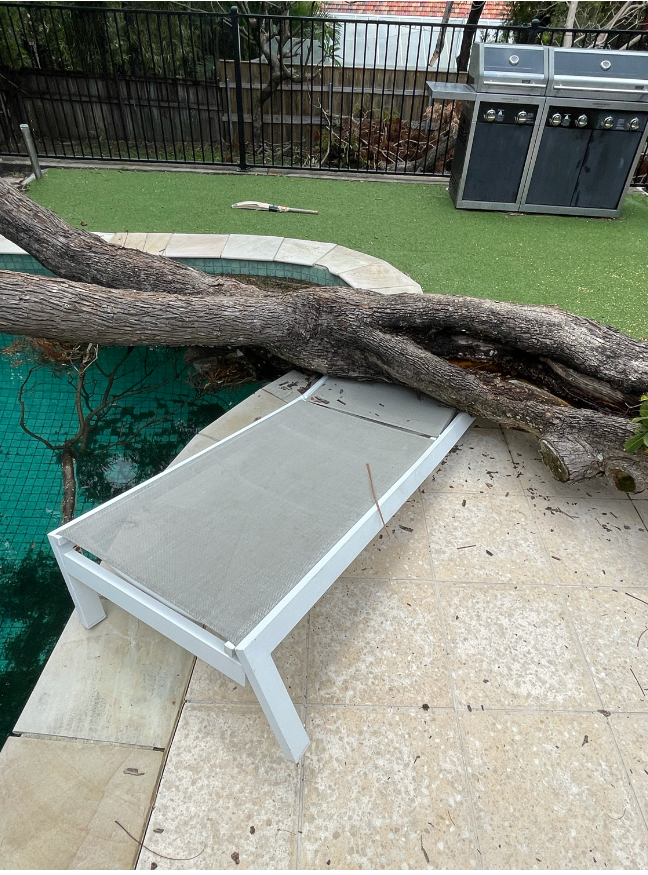
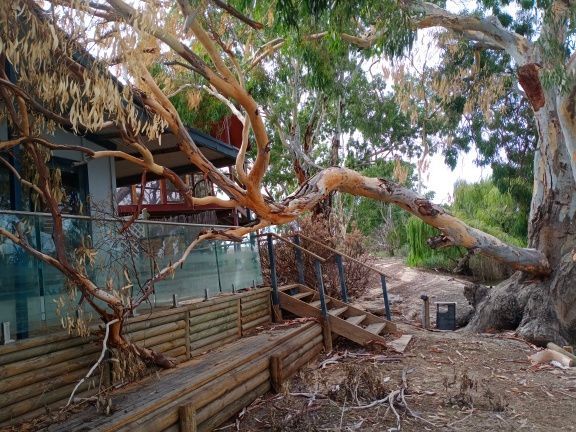
- Storm-damaged, split or suspended branches
- Any vegetation near powerlines
- Work involving a substantial part of the canopy
When Tree Trimming Should Be Left to a Professional
Professional assistance is appropriate where the branch is too large to control, the tree has structural defects or the work could place people or property at risk.
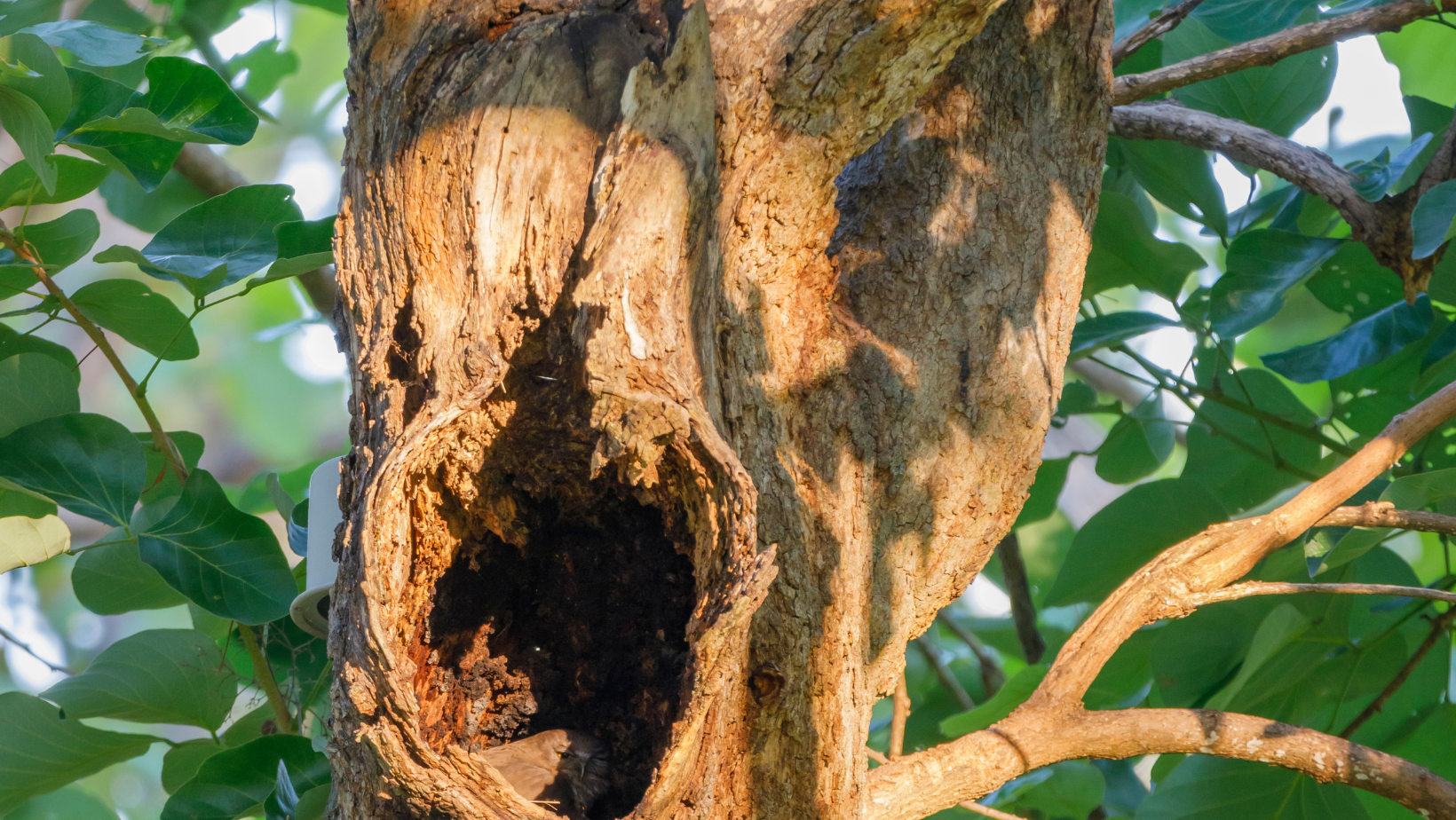
- A branch is split, cracked or partly detached
- The tree has been damaged during a storm
- Limbs are overhanging a house, pool, driveway or neighbouring property
- The work requires climbing, rigging or elevated equipment
- The tree is very large or difficult to access
- The tree may be protected by local regulations
- You are unsure how much foliage can be removed safely
Fallen, hanging or immediately hazardous branches may require urgent tree assistance in Brisbane.
Professional Tree Trimming Across Brisbane
GDE Tree Services has provided professional tree care throughout Brisbane and South East Queensland since 1987.
Our tree-trimming work includes:
- Selective branch removal
- Deadwood removal
- Roof and gutter clearance
- Crown lifting
- Structural pruning
- Canopy thinning
- Storm-damage pruning
- Large and difficult branch removal
Frequently Asked Questions About Trimming Tree Branches
Where should you cut a branch from a tree?
When removing the complete branch, make the final cut immediately outside the branch collar. Do not cut flush with the trunk and do not leave a long stub.
What happens if you cut through the branch collar?
Cutting through the collar removes tissue involved in the tree’s natural response to the wound. It also creates a larger wound than necessary and may damage the trunk.
Why should large branches be removed with three cuts?
The first two cuts remove the weight of the branch and help prevent the bark from tearing down the trunk. The final cut then removes the remaining stub just outside the branch collar.
Should a pruning cut be straight or angled?
The cut should follow the natural position of the branch collar and branch bark ridge. It should not be given an arbitrary angle or made flat against the trunk.
Can I seal a branch after cutting it?
Pruning paint and wound sealants are not routinely required. In most situations, a correctly positioned and clean pruning cut should be left uncovered.
How much of a tree can be trimmed at one time?
There is no single safe percentage for every tree. The appropriate amount depends on the species, age, health, condition and purpose of the work. Mature or stressed trees may tolerate considerably less canopy removal.
What is the difference between tree lopping and pruning?
Pruning usually refers to selective cuts made for a defined safety, clearance, structural or tree-management outcome. Tree lopping is a broader term commonly used for cutting back larger branches or reducing canopy growth.
Can I trim a tree growing near powerlines?
Homeowners should not attempt to trim branches near powerlines. Contact the electricity network provider for street powerline concerns and use a suitably qualified professional where vegetation is close to electrical infrastructure.
Do I need council approval to trim a tree?
Approval may be required for protected vegetation or trees on Council land. Requirements vary between councils, so check with the relevant local authority before substantial pruning begins.
Need Help Trimming Tree Branches Safely?
As a family-owned and operated tree company, GDE Tree Services can assess overgrown, damaged or hazardous branches and recommend a suitable trimming or pruning approach for the tree and surrounding property.
For professional tree trimming and branch removal across Brisbane, call 07 3910 3439.
Request a Free Written Quote