The Best Shade Trees for Brisbane Backyards
A well-positioned shade tree can make a Brisbane backyard cooler, greener and more inviting. Choosing a species that suits the available space also reduces the likelihood of future clearance problems and the need for extensive tree trimming.
Brisbane’s subtropical climate supports a wide variety of trees, but climate is only one part of the decision. Mature canopy width, root behaviour, soil, drainage, wind exposure, underground services and distance from buildings all need to be considered before planting.
The most important rule is to match the tree to the site. Tuckeroo and selected Lilly Pilly forms can suit many suburban gardens, while Blue Quandong and Moreton Bay Fig need the space of acreage or a very large property.
Do not choose a tree based only on how it looks in a small nursery pot. Check its expected mature height and canopy spread first.
Shade Trees for Different Brisbane Backyards
| Tree | General Site Suitability | Main Consideration |
|---|---|---|
| Tuckeroo | Small to medium suburban gardens | Allow room for a rounded canopy and fruit drop. |
| Lilly Pilly | Small to medium gardens, depending on species or cultivar | Mature size varies widely, so check the exact plant label. |
| Eumundi Quandong | Medium to large gardens | More upright than broad; best where height is acceptable. |
| Poinciana | Large suburban yards and open sites | Needs considerable space for its canopy, roots and pods. |
| Blue Quandong | Acreage and large revegetation sites | A fast-growing rainforest tree that can become very tall. |
| Moreton Bay Fig | Acreage, parks and expansive properties | Enormous canopy and powerful surface roots. |
1. Tuckeroo
Cupaniopsis anacardioidesTuckeroo is one of the more practical native shade trees for a suburban Brisbane garden. It develops dense, glossy foliage and a rounded crown without reaching the extreme proportions of the larger rainforest species in this guide.
Tuckeroo tolerates coastal conditions and salt-laden winds, making it useful across bayside and exposed areas. It still needs enough width for the crown to develop without regular hard cutting.
Best suited to: small to medium yards where a compact native feature tree is required, provided it is positioned away from buildings and services.
2. Lilly Pilly
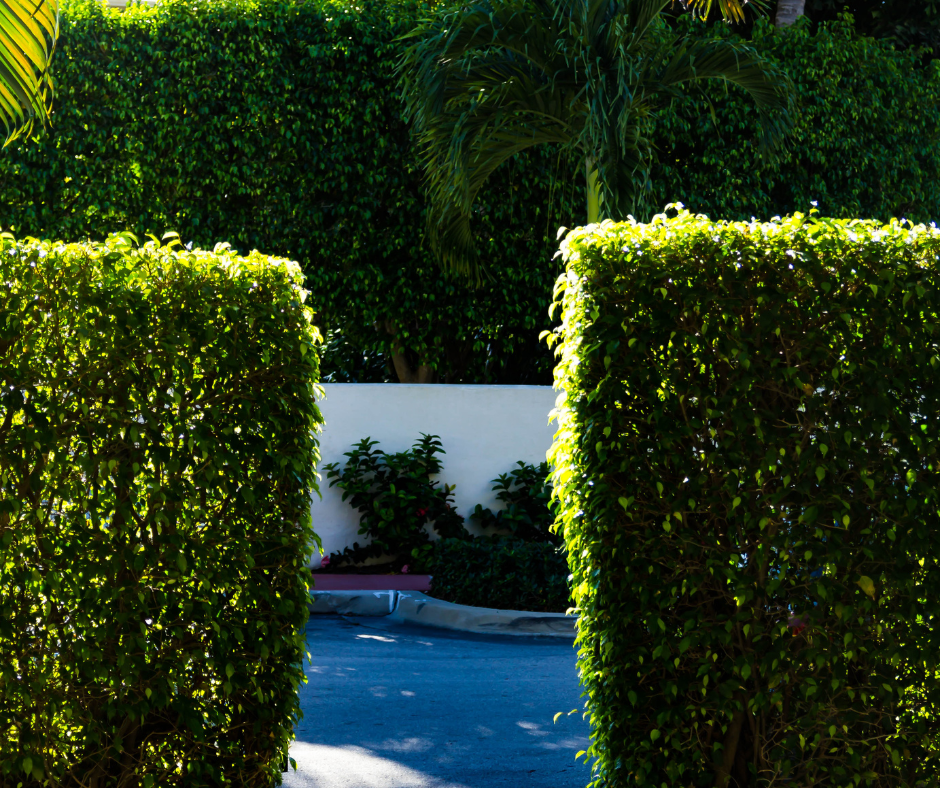
Syzygium smithii, formerly Acmena smithiiLilly Pilly is a familiar evergreen tree used for screening, hedging and garden structure. It produces glossy leaves, pale flowers and colourful fruit that can attract birds.
The name “Lilly Pilly” covers many different plants. Some remain compact, while others can become substantial trees. A cultivar selected for hedging may not develop the broad shade canopy expected from a freestanding tree.
Best suited to: suburban gardens needing evergreen screening and moderate shade. Choose the exact species or cultivar according to the available height and width.
3. Eumundi Quandong
Elaeocarpus eumundiEumundi Quandong is an Australian rainforest tree with attractive glossy foliage and bronze-toned new growth. Its form is generally more upright than the broad, spreading canopy of a Poinciana.
It can provide useful filtered shade and vertical structure, but it should not be treated as a permanently small six- or seven-metre tree. Its eventual dimensions depend on soil, moisture and growing conditions.
Best suited to: medium to large gardens where an upright native feature tree is wanted and adequate height is available.
4. Poinciana
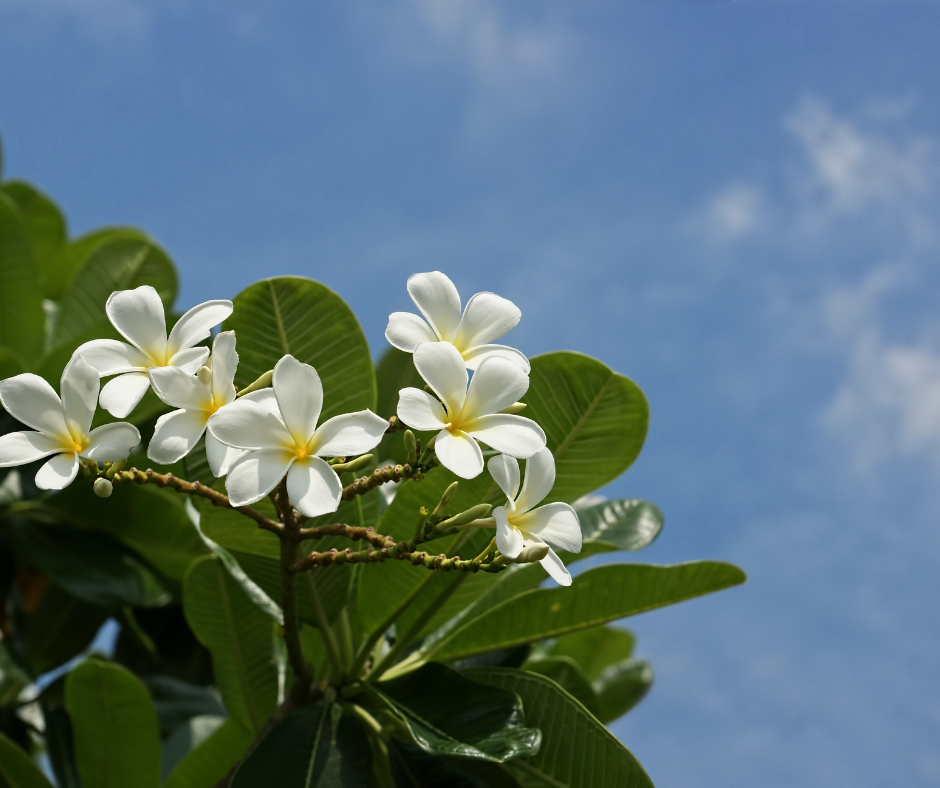
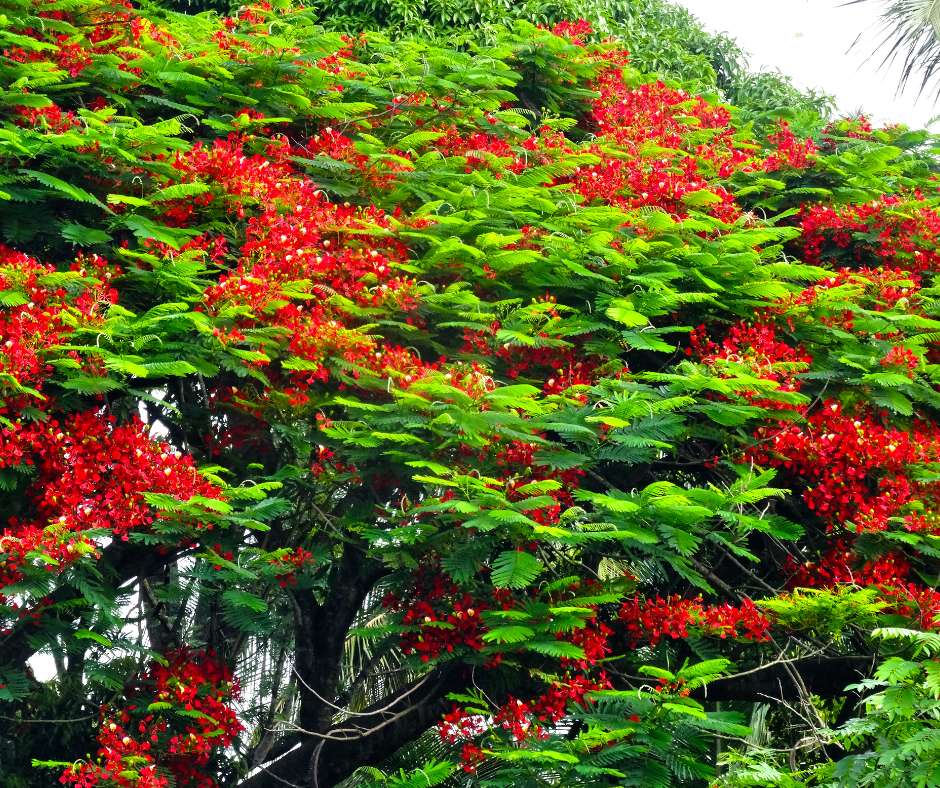
Delonix regiaPoinciana is valued for its spectacular red-orange flowers and broad, umbrella-like canopy. A mature specimen can provide excellent summer shade and become a major garden feature.
This is not a tree for a narrow side yard or a position close to a pool, retaining wall, drain or small paved area. It needs room for both the crown and root system to develop.
Best suited to: large open yards where a wide canopy is desirable and seasonal leaf, flower and pod drop can be accommodated.
5. Blue Quandong
Elaeocarpus angustifoliusBlue Quandong is a fast-growing rainforest tree known for its bright blue fruit, buttressed trunk and tall, straight growth. It can be impressive in the right setting, but it is much larger than a typical suburban shade tree.
It naturally occurs in moist rainforest environments and can reach around 40 metres under favourable conditions. It should not be promoted as a compact backyard tree or planted beneath powerlines.
Best suited to: acreage, large revegetation projects and expansive properties with substantial room above and below ground.
6. Moreton Bay Fig
Ficus macrophyllaThe Moreton Bay Fig is one of South East Queensland’s most recognisable trees. It develops a vast spreading canopy, heavy limbs, buttress roots and extensive surface roots.
Its shade can be outstanding, but so is its mature size. It should be kept well away from houses, paving, pools, drains, retaining walls and underground infrastructure.
Best suited to: acreage, parks and very large properties—not an ordinary suburban backyard.
What to Consider Before Planting a Shade Tree
The best shade tree is not necessarily the species with the largest crown. It is the tree that can mature in its position without creating predictable conflicts with the property.
- How tall and wide will the tree become?
- Will the mature canopy overhang the roof or neighbouring property?
- Where are the sewer, stormwater and water lines?
- Are overhead powerlines present?
- How close are paving, pools, retaining walls and foundations?
- Does the site have free-draining, dry or consistently moist soil?
- Is the location exposed to strong winds?
- How much leaf, fruit, flower or seed-pod drop is acceptable?
- Will the tree still suit the property in 10, 20 or 30 years?
Do Not Plant a Large Tree and Plan to Keep It Small
Repeated heavy tree lopping is not a substitute for choosing an appropriately sized species. Regularly removing large portions of the canopy can create stress, decay and poorly attached regrowth.
Native Alternatives for Smaller Brisbane Gardens
Where the six trees above are too large or do not suit the site, Brisbane City Council also recommends smaller native shade and feature trees such as Tuckeroo, Golden Penda and Ivory Curl Flower for subtropical gardens.
Brisbane ratepayers can obtain eligible native plants through Council’s Free Native Plants program. Availability varies, and the final species should still be selected for the property’s soil, space and growing conditions.
Caring for a Young Shade Tree
- Water deeply during establishment rather than applying frequent shallow watering.
- Use mulch over the root zone without piling it against the trunk.
- Remove stakes when the tree is established and stable.
- Avoid damaging the trunk with mowers and line trimmers.
- Use formative pruning while branches are small.
- Do not remove large amounts of living canopy simply to accelerate shaping.
- Monitor for changes in lean, branch attachments and root-zone disturbance.
Professional Care for Established Shade Trees
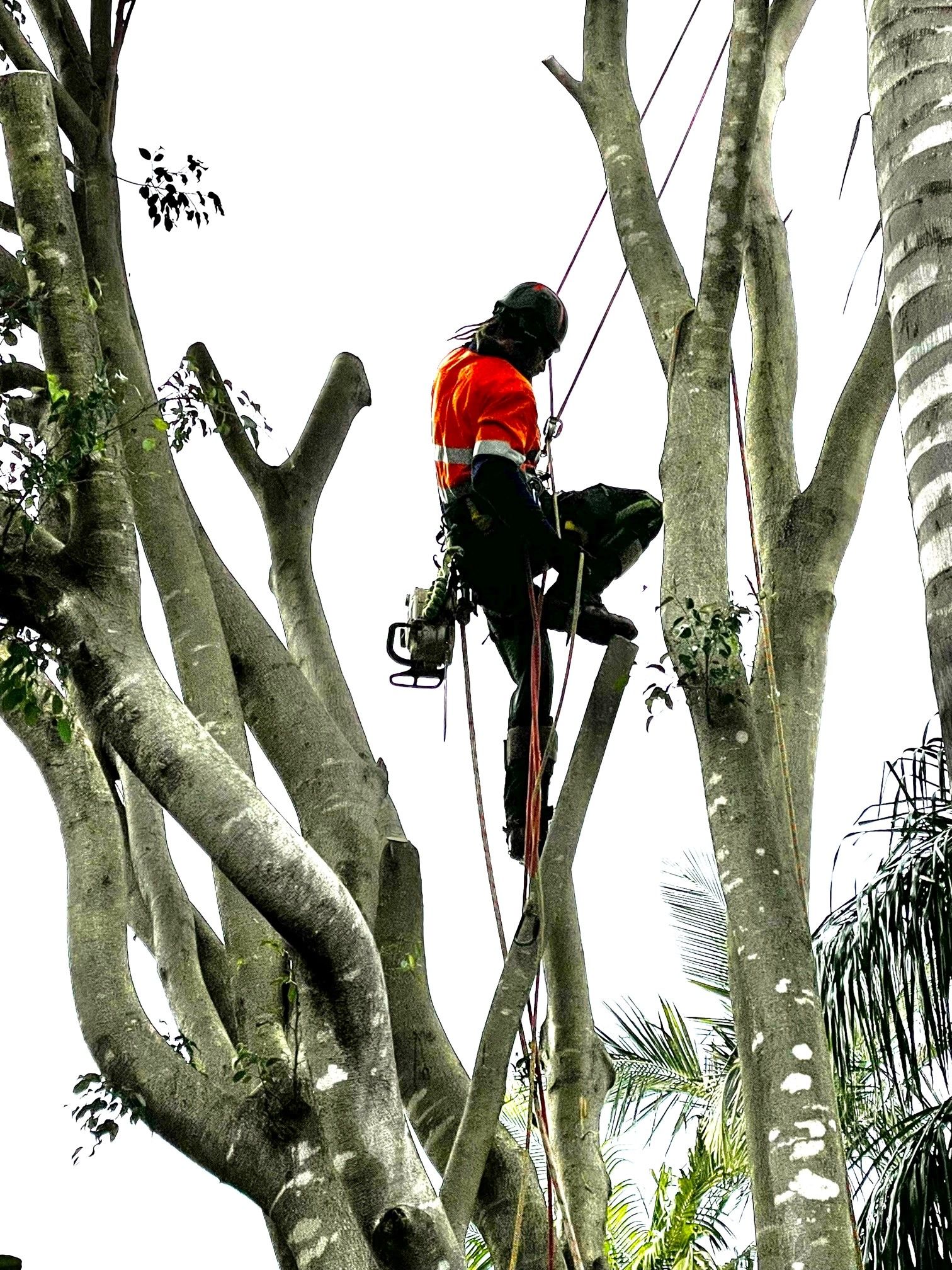
GDE Tree Services has provided professional tree work throughout Brisbane and South East Queensland since 1987.
Our team can assess established shade trees and provide a free on-site written quote for suitable trimming, pruning, branch reduction or other tree work.
Tree Care for Brisbane Properties
- Tree trimming and canopy maintenance
- Deadwood and damaged branch removal
- Clearance from roofs and structures
- Formative pruning for younger trees
- Assessment of large established trees
- Green waste chipping and removal
- Mulch left on-site when requested
- Final site clean-up
Frequently Asked Questions
What is the best shade tree for a small Brisbane backyard?
Tuckeroo and suitably selected smaller Lilly Pilly cultivars are often more practical than very large rainforest trees. The right choice still depends on the available width, soil, drainage, services and distance from buildings.
Is a Poinciana suitable for a suburban backyard?
It can be suitable where there is ample room for its broad canopy, roots and falling pods. It should not be planted close to buildings, paving, pools, drains or narrow property boundaries.
Can a Moreton Bay Fig be planted in a normal backyard?
A Moreton Bay Fig becomes an enormous tree with a very broad canopy and powerful surface roots. It is generally better suited to acreage, parks and expansive properties rather than a standard suburban yard.
How large can a Blue Quandong become?
Blue Quandong is a fast-growing rainforest tree capable of becoming very tall. It is best reserved for acreage, revegetation areas or large properties with substantial space above and below ground.
Are Lilly Pillies good shade trees?
Some Lilly Pilly species and cultivars can provide useful shade and screening, but their mature size and canopy form vary considerably. Check the exact label and cultivar rather than relying only on the common name.
How far should a shade tree be planted from a house?
There is no single distance suitable for every species. Base the position on the tree’s mature height, canopy width, root behaviour, soil, wind exposure and the location of buildings, drains, retaining walls and powerlines.
Can mature shade trees be kept small through heavy lopping?
Repeated heavy lopping is not a substitute for choosing a suitably sized tree. Planting the right species in the right location reduces the need for major canopy reduction later.
Need Help Caring for a Shade Tree?
GDE Tree Services can inspect established trees and provide a free written quote for appropriate tree trimming, pruning or branch-management work.
Call 07 3910 3439 to arrange an on-site assessment.
Request a Free Written QuoteMature tree size varies according to genetics, soil, moisture, climate and growing conditions. Check the exact species or cultivar and seek site-specific horticultural advice before planting.