How to Tell if a Tree Is Dead, Dying or Just Stressed
A bare branch, a patch of peeling bark or a sudden flush of yellow leaves can look alarming, but none of those signs proves on its own that a tree is dying. The more useful approach is to look at the pattern across the whole tree — canopy, branches, trunk, roots and what has changed around it recently.
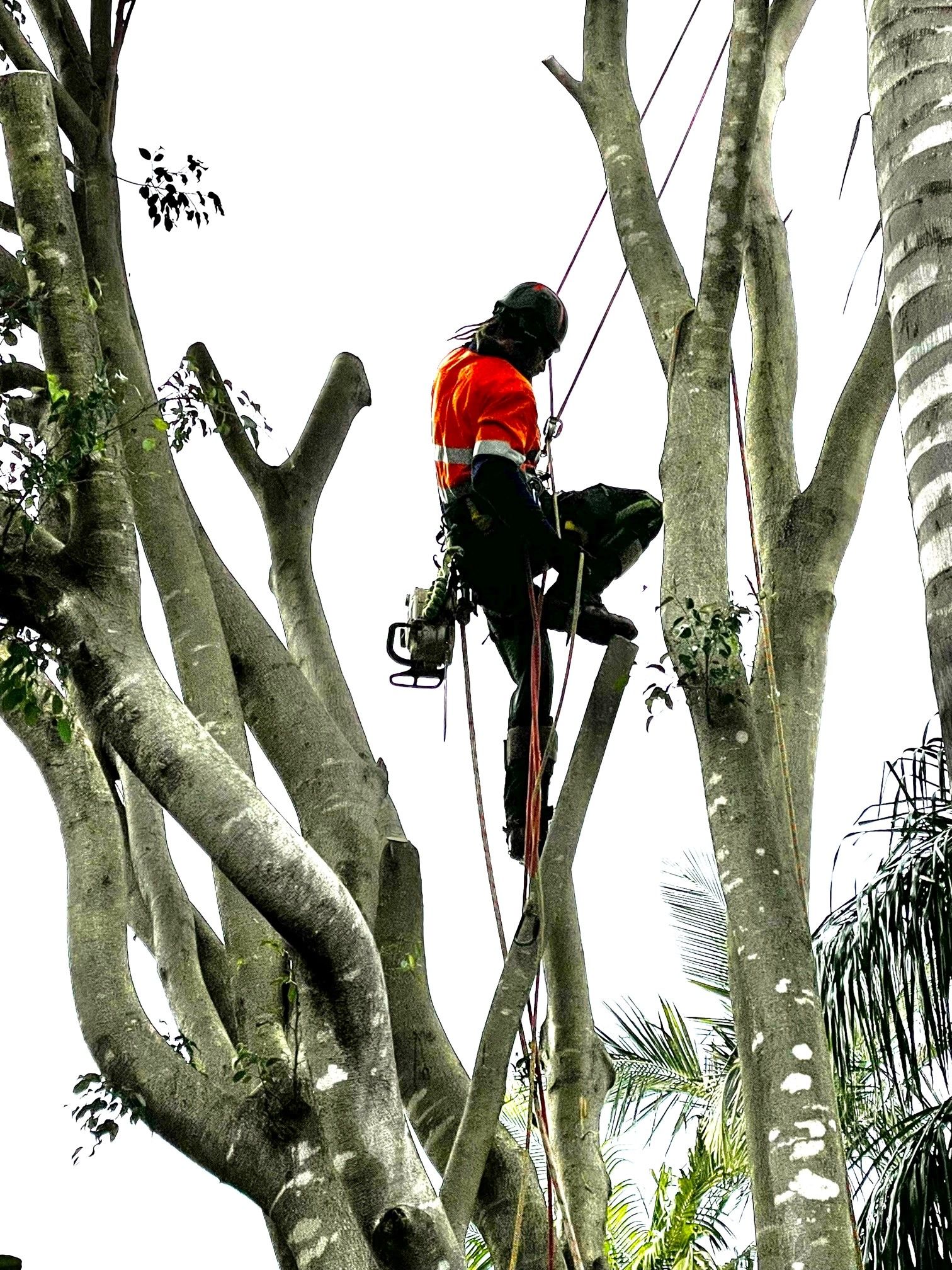
Some problems can be managed with monitoring or targeted tree trimming and pruning, while a completely dead or structurally compromised tree may need a very different response.
Dead, Dying, Stressed or Seasonal? They Are Not the Same Thing
Start With the Pattern, Not One Symptom
International Society of Arboriculture guidance lists smaller and fewer leaves, crown dieback and premature seasonal colour among signs of tree decline. It also notes that stressed trees can become more vulnerable to pests and disease.
One yellow branch may have a local problem. A progressively thinning canopy across the entire tree, combined with deadwood and trunk or root defects, tells a much more significant story.
Five Areas to Check From the Ground
Is the Tree Producing a Normal Amount of Foliage?
Step back far enough to see the whole crown. Compare different sides of the tree and, where possible, compare it with healthy trees of the same species at the same time of year.
Signs worth investigating include:
- large sections of canopy with no leaves while the rest is actively growing;
- progressively fewer or smaller leaves over successive seasons;
- dieback beginning at branch tips and moving further into the crown;
- unusually early leaf colour or leaf drop for that species; and
- a sudden change from the tree's normal appearance.
Look for Deadwood, Breakage and Progressive Dieback
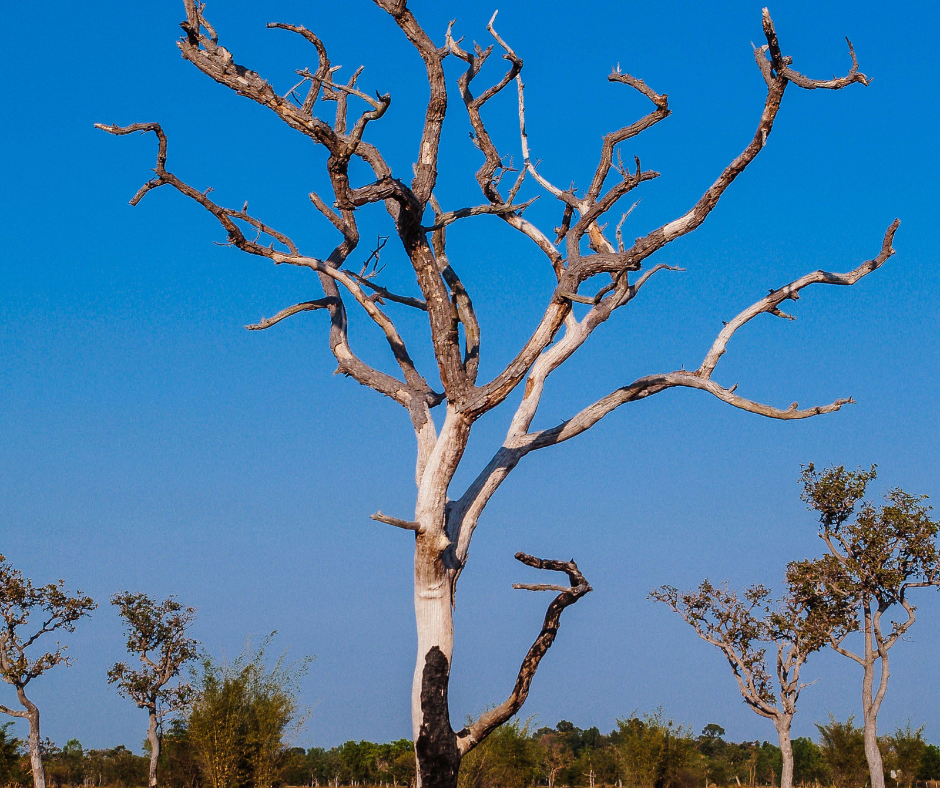
Dead branches often lose smaller twigs and foliage and may become dry or brittle over time. A few dead twigs do not mean the whole tree is dying, but widespread deadwood through the canopy deserves closer attention.
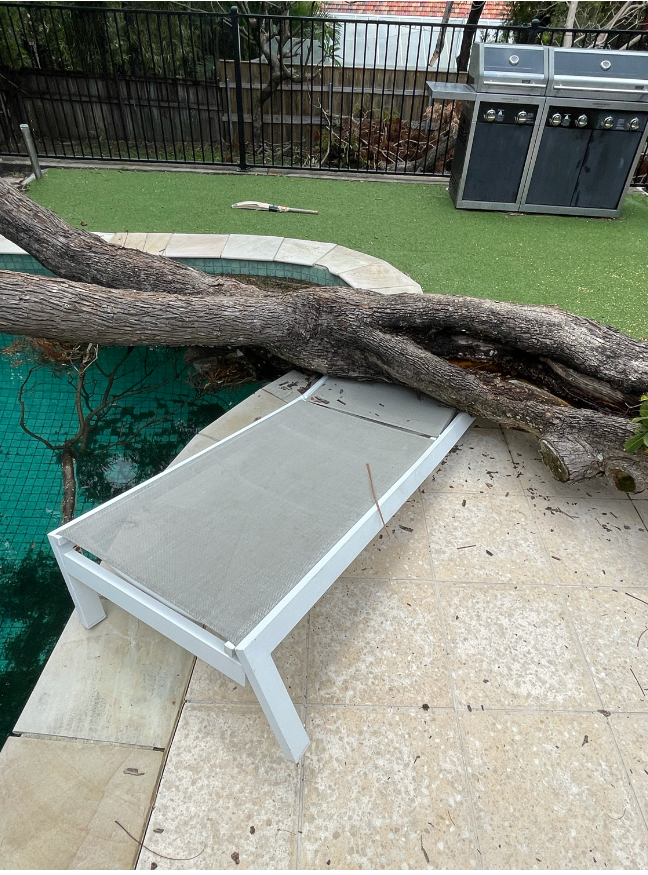
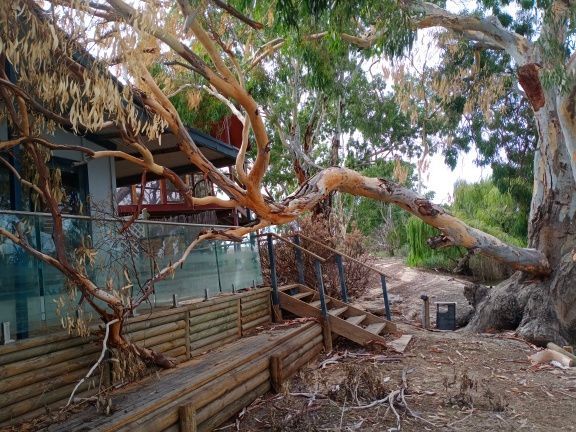
Fresh splits, hanging branches or major broken limbs are also structural concerns even if the rest of the tree remains alive.
Check for Damage, Cavities and Significant Cracks
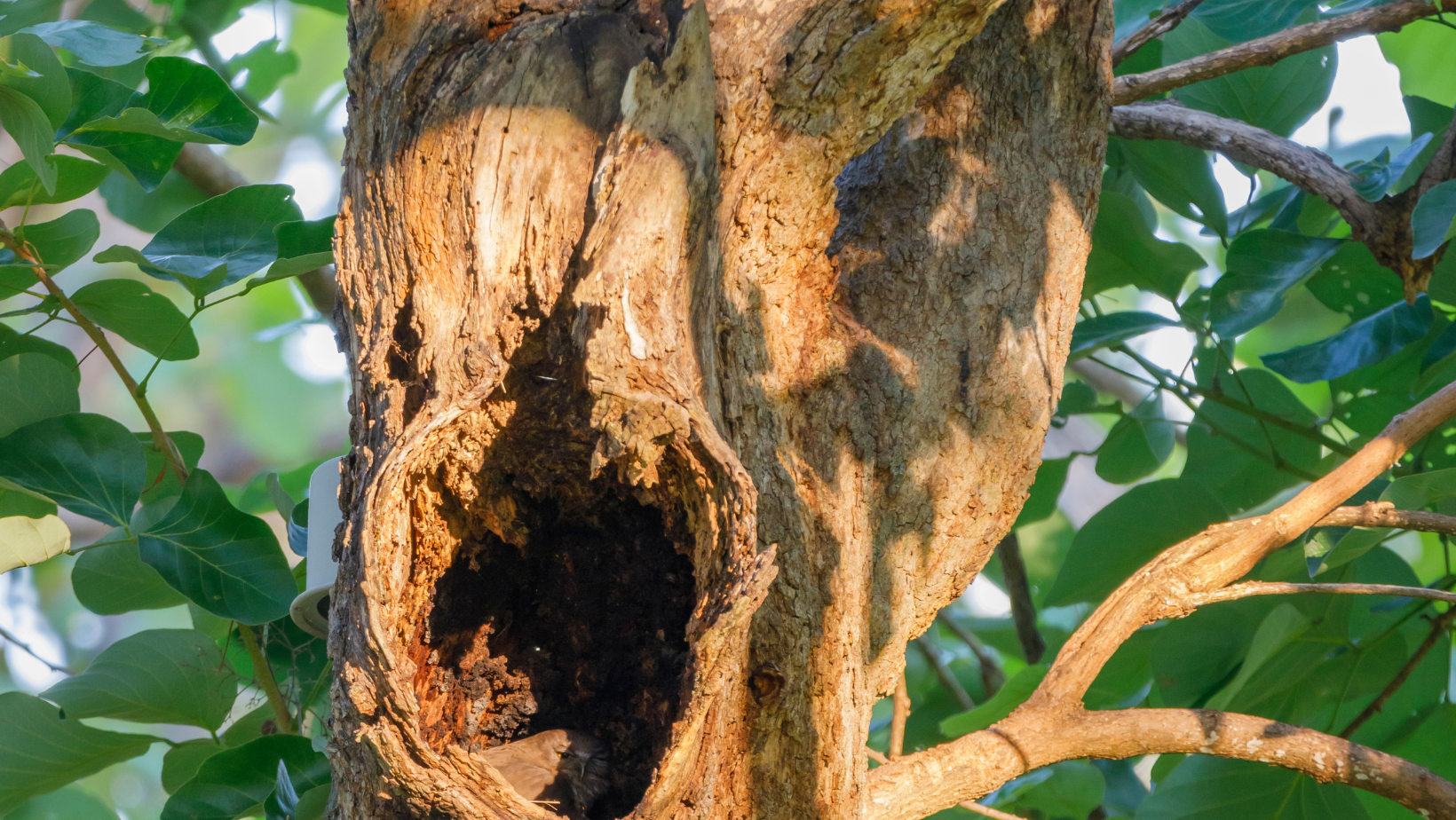
Look for major fresh cracks, cavities, areas of dead or missing bark, wounds, unusual swelling or obvious decay. These signs need to be interpreted in context because bark appearance differs enormously between species.
A tree that naturally exfoliates its bark should not be diagnosed as dying simply because bark is peeling away.
Changes at Ground Level Can Be More Important Than the Leaves
The root system affects both tree health and stability. Look for recent soil heaving, lifting around the root plate, exposed or severed roots, excavation, trenching, severe compaction or a change in the tree's lean.
International Society of Arboriculture guidance notes that construction damage such as soil compaction, severed roots, added fill and drainage changes can contribute to decline and structural problems.
Ask What Changed Before the Tree Started Declining
Tree decline is often easier to understand when you look backwards. Has there been building work, excavation, driveway construction, flooding, extended dry weather, a major storm, heavy pruning or a sudden change to drainage?
Urban tree stress is frequently caused by non-living factors such as drought, root injury and soil compaction. Pests or disease may then take advantage of an already weakened tree rather than being the original cause.
Signs That Look Serious but Do Not Prove a Tree Is Dying
Lichens on the Bark
Lichens often grow on tree bark but do not obtain their nutrients from the tree and are not, by themselves, a cause of tree decline.
One Dead Branch
An isolated branch can die because of local damage, shading or a branch-specific problem while the rest of the tree remains healthy.
Seasonal Leaf Drop
A deciduous tree losing its leaves at the expected time is behaving normally. The concern is leaf loss that is unusual for the species, season or recent conditions.
Peeling or Flaking Bark
Some species naturally shed bark. Bark loss becomes more concerning when it is associated with wounds, dead tissue, cavities, cracks or canopy decline.
Fungi or Mushrooms
Some fungal fruiting bodies can be associated with wood or root decay, but the species and location matter. “There is fungus, therefore the tree is dead” is not a reliable diagnosis.
Yellow Leaves
Yellowing can result from many causes including water stress, root problems, nutrient availability or natural leaf ageing. The pattern is more useful than the colour alone.
When a Tree May Be Dying Rather Than Temporarily Stressed
Decline becomes more concerning when several symptoms appear together or continue to worsen rather than improving.
| What You Notice | Why It Matters |
|---|---|
| Canopy gets thinner year after year | Progressive loss of foliage and shoot growth can indicate continuing decline rather than a short-term seasonal response. |
| Dieback spreads from branch tips into larger limbs | The amount of living canopy is progressively reducing. |
| Large areas of dead bark or major trunk decay appear with canopy decline | Multiple parts of the tree are being affected rather than one isolated branch. |
| Root damage is followed by thinning foliage or instability | Root injury can affect both the tree's ability to take up water and its structural support. |
| Major deadwood develops throughout the crown | Widespread branch death can indicate advanced decline and also creates a falling-branch concern. |
When the Issue Becomes a Safety Concern
Tree health and tree risk are related, but they are not exactly the same thing. A stressed tree may still be structurally sound, while a tree with a major split or unstable root plate may require attention even if much of its canopy is still green.
Keep Clear and Arrange Prompt Assessment If You Notice:
- a sudden or increasing lean;
- soil lifting or root-plate movement;
- a large fresh split in the trunk or major union;
- large broken or hanging branches;
- significant deadwood over a house, driveway or high-use area; or
- major damage following a storm.
WorkSafe Queensland warns that dead trees and dry standing decayed trees can be particularly dangerous because branches or the tree itself may fall. Where storm damage or instability creates an immediate property hazard, emergency tree removal in Brisbane may be required.
Does a Dying Tree Always Need to Come Down?
No. The outcome depends on what is causing the decline, how much viable canopy and root system remain, the tree's structure and what sits beneath it.
A professional assessment may lead to one of several recommendations:
- monitor the tree and correct a watering, drainage or site issue;
- remove selected dead or damaged branches;
- manage a specific structural or canopy problem;
- carry out further investigation where decay or root problems are suspected; or
- remove the tree where it is dead or the remaining risk cannot reasonably be managed.
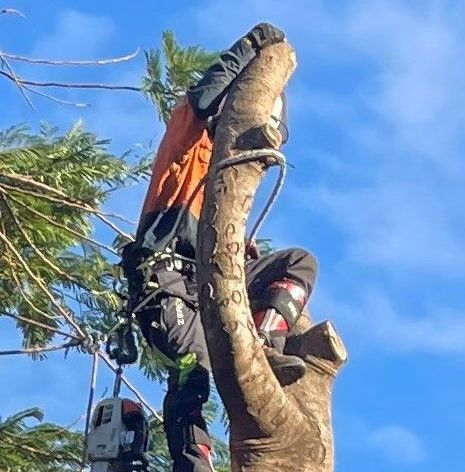
If a dead tree is to be removed and the property provides an appropriate open area, tree felling may be one suitable removal method. Confined sites can require a different approach.
Not Sure What Condition Your Tree Is In?
GDE Tree Services can inspect established trees showing deadwood, decline, storm damage or structural concerns and provide a free written quote for the tree work required.
Frequently Asked Questions About Dead and Dying Trees
How can I tell if a tree is completely dead?
A completely dead tree shows no living canopy growth and may have widespread dead, dry or brittle branches. However, some trees can retain dead-looking twigs or lose foliage seasonally, so the condition of the whole tree should be considered rather than relying on one branch.
Does no leaf growth mean a tree is dead?
Not always. Deciduous species naturally lose their leaves, and stressed trees can leaf out late or unevenly. Compare the tree with others of the same species and consider the season before assuming it is dead.
Are mushrooms or fungi on a tree a sign it is dying?
Some fungal fruiting bodies on the trunk or around the root zone can be associated with wood decay, but not every fungus means the tree is dying. Lichens growing on bark, for example, do not harm the tree. Identification and location matter.
Is peeling bark a sign a tree is dead?
It can be associated with dead or damaged tissue, but some tree species naturally shed or exfoliate bark. Look for other symptoms such as canopy dieback, cracks, cavities, wounds or widespread dead branches before drawing a conclusion.
Can a dying tree recover?
Sometimes. Trees affected by temporary drought, root disturbance, storm damage or another treatable stress may recover if enough healthy structure and root system remain. Other trees continue to decline despite treatment. The cause and severity need to be assessed.
Is a dead tree dangerous?
A standing dead tree can become increasingly unpredictable as branches and wood dry or decay. WorkSafe Queensland specifically warns that dead trees and dry standing decayed trees can shed branches or fall, creating serious hazards.
Should every dying tree be removed?
No. The appropriate response may be monitoring, correcting a site problem, selective pruning or removal. Removal becomes more likely where the tree is dead, has unacceptable structural risk or cannot reasonably be retained in its location.
When should I get a tree assessed urgently?
Seek prompt assessment if a tree has developed a sudden lean, visible root movement, major fresh cracks or splits, large hanging branches, severe storm damage or significant deadwood over a house, driveway or frequently used area.
Concerned About a Tree on Your Property?
GDE Tree Services can inspect the tree and provide a free written quote for pruning or removal work where required.
Request a Free Written QuoteThis guide is intended for visual observations from ground level. Do not climb a damaged, dead or unstable tree to inspect it. Tree health and structural risk can require professional assessment.