7 Warning Signs a Tree Could Be Dangerous in a Storm
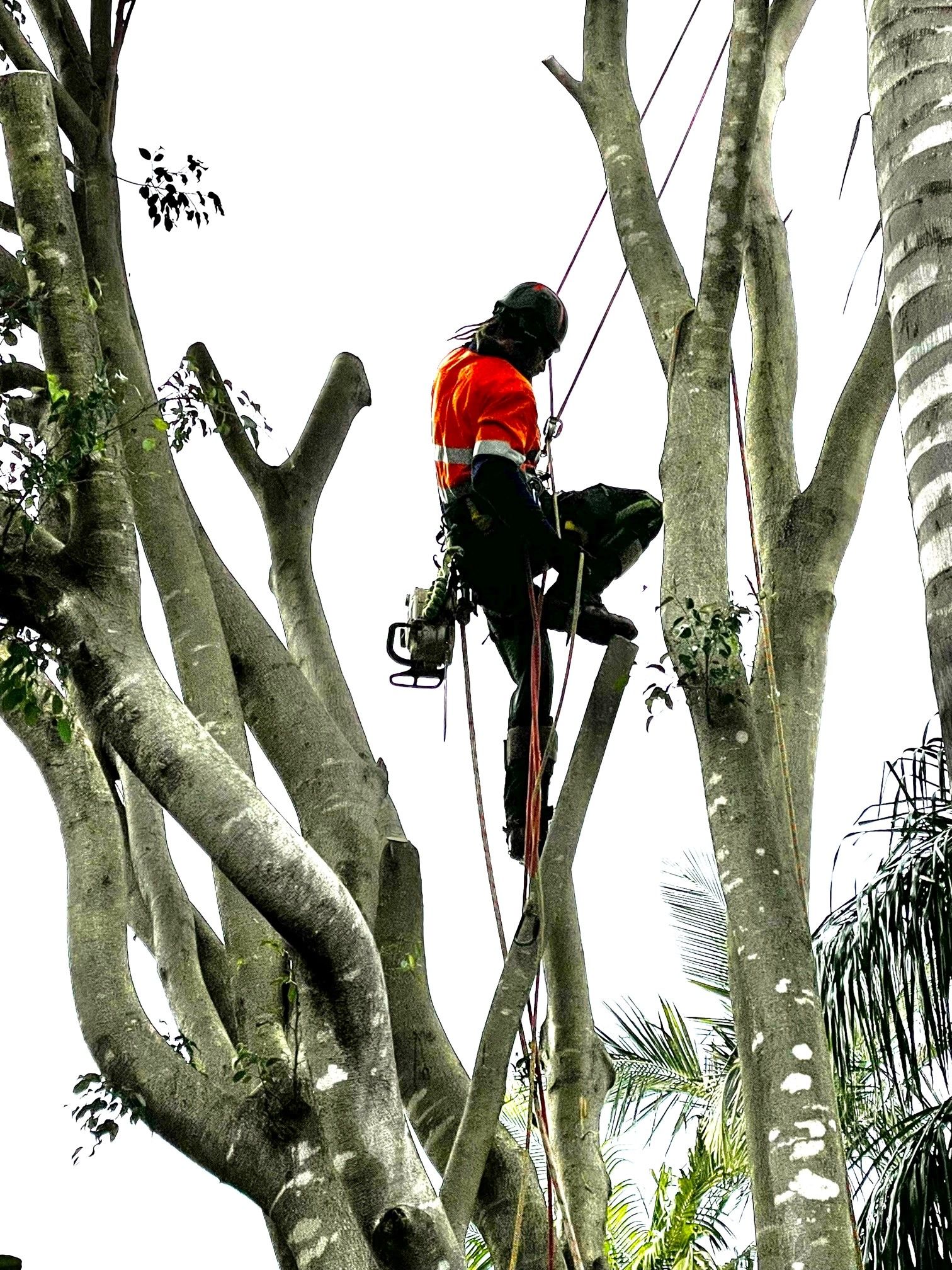
Severe storms can expose weaknesses in trees that may not be obvious during calm weather. Before storm season, professional tree trimming and pruning in Brisbane can help address identifiable problems such as dead branches, damaged limbs and overextended growth before strong winds and heavy rain arrive.
GDE Tree Services has worked across Brisbane and South East Queensland since 1987, helping homeowners, property managers and businesses assess and manage trees around homes, access areas and other property assets.
Why Check Your Trees Before Storm Season?
South East Queensland regularly experiences thunderstorms capable of producing damaging winds, heavy rain and hail. Brisbane's main storm season is generally associated with the warmer months, but severe weather can occur outside that period as well.
Wind is only part of the problem. Prolonged or intense rain can saturate the soil around a tree, while previous storm damage, root disturbance, decay or poor branch attachments may reduce the tree's ability to cope with additional loading.
A warning sign does not automatically mean a tree needs to be removed. Many tree problems can be managed through appropriate pruning, monitoring or other work. The important thing is recognising significant changes early enough to have the tree assessed.
7 Signs a Tree May Need Professional Assessment Before a Storm
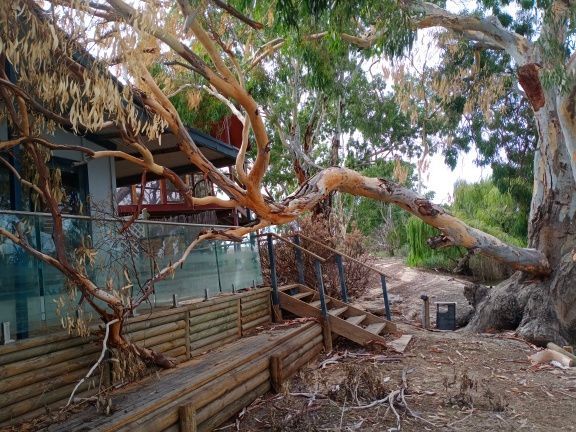
A New or Increasing Lean
A tree growing naturally at an angle is not automatically unstable. What deserves attention is a tree that has recently started leaning more, particularly after heavy rain or strong winds.
Look for changes around the base such as raised soil, cracking ground or roots lifting on the side opposite the lean. These can indicate movement of the root plate rather than ordinary angled growth.
Major Cracks or Splits
Cracks through the trunk, a major limb or the junction between two large stems can affect the way the tree carries weight.
Fresh splitting, opening cracks, exposed internal wood or movement at a branch union should be assessed promptly, particularly where the affected section is above a house, driveway or frequently used area.
Dead, Broken or Hanging Branches
Deadwood and partially broken limbs can fall with little warning. Hanging branches are especially concerning because they may already be detached or supported only by surrounding branches.
Removing identifiable hazards through appropriate pruning can reduce the chance of those particular branches falling during wind or rain.
Soil Movement or Root Damage
The root system anchors the entire tree. Uplifted soil, cracking around the base, exposed or severed roots, recent excavation, trenching or major changes to the ground level can all be relevant to stability.
A combination of root-zone movement and a newly leaning tree is more concerning than either sign viewed in isolation.
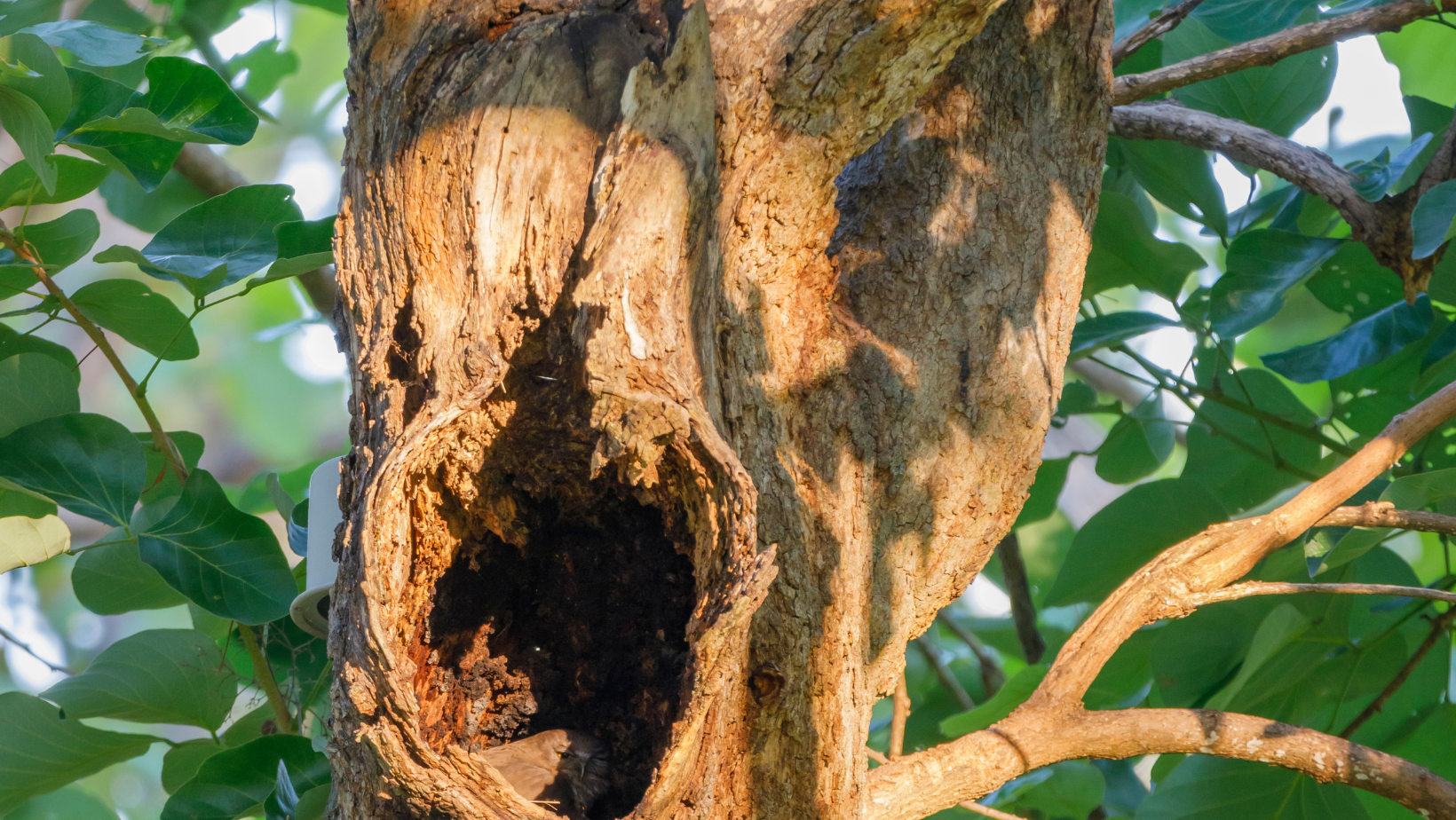
Cavities, Decay or Fungal Growth
Hollows and cavities do not automatically make a tree unsafe, and the presence of a fungus does not by itself prove that removal is required.
However, fungal fruiting bodies around the trunk or root zone, extensive cavities, soft or crumbling wood and other signs of decay can justify a closer inspection—especially when combined with cracks, dead branches or canopy decline.
Weak or Splitting Branch Unions
Trees with two or more large upright stems can sometimes develop structurally weak unions. Included bark, where bark becomes trapped between stems as they grow together, can reduce the amount of sound wood connecting them.
Not every forked tree is dangerous, but visible cracking, separation or movement at a major union should not be ignored.
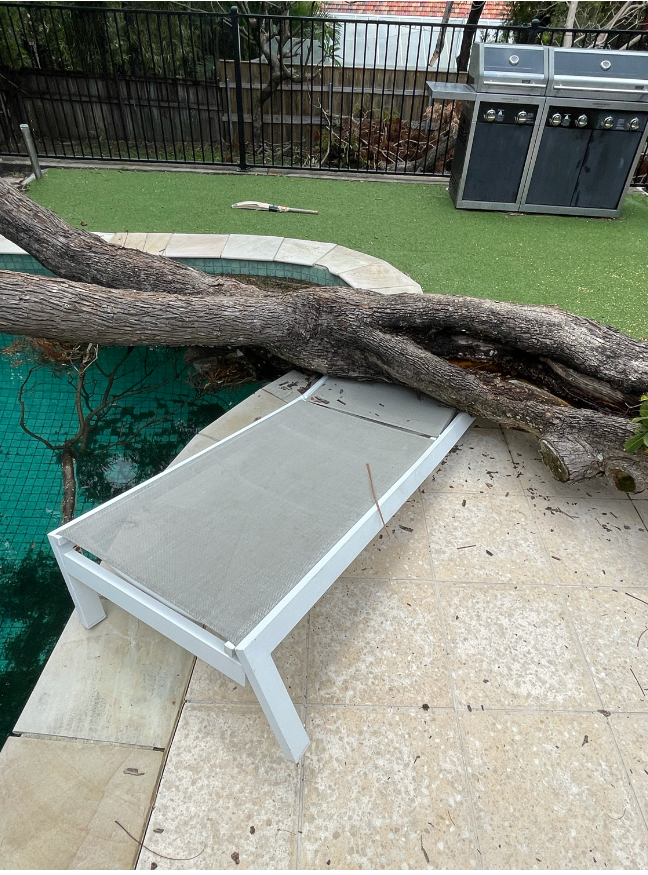
Recent Storm Damage or Major Limb Loss
A tree that has recently lost a major branch may have exposed wounds, changed weight distribution or additional damaged limbs that are difficult to see from the ground.
After a significant storm, inspect trees from a safe distance for broken tops, suspended branches, fresh splits and changes in lean before spending time underneath them.
What Does Not Automatically Mean a Tree Is Dangerous?
Tree risk is rarely determined by one feature alone. Some characteristics can look alarming but may be normal for a particular tree or may be manageable without removal.
- A long-standing lean: some trees develop normally at an angle and compensate through their growth.
- A hollow: a hollow tree can still retain substantial sound wood and may also provide important wildlife habitat.
- Fungal growth by itself: its significance depends on the fungus, where it is growing and the condition of the tree.
- A large tree close to a house: size and proximity alone do not prove instability.
- Leaf drop: seasonal leaf loss can be normal and should be considered alongside the species and other symptoms.
This is why a proper assessment looks at the whole tree, its surroundings and the potential consequences if a branch or the tree were to fail.
What Can Be Done Before Storm Season?
Tree maintenance should focus on identifiable problems rather than removing large amounts of healthy canopy simply because storms are approaching.
Depending on the tree, appropriate work may include:
- removing dead, broken or hanging branches;
- selectively reducing overextended or heavily weighted limbs;
- maintaining clearance from roofs, driveways and frequently used areas;
- addressing damaged branches left by earlier storms;
- monitoring known structural features where immediate work is not required; and
- removing a tree where the assessed risk cannot be reduced to an acceptable level through pruning or other practical measures.
Where larger branch or canopy reduction is appropriate, professional tree lopping should be planned around the tree's structure rather than simply cutting the canopy back as hard as possible.
Trees Near Powerlines Need Special Care
Trees growing near overhead electrical infrastructure create additional hazards during storms. Branches can contact powerlines directly, and fallen trees or limbs can bring electrical lines to the ground.
Do Not Trim Trees Near Powerlines Yourself
Energex advises property owners not to trim trees or vegetation near powerlines themselves. Trees growing into or close to network lines should be reported through Energex, while vegetation near the service line to a home should be handled by an appropriately qualified professional.
If a tree or branch is caught in damaged electrical lines after a storm, keep well away and treat the lines as live.
What to Do After a Tree Is Damaged in a Storm
Do not immediately walk beneath a damaged tree to inspect it closely. Broken branches can remain suspended in the crown, trunks can continue splitting and saturated root plates can move after the worst weather appears to have passed.
From a safe distance, look for:
- large hanging or partially detached branches;
- fresh trunk or branch splits;
- a new lean or lifted soil around the roots;
- broken tops or major canopy sections;
- branches resting on a roof, fence or other structure; and
- any contact with powerlines.
Where a tree has fallen, split or become unstable and is creating an immediate property hazard, GDE's emergency tree removal service can assess the site and determine the safest way to make the area secure.
Storm Preparation and Tree Care From GDE
GDE Tree Services provides professional tree work for residential, commercial and managed properties across Brisbane and South East Queensland. The team can inspect problem trees and provide a free on-site written quote for the work required.
When Should You Arrange an Assessment?
You do not need to wait for a severe weather warning. If a tree has changed noticeably, has recently lost a large branch or has one of the structural warning signs above, arranging an assessment during calm weather gives you more time to consider the available options.
Queensland emergency-preparation guidance also recommends maintaining trees and branches close to buildings and checking local council requirements before carrying out vegetation work.
Frequently Asked Questions About Trees and Storm Risk
How can I tell if a tree is dangerous before a storm?
Warning signs can include a new or increasing lean, soil lifting around the roots, major cracks or splits, hanging branches, recent limb failure, cavities or decay, and weak branch unions. No single sign proves that a tree will fail, so concerning changes should be assessed in context.
Is a leaning tree always dangerous?
No. Some healthy trees naturally grow at an angle. A lean is more concerning when it is new or increasing, particularly if the soil is lifting, cracking or moving around the root plate.
Does fungus on a tree mean it needs to be removed?
Not necessarily. Some fungal fruiting bodies can be associated with internal wood or root decay, while others are less significant. The location, species of fungus, tree condition and other structural signs all need to be considered before deciding what work is required.
Should dead branches be removed before storm season?
Dead, broken and hanging branches should be assessed because they may have a greater likelihood of falling. Professional pruning can remove identifiable branch hazards while retaining healthy canopy where appropriate.
Can pruning make a tree storm-proof?
No. Appropriate pruning may reduce specific branch hazards, but no tree can be guaranteed to withstand every storm. Severe winds, saturated soil, lightning and hidden defects can still cause branch or whole-tree failure.
Can I trim a tree that is close to powerlines?
Do not trim vegetation near powerlines yourself. Trees growing into or close to electricity infrastructure require the appropriate safety procedures and professional or electricity-network involvement.
What should I do if a tree is damaged during a storm?
Keep people and pets away from the affected area, especially beneath suspended branches or near damaged powerlines. Once the immediate area is safe, arrange professional assessment of unstable limbs or the damaged tree.
Does GDE Tree Services provide storm-damaged tree work?
Yes. GDE Tree Services provides tree pruning, hazard reduction and emergency tree removal for storm-damaged or dangerous trees across Brisbane and surrounding areas.
Concerned About a Tree Before the Next Storm?
GDE Tree Services can inspect the tree and surrounding property and provide a free written quote for appropriate pruning, branch reduction or other tree work.
Request a Free Written QuoteTree condition and risk are site-specific. This article provides general information and is not a substitute for an on-site tree assessment.