Understanding the Difference Between Tree Lopping and Tree Pruning
Tree lopping and tree pruning both involve removing branches, but the terms do not describe exactly the same type of work. Professional tree lopping generally refers to broader branch or canopy reduction, while pruning is usually more selective and tied to a specific health, structural, safety or clearance objective.
The quality of the result depends less on the label used and more on why the branches are being removed, where each cut is made and how much living canopy the tree can reasonably lose.
The simple distinction: lopping is a broad term commonly used for reducing larger branches or sections of canopy. Pruning is a more precise process in which selected branches are removed or shortened to achieve a defined outcome.
Indiscriminate topping or excessive cutting should not be confused with carefully planned professional lopping or pruning.
What Is Tree Lopping?
Tree lopping commonly describes cutting back larger branches or reducing the height, spread or weight of selected parts of a canopy.
It may be considered where:
- large branches have outgrown the available space;
- overextended limbs require weight reduction;
- branches are creating clearance problems around buildings;
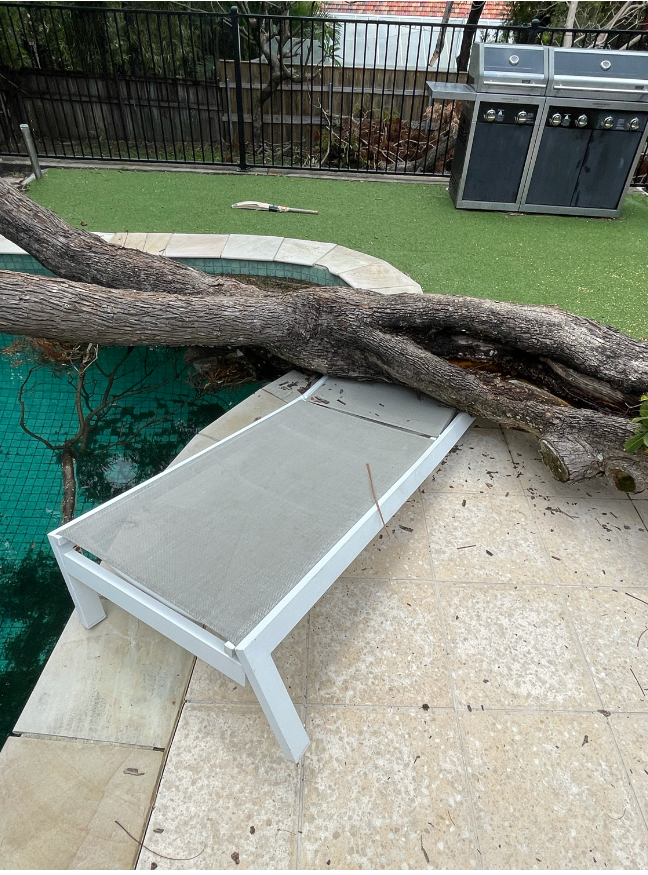
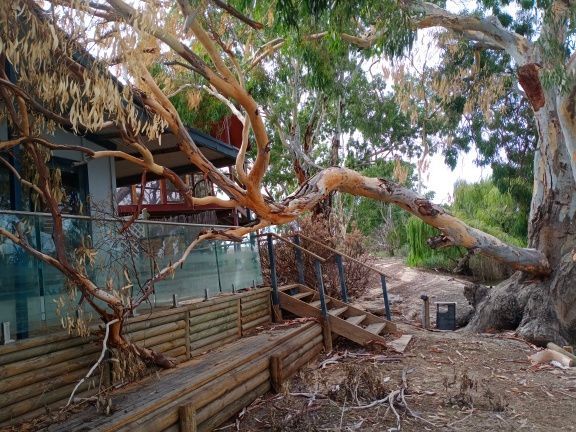
- storm-damaged sections need to be removed;
- a canopy has become uneven or excessively heavy on one side; or
- a larger branch must be shortened to a suitable lateral junction.
Professional lopping should be based on the tree’s structure and response to cutting. It should not involve removing large amounts of canopy simply to make the tree as small as possible.
What Is Tree Pruning?
Tree pruning is the planned removal or shortening of selected branches to achieve a defined result while retaining as much healthy and functional canopy as practical.
Pruning may be used to:
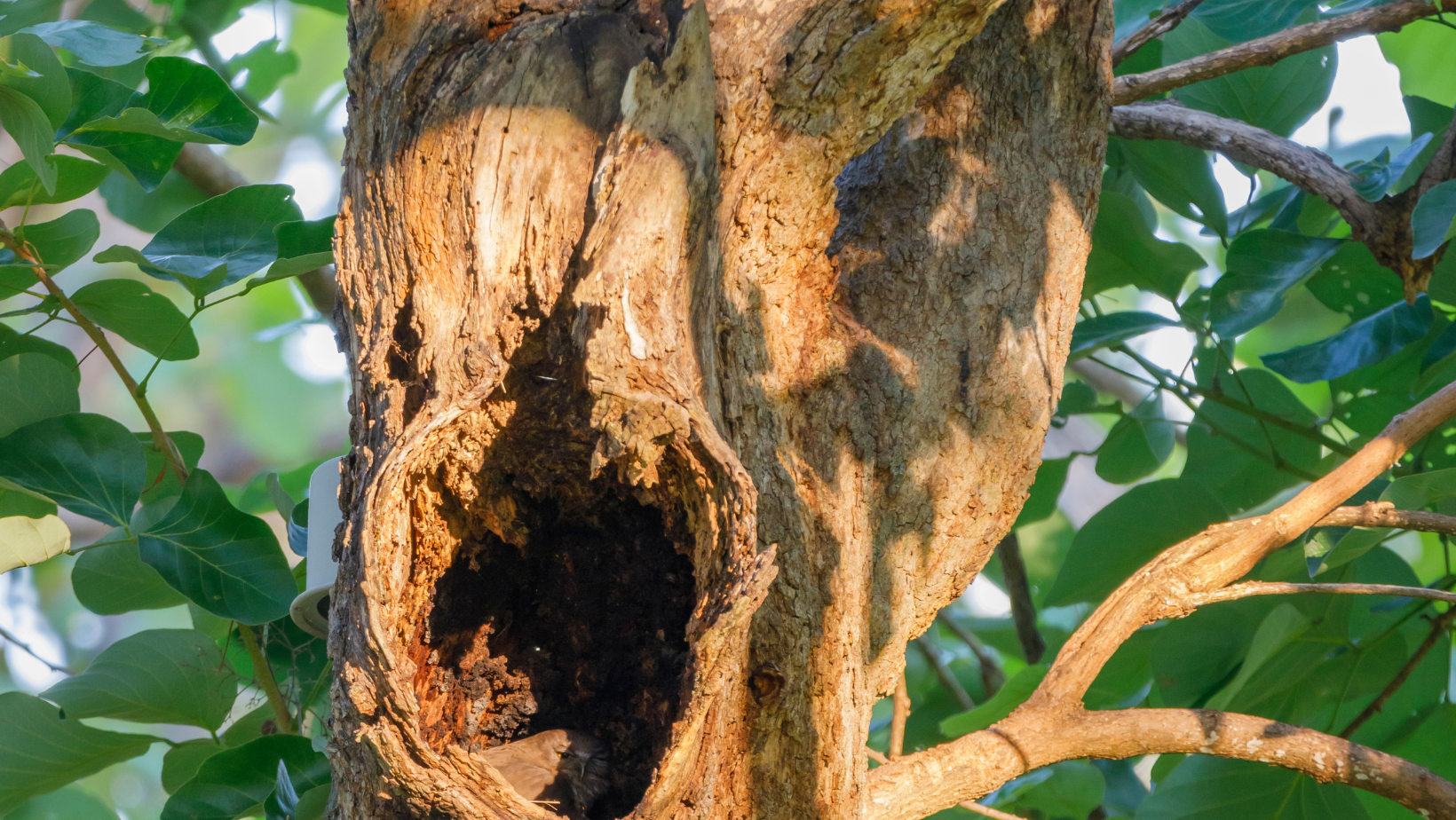
- remove dead, broken or diseased branches;
- improve the structure of a young tree;
- reduce weight on a particular limb;
- provide clearance from roofs, paths and structures;
- remove crossing or poorly attached branches;
- manage storm damage; or
- retain a balanced natural canopy.
GDE’s tree trimming and pruning service is suited to planned canopy maintenance, deadwood removal and selected branch-management work.
Tree Lopping vs Tree Pruning: Quick Comparison
| Point of Comparison | Tree Lopping | Tree Pruning |
|---|---|---|
| General meaning | A broad term for cutting back larger branches or reducing sections of canopy. | Selective branch removal for a defined objective. |
| Typical scope | May involve larger branches or more substantial canopy reduction. | Usually focuses on selected branches or specific structural issues. |
| Main purpose | Manage size, spread, clearance, weight or damaged canopy sections. | Improve structure, health, safety, clearance or long-term canopy form. |
| Cut selection | Should still use suitable branch junctions and account for tree structure. | Cut location and branch selection are central to the work. |
| Risk if poorly performed | Excessive reduction can create stress, large wounds and unstable regrowth. | Poor cuts or excessive pruning can also damage the tree. |
| Best outcome | A necessary reduction completed without unnecessarily stripping the canopy. | A targeted result that retains a balanced, functional canopy. |
Why the Cut Location Matters
Trees do not heal wounds in the same way as human skin. They form new tissue around pruning wounds and compartmentalise damaged wood.
Cuts made in unsuitable locations can leave long stubs, damage the branch collar or remove a branch without a suitable remaining lateral. This can increase the size of the wound, slow the tree’s response and affect the stability of new growth.
Professional branch reduction should consider:
- the branch collar and branch-bark ridge;
- the diameter of the branch being removed;
- whether a suitable lateral branch can take over the growth direction;
- the amount of living foliage being removed;
- the tree’s species, age and condition; and
- how the remaining canopy will carry wind and branch weight.
What Is Tree Topping?
Tree topping is a severe form of canopy reduction in which branches or stems are cut without regard for suitable branch junctions or the tree’s natural structure.
Topping can leave large exposed wounds and remove a substantial proportion of the foliage the tree uses to produce energy. The tree may respond by producing clusters of fast-growing shoots below the cuts.
This regrowth can create an ongoing maintenance problem because new shoots may become long and heavy while remaining less securely attached than the original branches.
Lopping Should Not Mean Indiscriminate Topping
Homeowners often use “lopping” as a general description for tree cutting. A professional tree service should explain the actual method being proposed, how much canopy will be removed and where the main cuts will be made.
When May Tree Lopping Be Appropriate?
Larger branch reduction may be appropriate where the tree can be retained but a substantial canopy issue needs to be managed.
Examples include:
- reducing an overextended limb above a roof or occupied area;
- shortening storm-damaged branches to suitable junctions;
- managing a canopy that has become heavily weighted in one direction;
- reducing branches that cannot maintain practical clearance;
- removing a hazardous, split or poorly attached branch; and
- managing a tree affected by previous poor cutting.
The proposed work should still consider the amount of canopy the tree can retain and whether reduction will provide a practical long-term result.
When Is Selective Pruning the Better Choice?
Pruning is normally the better option where the concern can be addressed by removing or shortening particular branches rather than broadly reducing the canopy.
This may include:
- deadwood removal;
- formative pruning of young trees;
- removing crossing or rubbing branches;
- improving pedestrian or vehicle clearance;
- reducing weight on one branch;
- removing a damaged branch after a storm; and
- maintaining a balanced canopy around a home or commercial property.
Can Pruning Reduce a Tree’s Height?
Some trees can be reduced through crown-reduction pruning, where selected branches are shortened back to suitable lateral branches.
The amount of height reduction that can be achieved without leaving a badly unbalanced or stressed tree depends on:
- the species and natural growth form;
- the tree’s age and current condition;
- the diameter and location of the proposed cuts;
- the amount of canopy being retained;
- previous lopping or pruning; and
- the reason the height needs to be reduced.
Where a tree has fundamentally outgrown its site, repeated heavy reduction may not provide a safe or sustainable long-term solution.
What About Trees Near Powerlines?
Trees and overhead electricity lines require specialist safety procedures. Electricity can pass through branches and foliage when vegetation contacts powerlines.
Energex advises property owners never to trim vegetation near powerlines themselves. Trees growing into network lines should be reported to Energex, while vegetation near the service line connecting the home should be assessed by a professional tree trimmer or arborist.
If a tree or branch is touching fallen or damaged lines, stay at least 10 metres away, warn others and call 000.
Do You Need Council Approval?
Permission may be required before pruning protected vegetation, and property owners must not privately prune Council street or park trees without approval.
Brisbane City Council requires a permit even for minor pruning of a Council street tree directly outside a property. For a tree on private property, check whether it is protected under the Natural Assets Local Law before arranging significant work.
How to Decide Which Service Your Tree Needs
- Is the concern limited to one or two branches?
- Is the tree healthy and structurally sound overall?
- Does the work involve routine clearance or deadwood?
- Would shortening selected branches solve the problem?
- How much living canopy would need to be removed?
- Has the tree previously been topped or heavily cut?
- Will the remaining canopy be balanced?
- Are buildings, roads or powerlines close to the tree?
- Is Council permission required?
Professional Tree Lopping and Pruning in Brisbane
GDE Tree Services has completed professional tree work throughout Brisbane and South East Queensland since 1987.
Our team can inspect the tree and property, explain whether broader branch reduction or selective pruning is more suitable and provide a free on-site written quote.
What You Can Expect From GDE
- Free on-site written quotes
- Assessment of the tree and surrounding property
- Clear explanation of the proposed cuts
- Qualified and experienced tree crews
- Clean and maintained equipment
- Branch and green waste chipping
- Waste removal or mulch left on request
- Final site clean-up
Frequently Asked Questions
What is the main difference between tree lopping and tree pruning?
Tree lopping is a broad term commonly used for cutting back larger branches or reducing parts of a canopy. Tree pruning is more selective and is carried out for a defined structural, health, safety or clearance objective.
Is tree lopping always bad for a tree?
No. Professional branch reduction or canopy-management work may be appropriate where it is carefully assessed and correctly performed. Problems arise when excessive foliage is removed, branches are cut at unsuitable points or the tree is indiscriminately topped.
What is tree topping?
Tree topping is the severe reduction of a canopy through cuts made without regard for suitable branch junctions or the tree’s natural structure. It can leave large wounds and encourage rapid, weakly attached regrowth.
When is tree pruning the better choice?
Pruning is generally preferred where the objective is to remove deadwood, improve young-tree structure, reduce weight on selected limbs, maintain clearance or retain a balanced natural canopy.
Can pruning reduce the height of a tree?
Sometimes. Crown reduction can lower or shorten selected parts of a canopy by cutting branches back to suitable lateral branches. The amount that can be removed safely depends on the species, condition and structure of the tree.
Can I prune a Brisbane street tree myself?
Brisbane City Council requires permission for pruning, removing or interfering with Council street and park trees. Minor pruning of a street tree directly outside a property also requires a permit.
Who should prune branches near powerlines?
Never attempt to trim vegetation near powerlines yourself. Energex advises using its reporting service for trees near network lines or engaging a professional arborist or tree trimmer where vegetation is close to the service line.
How do I know which service my tree needs?
A site inspection is the most reliable way to decide. The tree’s species, age, condition, branch attachments, surrounding property, clearance requirements and the amount of living canopy involved should all be considered.
Not Sure Whether Your Tree Needs Lopping or Pruning?
GDE Tree Services can inspect the tree and explain which method is appropriate for its condition, structure and location.
Call 07 3910 3439 to arrange a free on-site written quote.
Request a Free Written QuoteTree work should be based on the individual tree and site. The terms “lopping”, “trimming” and “pruning” can be used differently, so ask the contractor to describe the proposed work and its intended outcome in writing.