Tree Service Terminology Explained: A Glossary for Property Owners
Tree quotes can contain terms that sound similar but describe very different work. Tree topping, crown reduction, deadwooding and tree felling are not interchangeable, and knowing the difference makes it much easier to understand what is actually being proposed for your property.
Whether you are arranging tree lopping in Brisbane or simply comparing quotes, this glossary explains the language you are most likely to come across.
Why the Terminology Matters
Some tree-care words are technical pruning terms, while others are broader industry or everyday terms. The same word can also have a specific meaning in planning legislation.
For example, Logan City Council defines lopping as cutting or pruning branches and specifically says it does not include removing the trunk or pruning so severely that the tree is likely to die. That is very different from topping, which the International Society of Arboriculture describes as indiscriminate cutting back to stubs or undersized lateral branches.
Pruning and Canopy Terms
Tree Pruning
Broad termPruning is the selective removal of branches or parts of branches for a defined reason. That reason might be structural improvement, deadwood removal, clearance, canopy management or addressing a damaged limb.
The International Society of Arboriculture notes that every pruning cut can influence tree growth, which is why pruning should begin with a clear objective rather than simply removing foliage.
Tree Trimming
Common customer termTree trimming is commonly used as an everyday description for cutting back or maintaining branches and foliage. In arboricultural work, the more precise term is usually pruning, followed by the actual objective of the work.
GDE uses tree trimming and pruning for work such as clearance, canopy maintenance and selected branch removal.
Deadwooding
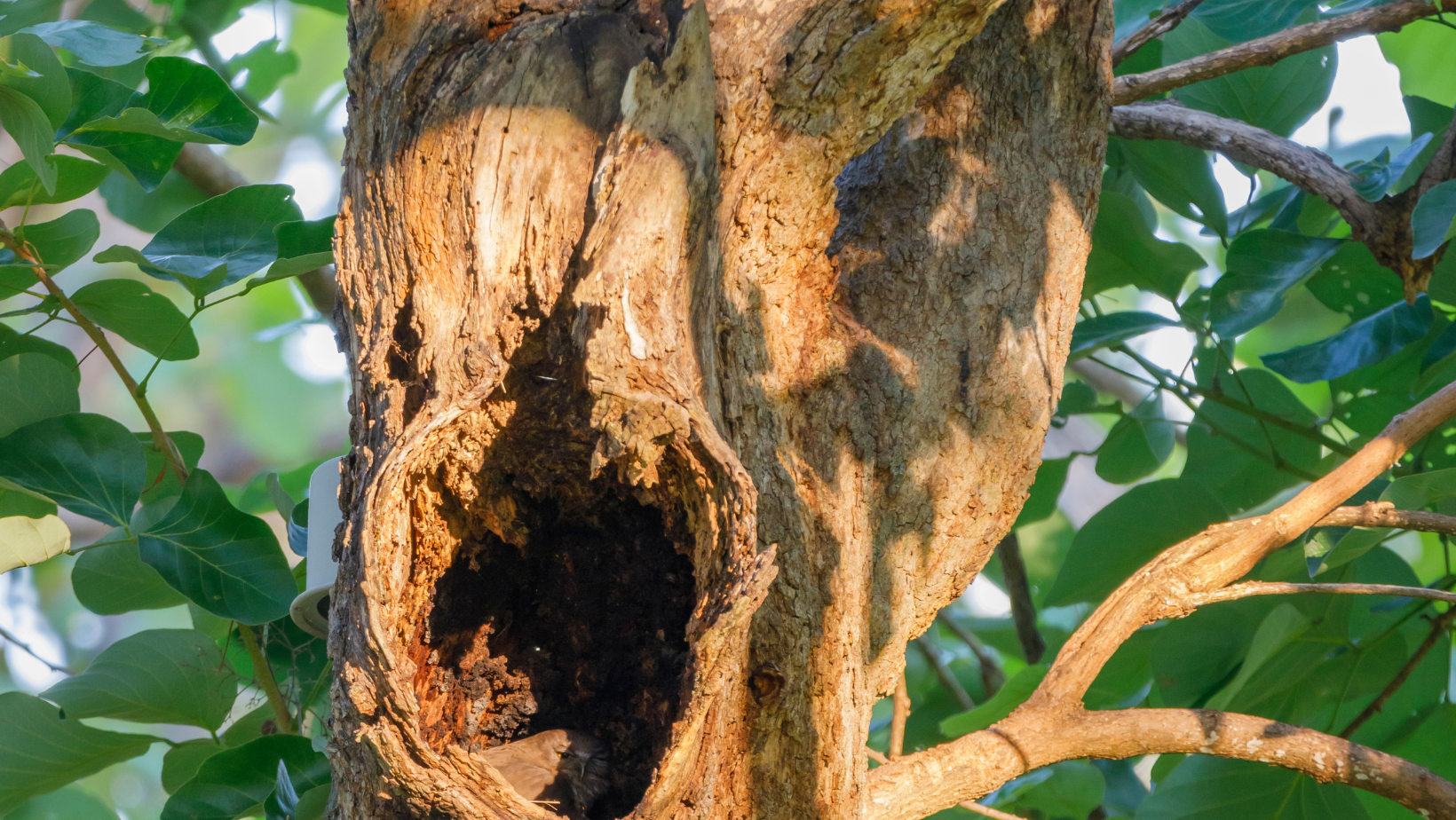
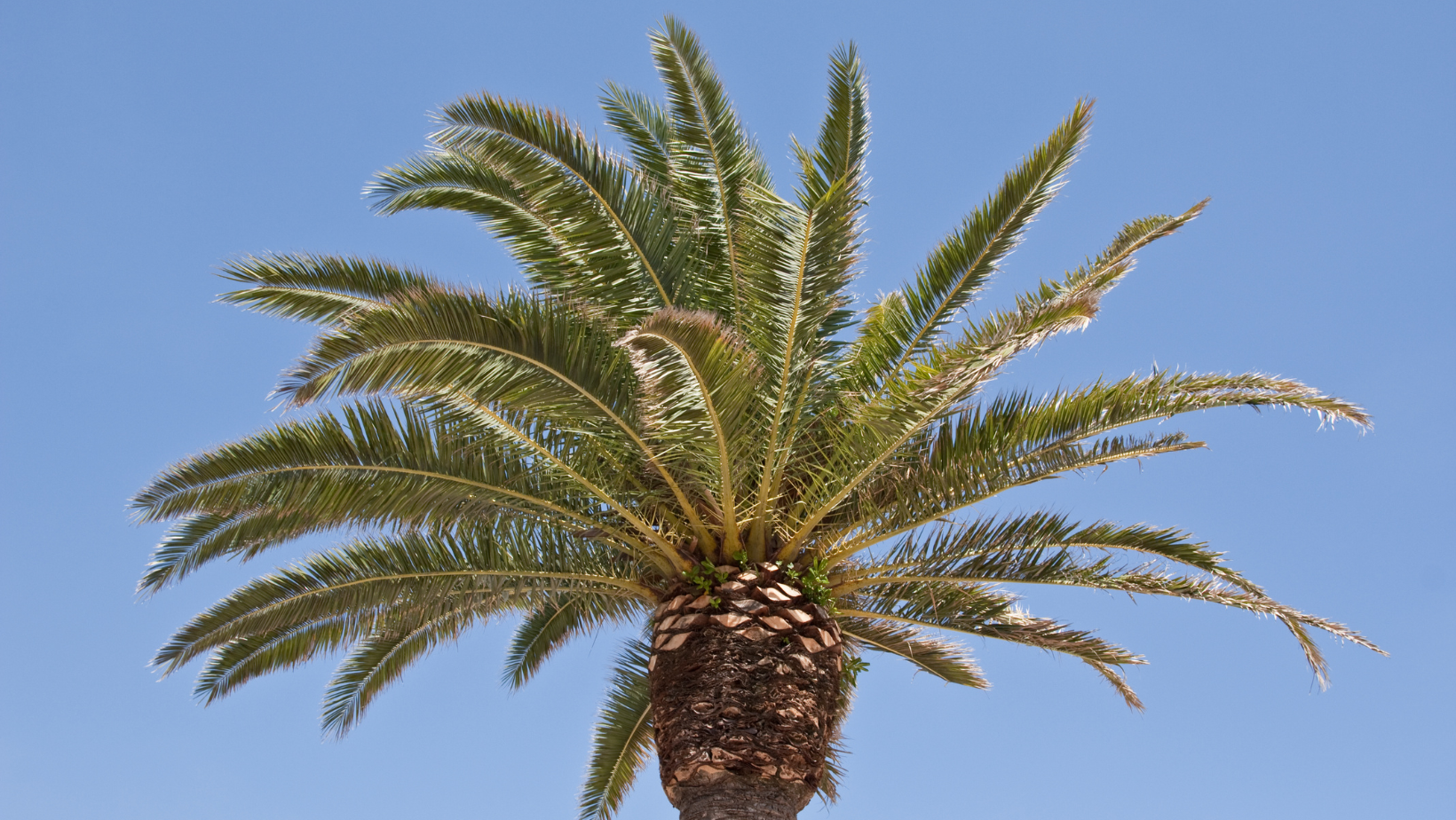
Canopy cleaningDeadwooding means removing dead branches from the tree's canopy. It is particularly relevant where dead branches sit above houses, driveways, paths, parking or other high-use areas.
The broader arboricultural term crown cleaning can also include dead, dying, diseased, weakly attached or low-vigour branches.
Crown Lifting
Also: canopy liftCrown lifting or canopy lifting means selectively removing or shortening lower branches to increase clearance beneath the canopy.
It may be used to improve clearance over a driveway, path, building, sightline or frequently used outdoor area. The work is concentrated on the lower canopy rather than reducing the height of the tree.
Crown Thinning
Density reductionCrown thinning means selectively reducing the density of foliage and branches while keeping the tree's general size and shape.
ISA guidance notes that thinning can be used to increase light or wind penetration and encourage interior foliage. It should not be interpreted as a promise to “storm-proof” a tree, and over-thinning can create its own problems.
Crown Reduction
Height or spread reductionCrown reduction selectively reduces the height, spread or both by shortening branches back to suitable lateral branches capable of taking over the terminal role.
The objective is to make the tree smaller while retaining more of its natural form and structure.
Formative Pruning
Young-tree structureFormative or structural pruning is carried out while a tree is younger to encourage a more suitable branch structure as it develops. The aim is to address poorly positioned or competing branches before they become large, rather than relying on major corrective cuts later.
This is more precise than the vague phrase “tree shaping”, although shaping is still commonly used in everyday garden language.
Tree Lopping
Broad Queensland termTree lopping is a broad term for cutting or pruning branches. It can describe legitimate planned branch or canopy reduction, so it should not automatically be treated as another word for topping.
Logan City Council's current vegetation terminology defines lopping as cutting or pruning branches and says it does not include removing the trunk or cutting so severely that the tree is likely to die.
Tree Topping
Not recommendedTree topping is the indiscriminate cutting of branches back to stubs or lateral branches that are too small to take over the role of the branch being removed.
The International Society of Arboriculture warns that topping can create tree stress, decay, structural problems and vigorous replacement growth while destroying the tree's natural form.
“Reduce the Tree” and “Top the Tree” Are Not the Same Instruction
A well-written quote should describe the pruning objective and the part of the canopy being managed. A request simply to “cut the top off” can produce a very different outcome from planned crown reduction.
Tree Removal Terms
Tree Removal
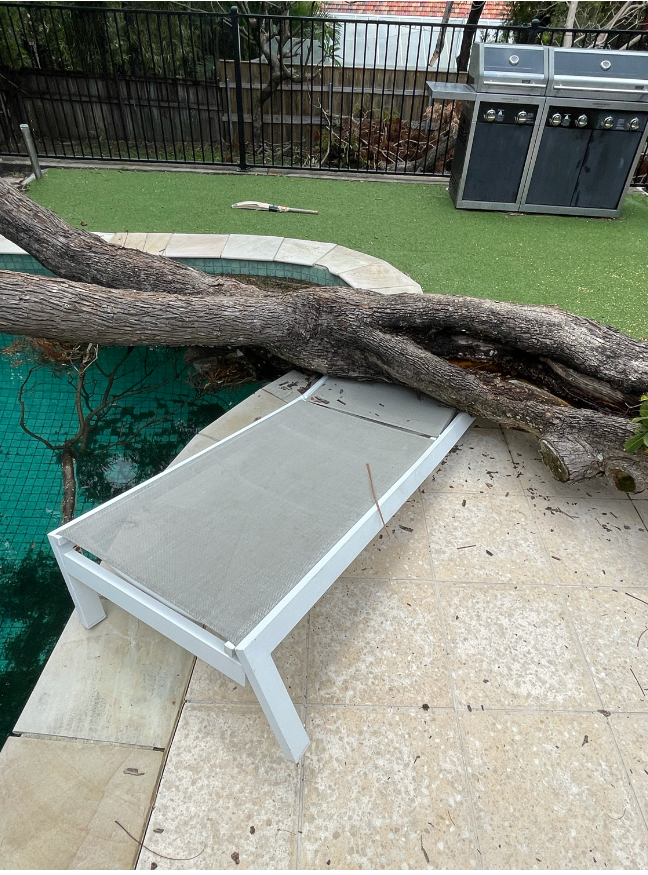
Complete standing treeTree removal means taking down the entire standing tree. It describes the end result, not necessarily the method.
A tree may be removed by felling it as a whole where conditions allow, or dismantled progressively where surrounding structures or access make a full fell unsuitable.
Tree Felling
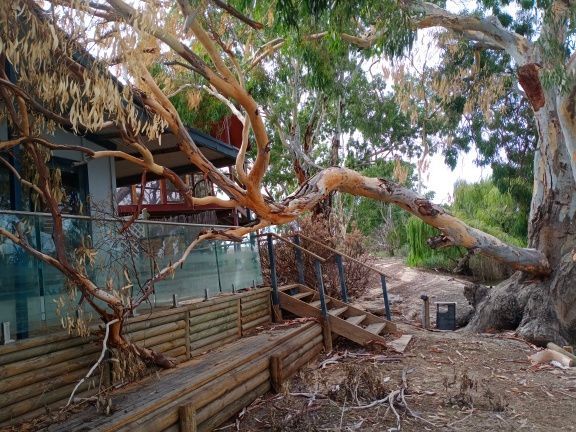
Removal methodTree felling means bringing the standing tree down. On a suitable open site, this can involve a controlled fell into a planned landing area.
Safe Work Australia includes felling within the broader risks associated with professional tree work. The method needs to suit the tree, the site and the space available around it.
Learn more about tree felling in Brisbane.
Sectional Dismantling
Confined removal methodSectional dismantling means removing the tree progressively in pieces rather than bringing the entire tree down at once.
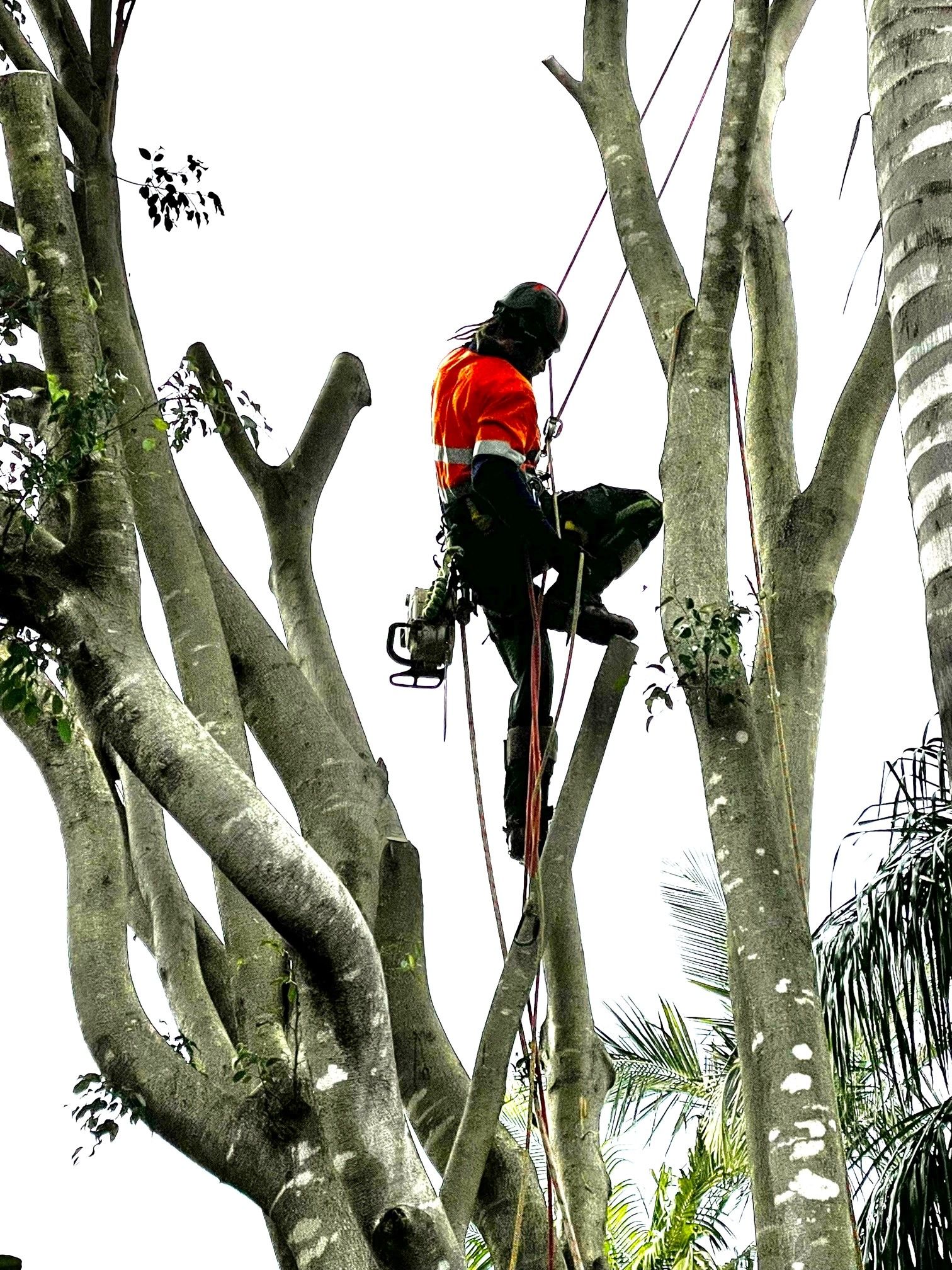
It is commonly used where buildings, fences, pools, roads, neighbouring property or other obstacles restrict the available drop zone. Branches and trunk sections may be controlled using climbing, an EWP, rigging or a combination of methods.
Access and Work-Site Terms
Rigging
Controlled loweringRigging is the use of ropes, blocks and related equipment to control branches or trunk sections during tree work. Instead of allowing material to fall freely, a crew can lower or redirect it into an appropriate area.
This is particularly useful around roofs, gardens, fences and other property features beneath a tree.
EWP
Elevated Work PlatformAn EWP is a mechanical work platform used to provide access at height. Compact tracked machines used in tree work are often called spider lifts.
Safe Work Australia includes falls, falling objects and plant among the hazards that must be managed during professional tree work, so an EWP still requires suitable access, ground conditions and competent operation.
Arborist
Tree-care professionalAn arborist is a professional who works in arboriculture — the cultivation, management and care of trees and other woody plants.
Qualifications and credentials vary, so terms such as “qualified arborist”, “consulting arborist” or a specific certification should only be used where the person actually holds the relevant qualification or credential.
After the Tree Comes Down
Stump Grinding
Below-ground grindingStump grinding uses a specialised machine to reduce the remaining stump below the surrounding ground level. Some surface roots may also be ground, but most of the tree's underground root system remains in place and breaks down over time.
Stump Removal
More extensive excavationStump removal means physically extracting the stump and a larger portion of the main root mass. It normally creates more ground disturbance than stump grinding and does not necessarily mean every fine or lateral root is excavated from the property.
See GDE's stump grinding and removal service for more information.
Quick Reference: Which Term Describes Which Job?
| Term | What It Mainly Changes | What It Does Not Automatically Mean |
|---|---|---|
| Deadwooding | Removes dead branches | Reducing the whole canopy |
| Crown lifting | Raises lower-canopy clearance | Reducing the tree's height |
| Crown thinning | Reduces canopy density | Making the tree substantially smaller |
| Crown reduction | Reduces height, spread or both | Indiscriminate topping |
| Tree lopping | Broadly describes branch cutting/pruning | Topping or complete tree removal |
| Tree felling | Brings down the whole standing tree | Stump removal |
| Sectional dismantling | Removes a tree progressively in pieces | A full fell into one landing area |
| Stump grinding | Reduces the stump below ground | Removing the entire root system |
Three Useful Questions to Ask Before Approving Tree Work
Technical vocabulary is only useful when it makes the scope clearer. Before approving a quote, make sure you understand:
What is the objective? Is the work for clearance, deadwood, canopy size, storm damage or complete removal?
Which parts of the tree are being removed? “Prune tree” is much less informative than a clear description of the branches or canopy area being managed.
What is included after cutting? Ask whether green waste, logs, woodchip and the stump are included in the quoted scope.
Clear Quotes Make Tree Work Easier to Compare
GDE Tree Services provides free written quotes so property owners can understand the tree work being proposed before the job begins.
Frequently Asked Questions About Tree Service Terminology
Is tree lopping the same as tree topping?
No. Tree lopping is a broad term for cutting or pruning branches. Topping is the indiscriminate cutting of branches back to stubs or undersized laterals and is widely discouraged because it can damage tree structure and lead to weak regrowth.
What is the difference between pruning and trimming?
Pruning is the broader arboricultural term for removing selected branches for a defined purpose such as structure, clearance or deadwood removal. Trimming is commonly used by property owners as a general term for cutting back or maintaining foliage.
What is deadwooding?
Deadwooding means removing dead branches from the canopy. It is often done where dead branches could fall into areas used by people, vehicles or buildings. It should not be confused with removing every branch that looks sparse or discoloured.
What is crown lifting?
Crown lifting, also called canopy lifting, means selectively removing or reducing lower branches to create clearance beneath the tree for pedestrians, vehicles, buildings or sightlines.
What is crown reduction?
Crown reduction selectively shortens branches to reduce the height or spread of a tree while retaining more of its natural structure. It is different from topping because branches are cut back to suitable laterals rather than arbitrary stubs.
What is tree felling?
Tree felling means bringing down the whole standing tree. Where there is adequate clear space this may be done as a controlled fell. On confined sites, complete tree removal may instead require sectional dismantling.
Does tree removal include stump removal?
Not automatically. Tree removal generally refers to taking down the standing tree. Stump grinding or stump removal is often quoted as a separate stage unless specifically included.
What is the difference between stump grinding and stump removal?
Stump grinding reduces the stump below ground level while most roots remain in the soil. Stump removal is a more invasive excavation that removes the stump and a larger portion of the main root mass.
Need a Tree Quote Explained in Plain English?
GDE Tree Services can inspect the tree and property and provide a free written quote that clearly sets out the work required.
Request a Free Written QuoteTree-care terminology can vary between contractors, councils and technical guidance. The scope written into the quote is more important than relying on a single label by itself.